What To Wear And Bring For The Gros Piton Climb
The Gros Piton trail is a 4 km round trip that takes most hikers 4 to 6 hours on moderate to challenging terrain, and what you wear and carry makes the difference between a steady climb and a miserable one. Here is the practical kit list, section by section.
Short answer
Wear broken-in trail shoes or trainers with grip, lightweight breathable clothing you can move in, and a hat. Carry at least 1.5 litres of water, sunscreen, a light rain layer and a small day pack. The trail fee is USD 50 per adult, paid at Fond Gens Libres, and a certified local guide is required, so you never need to pack navigation gear.
Gros Piton stands 798 m (2,619 ft) above the Caribbean near Soufriere, and the trail to its summit is a 4 km round trip that typically takes 4 to 6 hours on moderate to challenging ground, according to the Saint Lucia Tourism Authority. That combination, a full morning of climbing in tropical heat and humidity, punishes the wrong clothing and rewards a short, well chosen kit list. The good news is that you need far less than most people pack.
The trail begins at the Fond Gens Libres interpretive centre inside the Pitons Management Area, a UNESCO World Heritage site inscribed in 2004, and a certified local guide is required for the climb. The entry fee of USD 50 per adult covers both access and that guide, paid at the trailhead. So navigation, route finding and permits are already handled before you lace up. What is left is the personal layer: shoes, clothes, water, sun protection and a few small comfort items.
If you are still choosing how you will get to the trailhead, the Dannyboy Guided Hike, 5 Hours by St. Lucia Best Experience Tours & Airport Transfers is the most reviewed Gros Piton climb on this site at 4.7 across 230 reviews, from US$90 per person, with hotel and cruise-port pickup, water for the hike and a cold Piton beer afterwards. There is more on choosing between guided trips and private climbs further down.
For everything on the mountain itself, see the main guide to hiking the Pitons in St Lucia.
| Quick Fact | Detail |
|---|---|
| Trail | Gros Piton, 4 km round trip, moderate to challenging |
| Summit height | 798 m (2,619 ft) |
| Typical time | 4 to 6 hours on the trail |
| Trailhead | Fond Gens Libres interpretive centre near Soufriere |
| Trail fee | USD 50 per adult, covers entry and the certified guide |
| Footwear | Broken-in trail shoes or trainers with grip |
| Water target | At least 1.5 litres per person |
What To Wear For The Gros Piton Climb
Dress for tropical heat, intermittent rain and rough ground: a moisture-wicking t-shirt or sports top, shorts or stretchy hiking trousers, broken-in shoes with grip, and a hat. Nothing cotton-heavy, nothing new, and nothing you would mourn if it gets mud on it. The trail is steep, shaded in parts and exposed in others, so light layers beat one thick outfit every time.
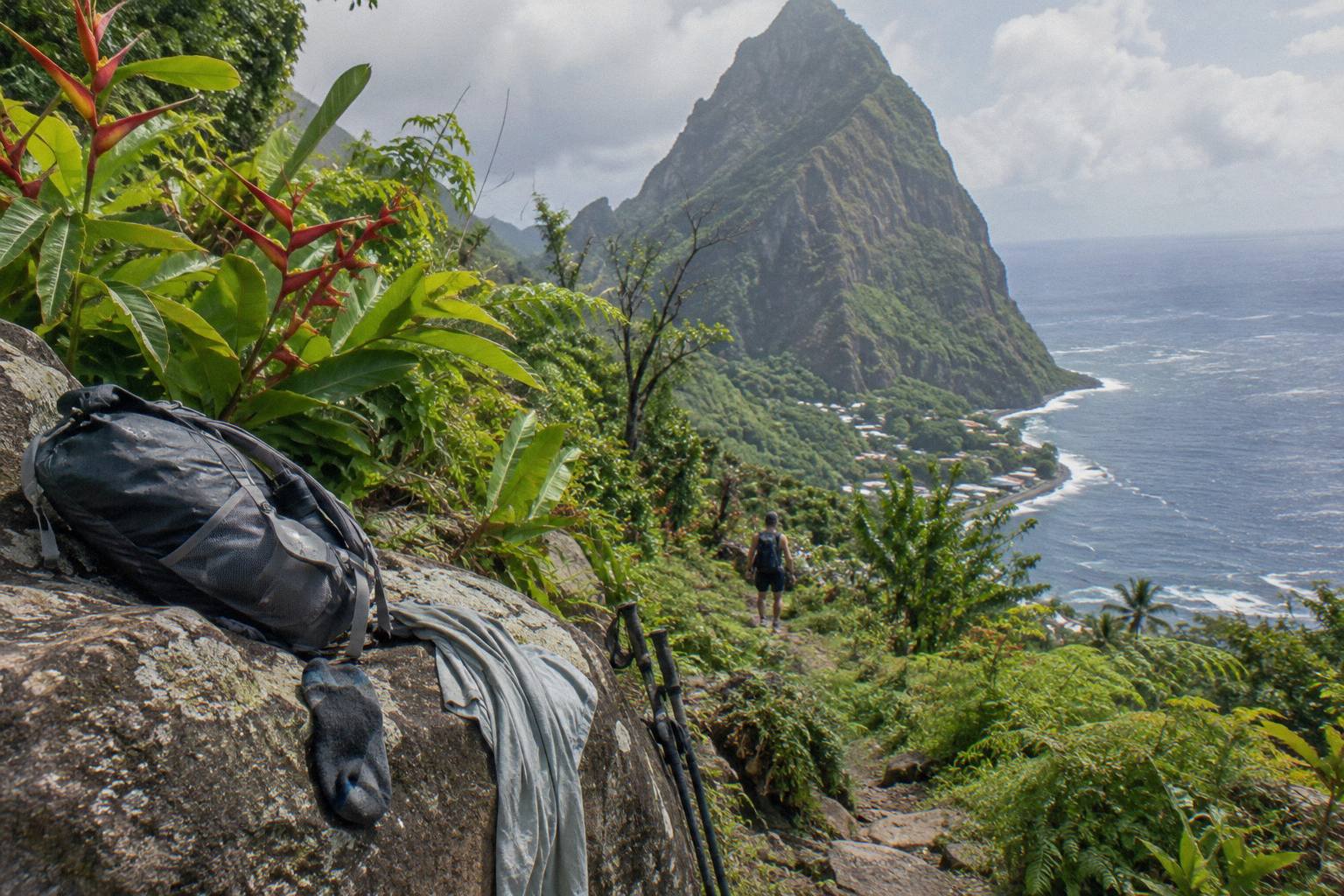
St Lucia sits deep in the tropics, and the lower half of the Gros Piton trail runs through shaded, humid forest before the upper sections open onto rock and thinner vegetation. You will sweat continuously on the ascent, then cool quickly at the top while you rest. A fast-drying synthetic or merino top handles both states better than cotton, which stays wet and heavy once soaked. Shorts work fine for most hikers; trousers that convert at the knee suit anyone sensitive to scrapes from branches and rock.
Colour matters less than weight, but a light colour on your top keeps the sun honest on the exposed upper sections. A wide-brimmed hat or a cap with a neck flap does more work per gram than almost anything else in the pack. Sunglasses live on your face, not in the bag, because the trade winds and the equatorial light make the summit ridge glare hard on clear mornings.
Weather on the mountain can swing from blazing sun to a short, hard shower inside an hour, and the Saint Lucia Tourism Authority page on the Piton climbs describes conditions as variable enough that guided parties adjust pace accordingly. A cheap packable rain shell answers the shower without turning your bag into a wardrobe. Skip the heavy waterproof jacket: in tropical temperatures an unbreathable coat creates a personal sauna faster than the rain wets you.
Underwear and socks deserve one specific sentence: choose synthetic or wool socks over cotton, and carry one spare pair in the pack. Wet cotton socks rubbing inside a shoe on a steep descent is the single most common cause of blisters on this trail, and a fresh pair at the summit costs nothing in weight.
Footwear Choices For A Rocky, Rooty Trail
Trainers with decent tread are the realistic minimum, and trail runners or lightweight hiking shoes are the better answer. The path alternates between packed earth, exposed tree roots, loose rock and short scrambles on stone, so grip and ankle comfort matter more than waterproofing. Boots are not wrong, but in this heat they are usually overkill and slow to dry.
Whatever you wear, it must already be broken in. A first long walk in brand new shoes on a 4 to 6 hour climb is a blister factory, and the descent, with your full weight pressing into the front of the shoe, is where new footwear bites hardest. If your trainers have a smooth, worn-out sole, replace them or borrow better ones; smooth soles on wet root sections are genuinely hazardous.
Sandals and flip-flops fail on every count: no toe protection, no grip, and a strap that saws into your foot within an hour. If you want something for after the hike, pack the sandals and wear the shoes on the trail. Water shoes are not a substitute either, despite the beach setting; the trail is dry rock and dirt, not stream crossings.
Your guides, mandatory under the rules at the trailhead, will set a pace to the group and point out the tricky footing, but they cannot choose your shoes for you. For readers weighing the overall challenge, the dedicated page on how difficult the Gros Piton trail is breaks the route into stages.
If you are still deciding how to book the climb itself, these three options cover the main formats: a guided group with pickup, a private climb, and a guided alternative with hotel or cruise pickup.
Each of those handles the drive to Soufriere differently. The Dannyboy Guided Hike, 5 Hours includes hotel pickup and drop-off plus water for the hike and a Piton beer afterwards. The Private Hike, 4 To 5 Hours by Cool Vibes Taxi and Tours includes private transport, entrance fee, 1.5 litres of water per person and local beer, from US$140 per person. The Hotel Or Cruise Pickup Hike by St Lu Taxi and Tours, from US$130 per person, is the guided-group option for travellers staying anywhere with hotel or cruise-port pickup.
What To Bring In Your Day Pack
Carry a small day pack with 1.5 litres of water or more, sunscreen, insect repellent, a light rain layer, a spare pair of socks, a small snack, and a zip-lock bag for your phone and valuables. That is the whole list. Everything else, permits, guiding and route finding, is handled at Fond Gens Libres through the USD 50 trail fee.
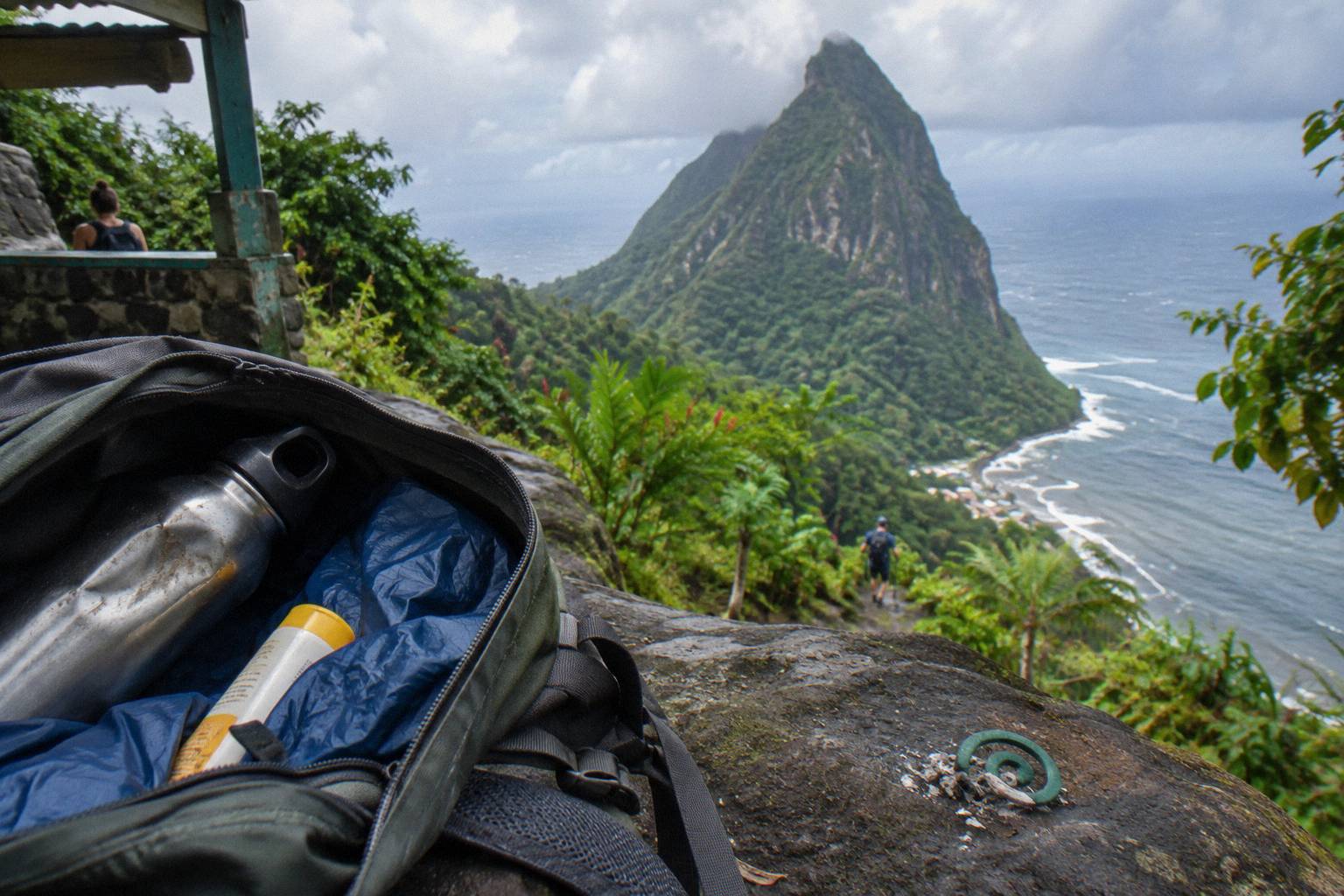
The pack itself should be something in the 10 to 20 litre range with a chest strap if you have one; a strapless bag swings on steep sections and wears your shoulders out. A hydration bladder works, but two simple bottles are easier to refill, share and monitor, and you can hand one to a guide or fellow hiker who ran dry. The tourism authority packing list says at least 2 litres of water per person for the full 4 km round trip.
Sunscreen needs reapplying on a climb this long, so pack the tube, do not just pre-apply. The same goes for insect repellent: the lower forest section is calm in comparison to the beaches, but biting insects live in tropical woodland and a small bottle settles the question. A zip-lock bag keeps your phone dry in a shower and protects it from sweat on the way up; a dry bag does the same job if you own one.
Two small items earn their place repeatedly. A spare pair of socks, already mentioned under clothing, changes the descent. And a modest snack, a muesli bar, trail mix or a banana, gives you something for the summit stop, where most parties rest for ten to twenty minutes before turning around. Pack a little more than you need and offer the surplus around; it makes friends on the trail.
| Item | Why It Earns Its Place | Optional Or Skip |
|---|---|---|
| Water, 1.5 L or more | Heat and sustained climbing dehydrate fast | Flavour sachets if you dislike plain water |
| Trail shoes with grip | Roots, rock and loose gravel underfoot | Boots, only if you already prefer them |
| Hat and sunscreen | Exposed upper sections, equatorial light | Neck-flap cap beats a beanie |
| Light rain shell | Short tropical showers arrive quickly | Heavy waterproof, too hot to wear |
| Spare socks | Prevents descent blisters | Second full outfit, not needed |
| Snack | Energy for the summit and the walk down | Full picnic, weight you will regret |
| Zip-lock for phone | Rain, sweat and pack compression | Camera gear beyond a phone |
| Insect repellent | Forest section on the lower trail | After-sun lotion, hotel item |
Several tours among the tours listed here remove items from this list entirely, because their inclusions spell out what they carry for you. The Private Hike, 6 To 7 Hours by A1 Transfer & Tours SLU includes bottled water and covers the hike and guide fee, from US$130 per person. The FRAM Soufriere Hike, 6 Hours by FRAM Tours & Taxi Services includes the Gros Piton trail entrance fee, private transport and hotel, port, Airbnb and villa pickup, from US$200 per person. The All Inclusive Hike, 4 Hours by Treasure tours Ltd. St. Lucia lists all fees and taxes, bottled water, soda and even walking sticks and backpacks available to rent.
Water, Food And Hydration On The Trail
Plan on drinking steadily through the climb rather than gulping at the summit: roughly half a litre every hour on the ascent is a sensible working rate in tropical heat, which means 1.5 to 2 litres covers the typical 4 to 6 hour round trip. Bring a small snack for the top. Heavy meals before the hike do more harm than good.
The trail gives you no reliable refill point once you leave Fond Gens Libres, so whatever you carry is the water you have. That is the plain arithmetic behind the 1.5 litre minimum. On hot, still days the forested lower section feels like a greenhouse and you will drink more than you expect; on breezy mornings the same bottle lasts comfortably. It is easier to carry a little home than to ration an empty container on a exposed ridge.
Food should be light and dense. A couple of muesli bars, a bag of nuts or a piece of fruit answer the summit hunger without weighing down the pack. Eat a normal but not heavy breakfast beforehand; a plate of saltfish and bakes is a fine St Lucian start, but a plate and a half will sit in your stomach for the first hour of climbing. Save the big meal for Soufriere afterwards.
Electrolyte sachets or rehydration tabs are a genuine help for hikers who sweat heavily, and they weigh nothing. Plain water plus a salty snack afterwards covers most people, but if you know you cramp in heat, add the sachets. Alcohol before the climb is a poor trade: the beer at the summit or the beach afterwards tastes far better than the one the night before.
Sun, Rain And Changing Trail Conditions
Pack for two climates in one morning: shaded, humid forest at the bottom and bright, windy exposure near the summit, with the chance of a short heavy shower at any point. Sunscreen, a hat and a packable rain layer are the three items that answer all of it, and together they weigh well under a kilogram.
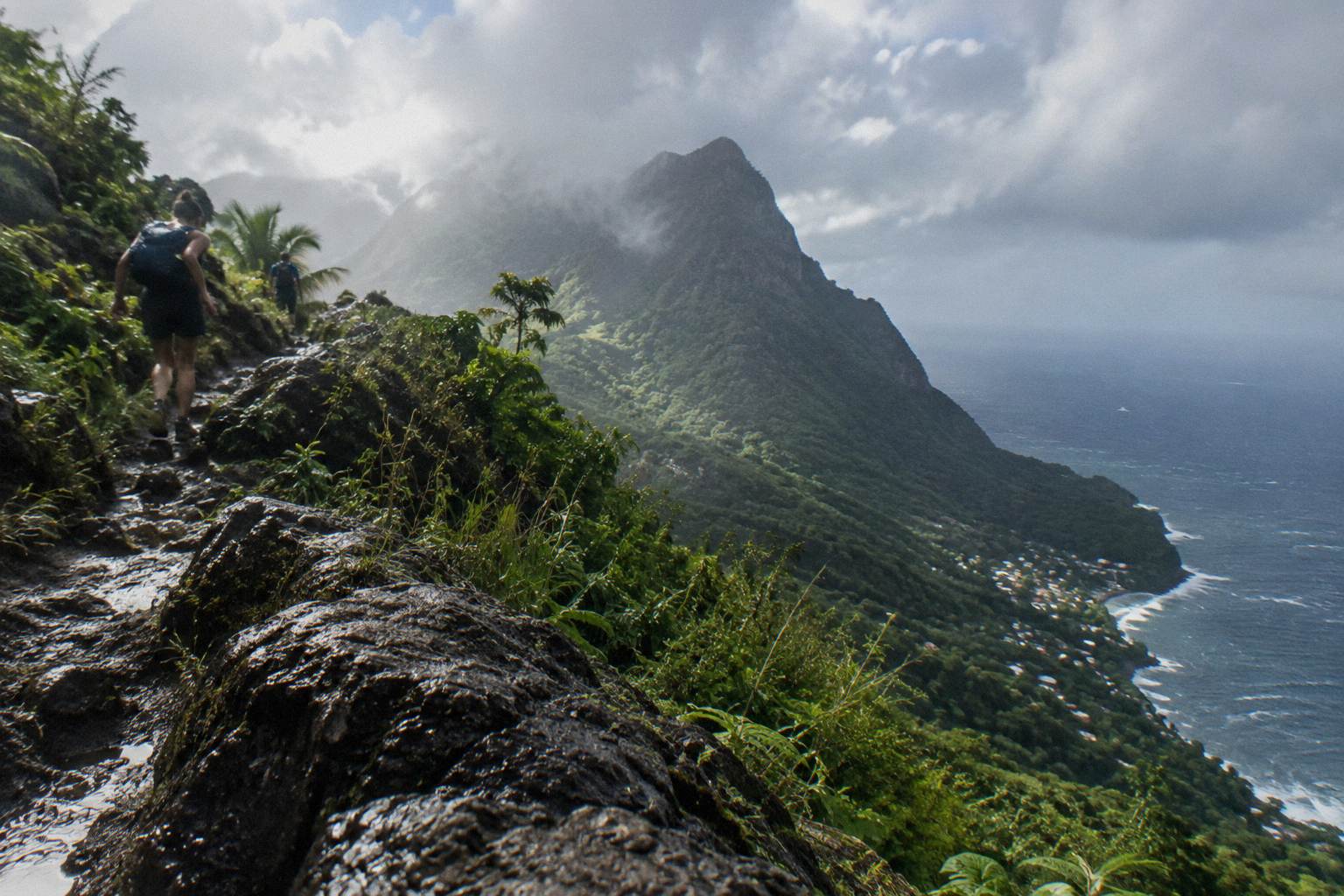
The lower trail holds its shade for the first substantial stretch, which keeps temperatures civilised but hides the sunburn clock. Many hikers arrive at the open upper sections already mildly burned on the shoulders and neck because they skipped the second sunscreen application in the cool of the forest. Set a habit: sunscreen at the trailhead, sunscreen again at the first long rest stop. The rest of the planning pages sit on Gros Piton Hike.
Rain in the tropics tends to arrive in short, intense bursts rather than long drizzle. Fifteen minutes of hard rain makes roots and rock slick, which is the main safety argument for grippy footwear, and then it stops and the forest steams. A packable shell keeps you and your day pack contents dry through the burst; a garbage bag wrapped around the pack is the budget equivalent and works surprisingly well.
Because conditions vary and neither the authority nor the trailhead publishes fixed weather-closure rules, treat the guide's judgement on the day as the final word on pace and any section. The page on the best time of year to hike Gros Piton covers the seasonal picture if your travel dates are still flexible, and the fitness and preparation guide explains what training helps before you arrive.
What You Do Not Need To Carry
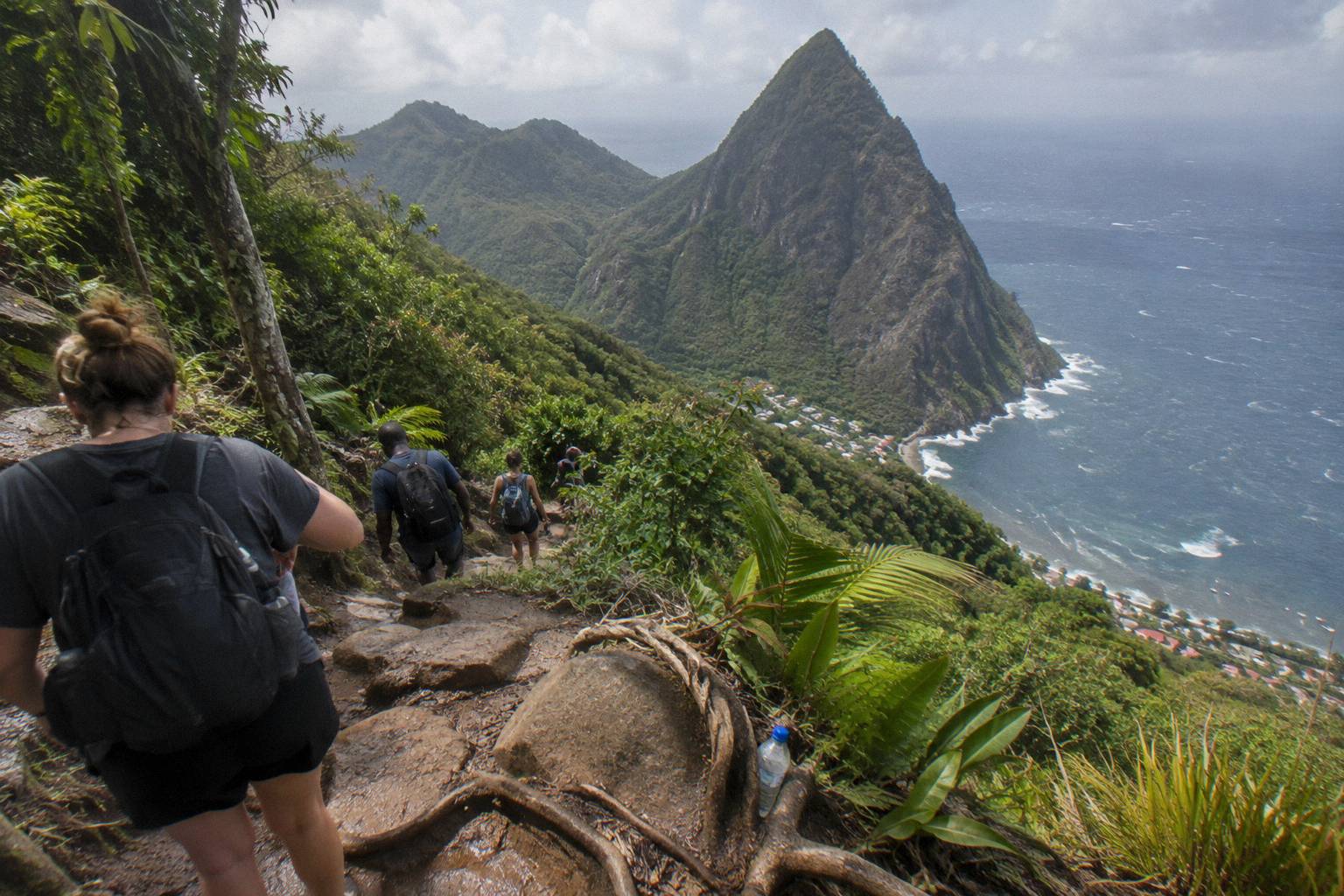
Leave behind navigation gear, trekking poles you have never used, a change of clothes, bulky toiletries and more than one camera body. The guide is required and provided under the trail fee, the route is a single obvious path with a mandated escort, and every gram counts on a 798 m ascent. A light pack is a better companion than a complete one.
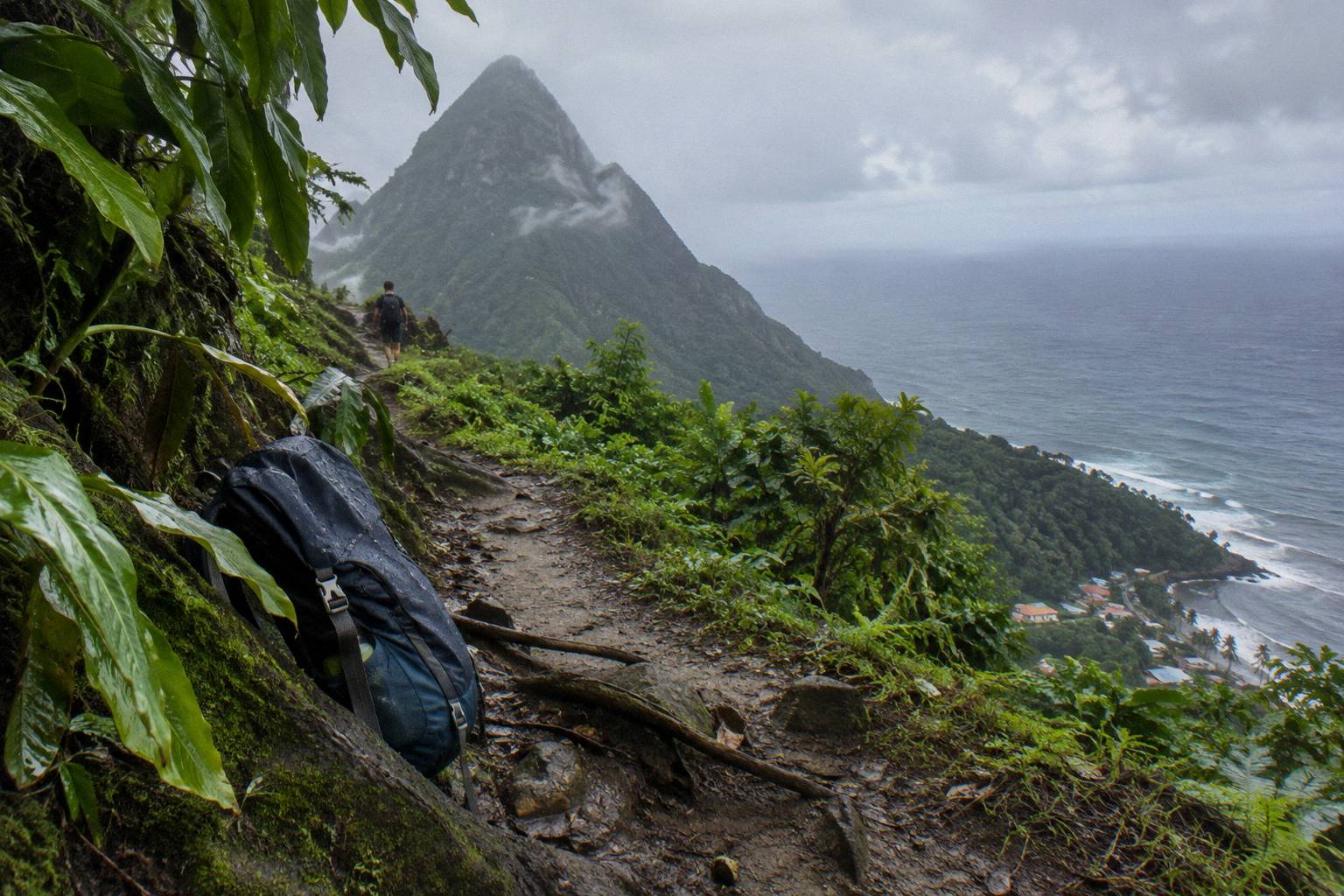
Map, compass and GPS are the classic over-packs here. The certified local guide requirement means you walk with someone who knows the trail intimately, and the route does not branch into a maze of options. A phone with a charged battery covers photos and emergencies. Trekking poles divide opinion: hikers who already use them on steep descents will be glad of them, but buying a pair the week before and learning on a rocky trail usually produces more stumbles than support.
Toiletries, hair dryers, laptops and a second outfit belong at the hotel. If your tour includes a stop at a waterfall or a beach afterwards, a swimsuit and a towel in the vehicle, not on your back, is the right arrangement, since transport-based tours keep a bag in the van or car. Several private options among the tours listed here suit exactly that pattern, carrying your after-hike kit in the vehicle while you climb light.
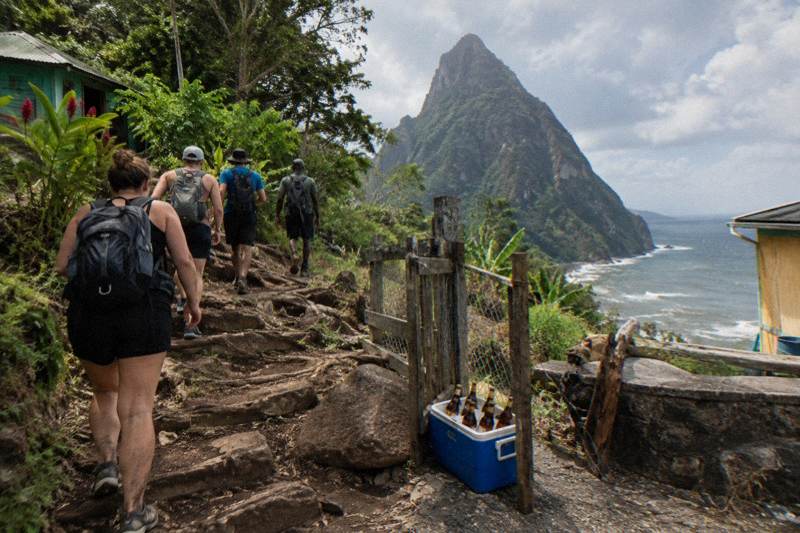
One more item crosses off itself: the beer at the top or the bottom. The Dannyboy Guided Hike lists a cold Piton beer after the hike among its inclusions, and the Cool Vibes private climb includes local Piton beer and island signature beer, so the celebration is already bought and carried by someone else. The point generalises: read your tour's inclusion list before you shop, because a US$6 bottle of water and a US$50 walking stick are only bargains if nobody was bringing them anyway.
Packing Shortcuts When Your Tour Provides The Extras
Before you buy anything for the trip, read the inclusion list on your chosen tour, because several operators carry water, cover the entrance fee or provide transport that shrinks your personal kit list. Cross-referencing the inclusions against the packing table above is the difference between a 4 kg pack and a 2 kg one.
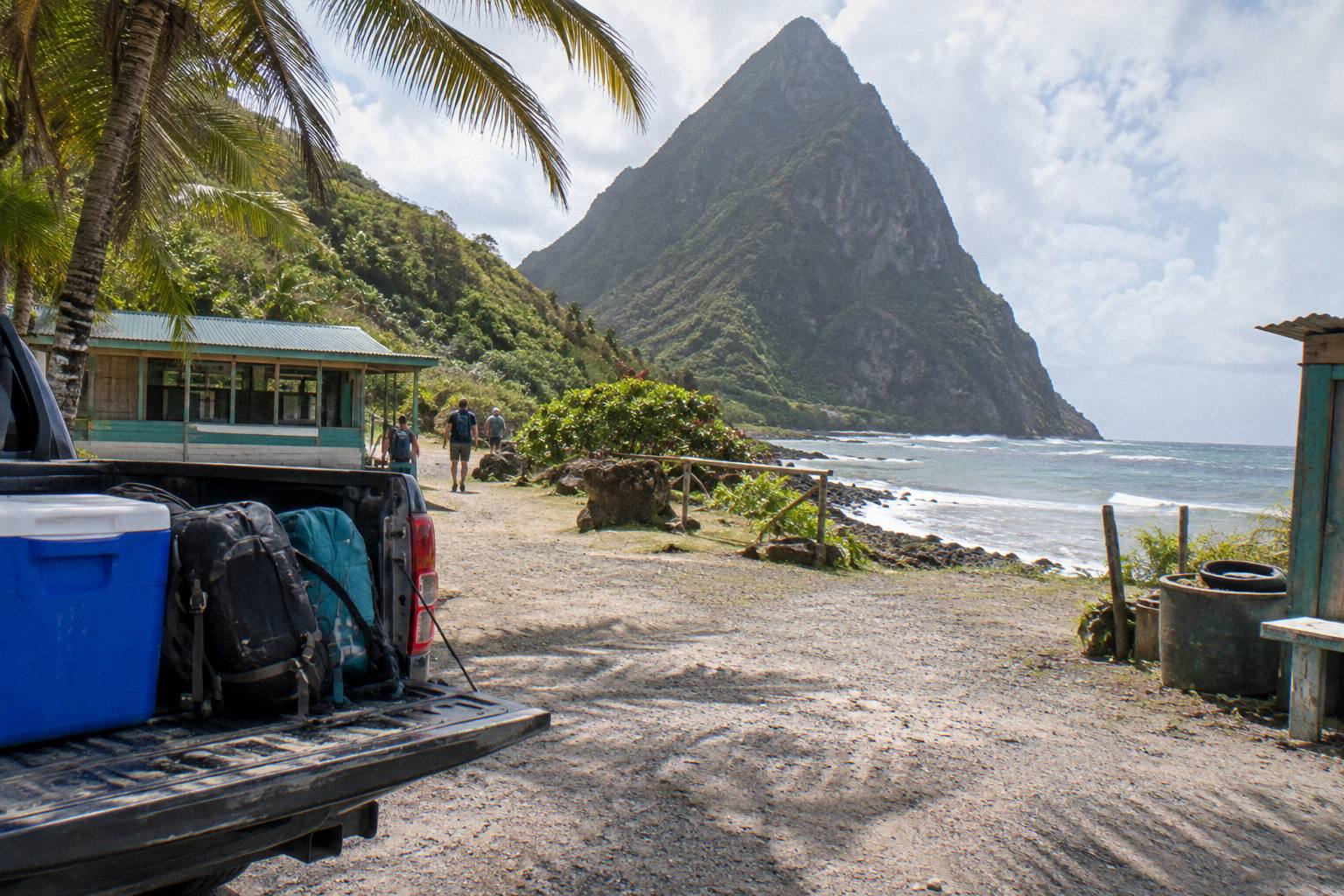
The pattern is easiest to see across the three main formats. Guided group trips such as the Dannyboy Guided Hike, 5 Hours and the Hotel Or Cruise Pickup Hike bundle transport, water and the guide coordination, which suits travellers who want one booking to answer everything. Private climbs such as the Cool Vibes Private Hike, 4 To 5 Hours and the St. Lu Taxi Private 4-Hour Hike add privacy and flexible pacing, with inclusions that vary row by row. Combo products, including the Sulphur Springs Mud Bath Hike by St. Lucia Taxi Service, from US$127 per person, add a second activity so you pack once for two stops.
| Tour (operator) | Format | Includes That Shrinks Your Pack | From (per person) |
|---|---|---|---|
| Dannyboy Guided Hike, 5 Hours (St. Lucia Best Experience Tours) | Guided group | Water for the hike, Piton beer after, hotel pickup and drop-off | US$90 |
| Private Hike, 4 To 5 Hours (Cool Vibes Taxi and Tours) | Private | Entrance fee, 1.5 L water per person, local beer, private transport | US$140 |
| Hotel Or Cruise Pickup Hike (St Lu Taxi and Tours) | Guided group | Hotel or cruise-port pickup | US$130 |
| Private Hike, 6 To 7 Hours (A1 Transfer & Tours SLU) | Private | Bottled water, hike and guide fee | US$130 |
| FRAM Soufriere Hike, 6 Hours (FRAM Tours & Taxi Services) | Private | Entrance fee, private transport, hotel/port/villa pickup | US$200 |
| All Inclusive Hike, 4 Hours (Treasure tours Ltd.) | Private | All fees and taxes, water, soda, walking sticks and packs to rent | US$150 |
Two cautions keep that table honest. First, inclusions belong to the specific tour named: the fact that one operator provides 1.5 litres of water per person says nothing about another, so check the booking page for the trip you actually choose. Second, the USD 50 trail fee is paid at Fond Gens Libres, and whether a given tour price covers it depends on whether that tour's inclusions list an entrance or guide fee, as the FRAM and Cool Vibes rows do.
Common Mistakes That Trip Hikers Up
The recurring errors are new or slick shoes, too little water, cotton everything, a pack that is too heavy, and no rain layer because the morning looked clear. None of these are exotic; all of them are visible at the trailhead every week, and every one is fixed the night before rather than on the mountainside.
Hikers who underestimate the heat show up in dark cotton hoodies and regret it within the first forest section. Hikers who overestimate the mountain show up with expedition-sized packs and regret it by the halfway mark. The trail asks for a narrow middle path: light, grippy and hydrated.
A subtler mistake is planning footwear around the descent only, or the ascent only. The climb up stresses your calves and your lungs; the walk down stresses your toes, knees and ankles, and it is where most soreness originates. Shoes with room in the toe box and laces snug enough to stop your foot sliding forward answer both halves of the day.
The last mistake is logistical: arriving at Fond Gens Libres expecting to sort the fee and the guide in seconds, without cash arranged or a tour pre-booked. The fee is USD 50 per adult, payable at the trailhead, and a certified guide is required. Booking a tour that lists the entrance fee among its inclusions, as several rows above do, removes that step entirely.
Common Questions About What To Wear And Bring
What Shoes Should I Wear For The Gros Piton Climb?
Broken-in trainers with decent tread are the minimum; trail runners or lightweight hiking shoes are better. The path mixes packed earth, roots, loose rock and short rock scrambles, so grip matters more than waterproofing, and in tropical heat waterproof boots are usually too warm. Sandals and flip-flops are not suitable.
How Much Water Should I Carry On The Gros Piton Trail?
At least 1.5 litres per person for the typical 4 to 6 hour round trip, and 2 litres on a hot day. There is no reliable refill point once you leave the Fond Gens Libres trailhead, so what you carry is what you have. Some tours list bottled water among their inclusions, which reduces what you need to pack.
Do I Need A Rain Jacket For The Hike?
A light packable rain shell is worth its weight, because tropical rain often arrives in short heavy bursts. A heavy waterproof coat is not recommended, since it traps heat. A garbage bag wrapped around your day pack is a workable budget alternative for keeping contents dry.
Are Trekking Poles Necessary For Gros Piton?
No. Hikers who already use poles on steep descents may like them, but buying a new pair just for this trail usually causes more stumbles than support on the rocky sections. One operator lists walking sticks available to rent, so buying a set before your trip is rarely necessary.
Can I Wear Shorts On The Gros Piton Trail?
Yes, most hikers do. Shorts plus a fast-drying top handle the heat well. Convertible trousers suit anyone sensitive to scrapes from branches and rock on the narrower forest sections, but long trousers are not required.
Does The Trail Fee Include A Guide?
Yes. The USD 50 per adult fee paid at Fond Gens Libres covers entry and the certified local guide, who is required for the climb. Some tours list an entrance or guide fee among their inclusions, so check your tour's inclusions before assuming you pay it separately.