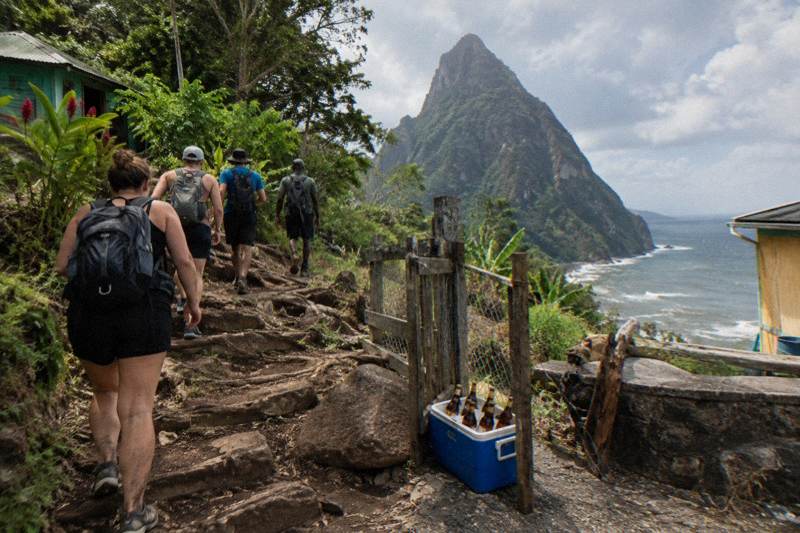
Best Time To Hike Gros Piton: Season, Weather And Start Time
Picking the right season and the right start hour shapes a Gros Piton climb more than almost any other decision, because the mountain sits in the tropics and the trail goes from warm coastline to exposed ridge.
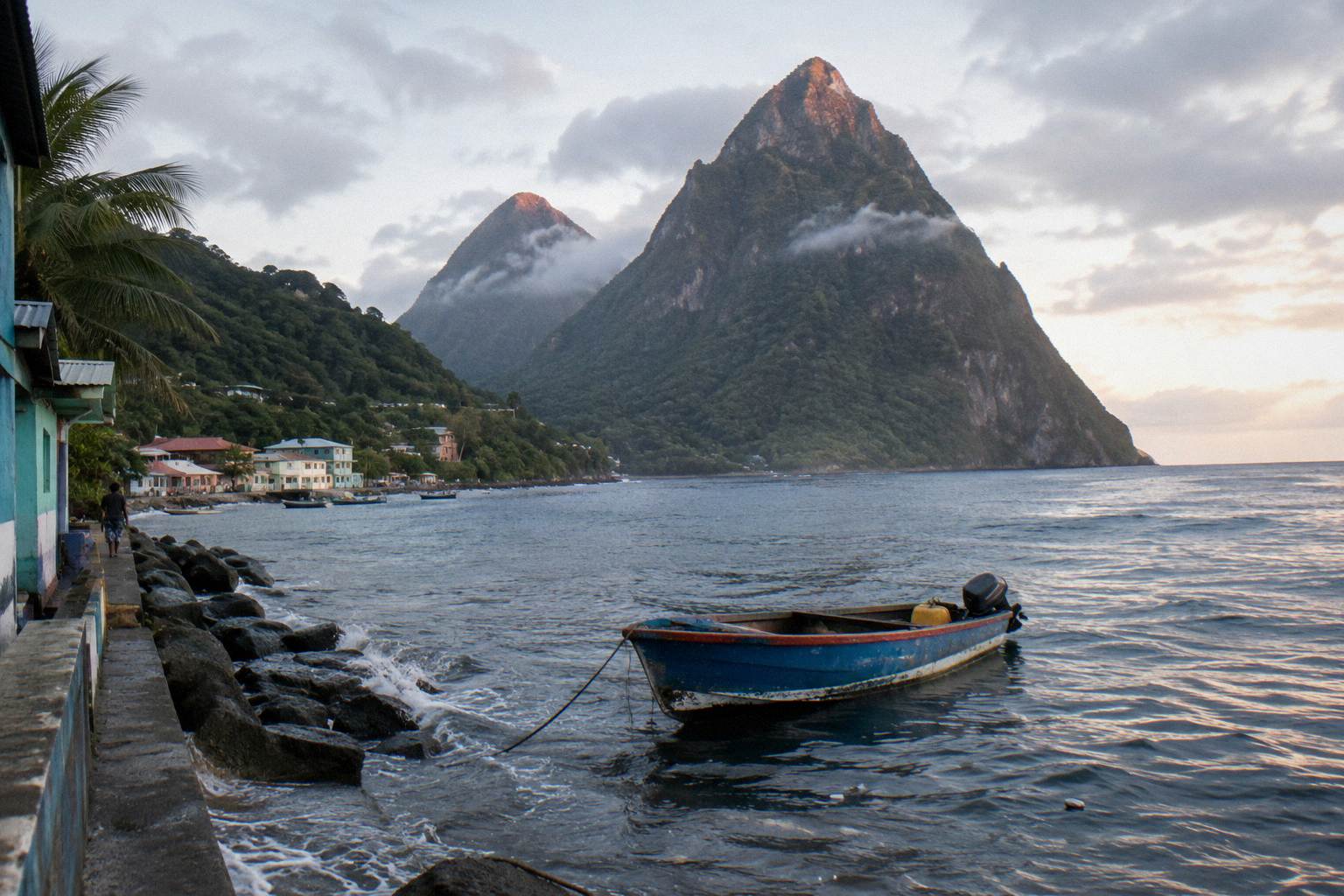
Short answer
Gros Piton stands 798 m (2,619 ft) with a 4 km round trip that typically takes 4 to 6 hours, and the certified local guide requirement means your start time is usually locked to your tour slot. Earlier starts avoid the strongest heat, and a guided trip such as the Dannyboy Guided Hike, 5 Hours from US$90 per person is the simplest way to control both the season and the hour.
The Gros Piton climb is a 4 km round trip to 798 m (2,619 ft) that typically takes 4 to 6 hours on a trail rated moderate to challenging, and a certified local guide is required on every ascent. That combination, tropical latitude plus a sustained climb, makes timing matter more than gear or fitness for most visitors. Heat builds through the morning, afternoon cloud often rolls over the ridge, and wet ground on the steeper stages is genuinely slippery. None of that is seasonal trivia. It decides whether the middle third of the trail feels like steady effort or a grind.
The practical answer for most travellers is to book a guided trip with an early start and let the operator handle the logistics. The Dannyboy Guided Hike, 5 Hours from St. Lucia Best Experience Tours & Airport Transfers, from US$90 per person and rated 4.7 across 230 reviews, is the most reviewed climb on this site and the cheapest priced Gros Piton ascent among the tours covered here, with hotel and cruise-port pickup both listed. Travellers who want a private vehicle instead often look at the Private Hike, 4 To 5 Hours from Cool Vibes Taxi and Tours, from US$140 per person, or the Hotel Or Cruise Pickup Hike from St Lu Taxi and Tours, from US$130 per person. This guide walks through season, weather and start time in the order you actually need them.
Book a tour whose departure slot reflects that, and give yourself a buffer day if the trip matters to you, since conditions vary year round.
For the full trail picture, the Gros Piton trail route and stages breaks down what each section demands, and the difficulty guide covers who the climb suits.
| Quick Facts | Detail |
|---|---|
| Summit height | 798 m (2,619 ft) |
| Round trip distance | 4 km |
| Typical hiking time | 4 to 6 hours |
| Difficulty | Moderate to challenging |
| Guide requirement | Certified local guide required |
| Trailhead | Fond Gens Libres interpretive centre near Soufriere |
| Trail fee | USD 50 per adult visitor, covers entry and the certified guide, paid at Fond Gens Libres |
| Protected status | Part of the UNESCO Pitons Management Area, inscribed 2004 |
When Is The Best Time To Hike Gros Piton?
No verified monthly weather data exists for this trail, so the best time is a structural decision rather than a calendar date. Start early in the day, choose a season that suits your heat tolerance, and treat any month as workable. Conditions on a tropical volcano ridge vary week to week, and what you control, your start hour and tour format, matters far more than what you cannot.
The Saint Lucia Tourism Authority's own page on Piton climbs confirms the core numbers, 798 m, 4 km round trip, 4 to 6 hours, moderate to challenging, and a required certified guide, but it publishes no opening hours, no last start time and no weather closure rules. Those specifics simply do not exist on official sources. So this page deliberately avoids inventing rainfall charts or temperature tables, and instead focuses on what holds true in every season: the climb starts warm near the coast at Fond Gens Libres, gains height steadily, and finishes on rock that is slick after rain whenever the rain fell.
That leaves three levers. First, the hour you start, covered in depth below. Second, the format you book, because a private tour gives you more say over the departure slot than a shared group departure. Third, your fallback, which means building a spare day into an island stay so a soaked or clouded morning does not cost you the climb entirely. Travellers on a one-day cruise stop have the least flexibility, and the guide to hiking Gros Piton from the cruise port addresses that tighter arithmetic.
A practical note on the guide fee: the USD 50 per adult trail fee covers entry and the certified guide and is paid at Fond Gens Libres. Some tour listings bundle fees into their price and others do not, so check what your chosen tour includes before comparing. The Private Nature Trail, 7 Hours from Xceptional Tours, from US$190 per person, lists entrance fees to the Gros Piton trail and to Toraille Waterfall in its inclusions, while the Private Hike, 6 To 7 Hours from A1 Transfer & Tours SLU lists a "Hike & Guide Fee - US$50 Per Person" line explicitly, which is a useful model of transparency.
How Gros Piton Weather Behaves Through The Year
St Lucia sits in the tropics, so the climate is warm year round with a wetter and a drier pattern rather than four seasons. No official source publishes monthly rainfall or temperature figures for the Pitons Management Area, so nothing here quotes numbers. The morning is almost always the cooler, clearer part of the day, and rain can fall in any month.
Rain makes the trail's steeper stages slippery whenever it falls, and cloud can sit on the summit ridge regardless of season.
The mistake readers make is trusting pages with tidy rainfall charts. Those figures are usually island-wide averages, sometimes from another data era, and they say nothing about whether the trail was dry at 7 a.m. on the specific morning you climb. A drier-season week with an afternoon shower can leave the upper rock greasier than a wetter-season morning that dried out by sunrise. The only weather fact that reliably helps you is the diurnal one: tropical heat builds through the late morning and peaks early to mid afternoon, exactly when a slow climber who started late is on the exposed upper section.
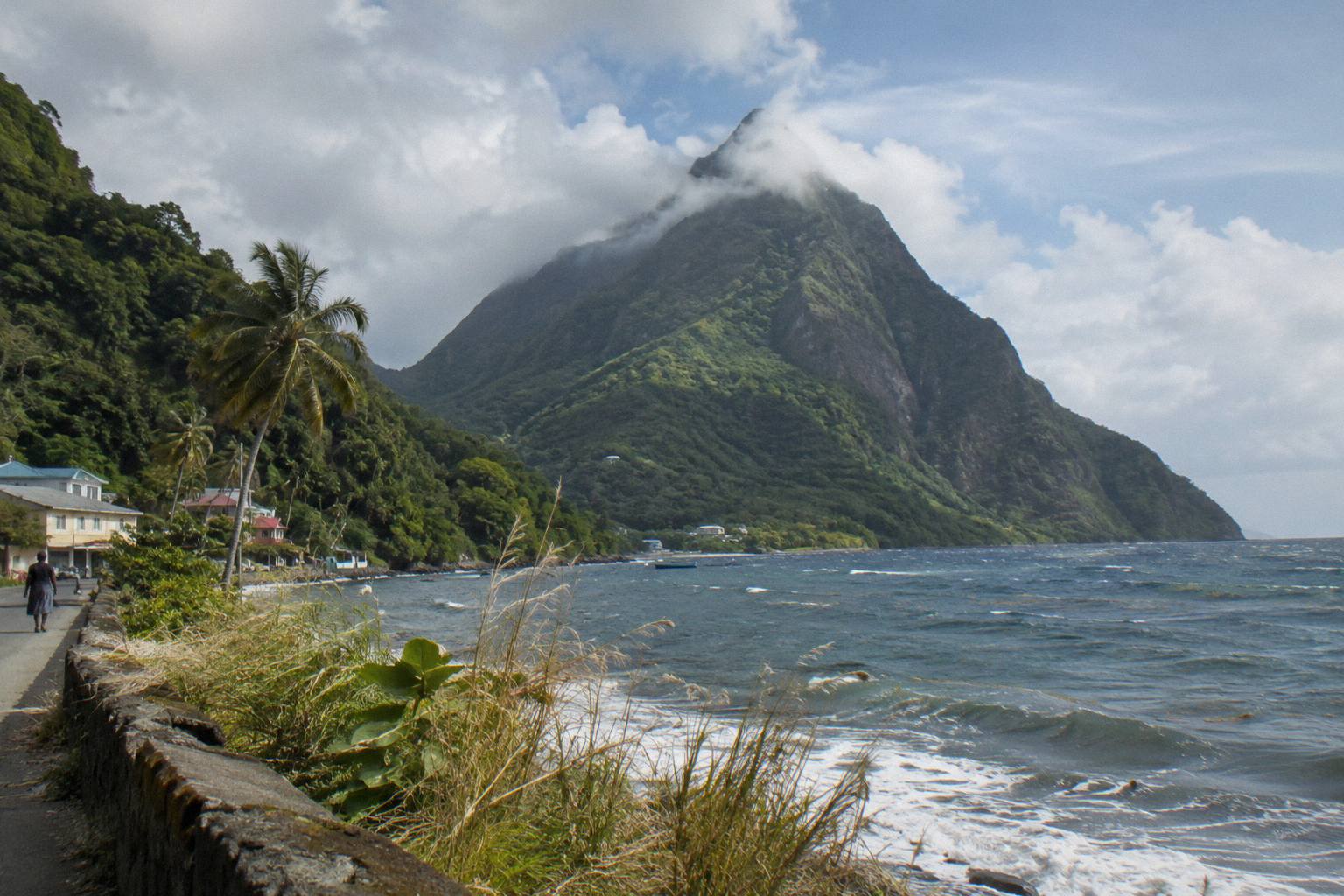
Season also changes the tour market, not just the trail. Peak visitor months mean more demand for the best early slots, so the popular guided departures fill further ahead. The Dannyboy Guided Hike, 5 Hours, the most reviewed climb at 4.7 across 230 reviews, is exactly the kind of product where an early slot in a busy month is worth booking as soon as your dates firm up. Free cancellation inside a 24 hour window, which the Dannyboy trip and every other climb in this article's tour set carries, means an early booking is low risk.
| Season factor | What it means for the climb | What you can control |
|---|---|---|
| Tropical heat | Builds through late morning, strongest early to mid afternoon | Start as early as your tour slot allows |
| Rain in any month | Steeper trail stages become slippery when wet | Footwear with grip, and see the packing guide below |
| Summit cloud | Can sit on the ridge in any season, views are never promised | Pick an early start, accept conditions on the day |
| Peak visitor months | Early tour slots fill further ahead | Book earlier; 24 hour free cancellation lowers the risk |
| Short visits | One weather window, no second chance | Add a buffer day where the itinerary allows |
Three formats sit in front of you for handling this. A guided group departure such as the Dannyboy Guided Hike, 5 Hours gives you a set structure with pickup, water and a cold Piton beer after, plus a driver waiting during the hike. A private climb such as the Private Hike, 4 To 5 Hours from Cool Vibes Taxi and Tours, from US$140 per person, gives you more control over the day's pace. And a middle option, the Hotel Or Cruise Pickup Hike from St Lu Taxi and Tours, from US$130 per person, pairs a guided group format with hotel and cruise-port pickup.
What Time Of Day Should You Start The Climb?
Earlier is better, and not marginally. On a 4 km round trip that typically takes 4 to 6 hours, a start in the early morning puts the steepest and most exposed stages behind you before the day's heat peaks, while a mid-morning start can push the summit section into the warmest hours. No official last start time is published, so the constraint is your tour's departure slot, not a gate closing. Book the earliest slot your operator offers.
Do the arithmetic yourself. If the climb runs the full typical 6 hours and you begin at 7 a.m., you finish around 1 p.m., having spent the final, hardest descent hours in early afternoon warmth rather than mid-afternoon heat. Begin at 10 a.m. instead and the same climb ends around 4 p.m., with the upper section climbed in the strongest sun and descended tired. Nothing about the mountain changed, only the clock. This is why seasoned visitors treat the start hour as the single most consequential timing decision, ahead of any question about which month to visit.
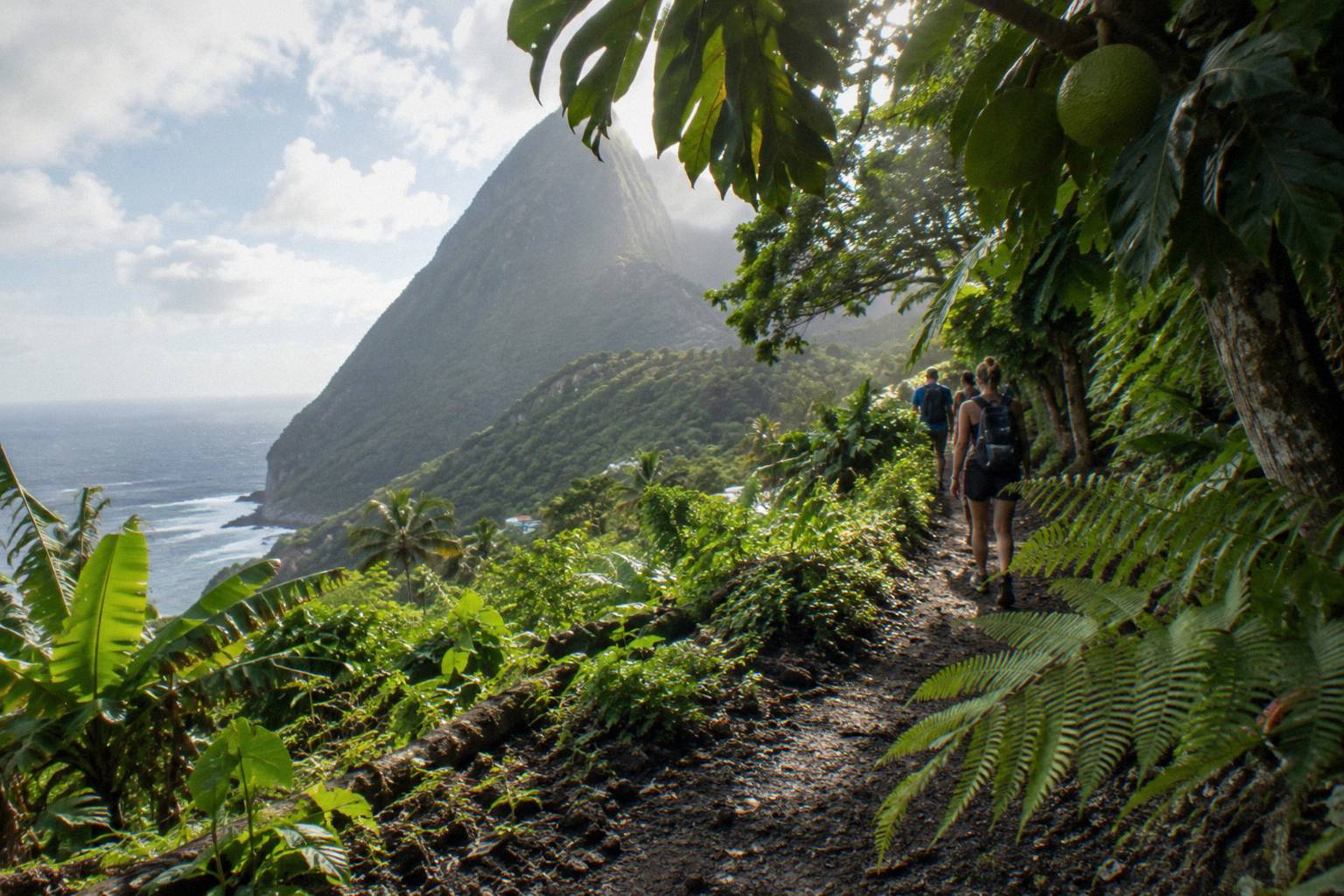
Your start time is usually inherited from your tour format, which is worth understanding before you book. A private tour gives you the most influence, since the vehicle and driver are yours. The Private Hike, 6 To 7 Hours from A1 Transfer & Tours SLU, from US$130 per person and rated 4.7 across 18 reviews, runs a longer whole-tour window of 6 to 7 hours, which leaves room for an unhurried early departure and recovery time after. The FRAM Soufriere Hike, 6 Hours from FRAM Tours & Taxi Services, from US$200 per person, lists a driver waiting at the location for the duration of the hike regardless of time, a clause that removes the anxiety of a meter running on a slow descent.
Guided group departures set the hour for you, which is not a drawback if the operator sets it well. The whole point of a group format is that the schedule is pre-built around local knowledge of the trail and the day. What you give up in control you gain in simplicity: one booking, one pickup, one start time that a local team has already chosen sensibly. For most first-time visitors that trade is worth it, and it is why the guided category dominates the early-morning slots.
| Tour format | Start-time control | Whole-tour length | Typical traveller |
|---|---|---|---|
| Guided group (e.g. Dannyboy Guided Hike, 5 Hours) | Set by the operator, usually early | 5 hours | First-time visitors, cruise days, solo travellers |
| Private climb (e.g. Private Hike, 6 To 7 Hours) | Negotiated with your driver-guide | 6 to 7 hours | Couples, photographers, slower or faster hikers |
| Guided with pickup (e.g. Hotel Or Cruise Pickup Hike) | Set by the operator | 4 to 6 hours | Visitors wanting group pricing with transport sorted |
One caution: never promise yourself a summit view as the reward for an early start. Cloud on the ridge is common in any season and at any hour, and no operator can guarantee conditions. The reason to start early is heat management and safer footing, full stop. Anything the sky does at the top is a bonus. For what the top actually offers when it clears, the Gros Piton summit views guide covers it honestly.
How Heat Changes The Trail Through The Day
Tropical heat is the quiet, consistent hazard on Gros Piton, and it interacts with the climb's geometry. The trail gains height from a warm coastal start at Fond Gens Libres near Soufriere, and the upper section is steeper and more exposed, so the physiological load rises just as the air temperature does. Heat, not distance, is what usually ends a day early.
A climber who starts late absorbs both curves at once, which is the real risk.
The 4 km figure misleads people. Four kilometres sounds like a short walk, but it is four kilometres of climbing to 798 m, much of it on stone steps and root-laced sections where progress is measured in minutes per hundred metres, not kilometres per hour. Add a tropical late morning and the effort per step rises sharply. Guides manage this by pacing and by choosing rest points in shade, which is one of the invisible services the certified guide requirement buys you; the fee is not paperwork, it is someone who reads the day and the group.
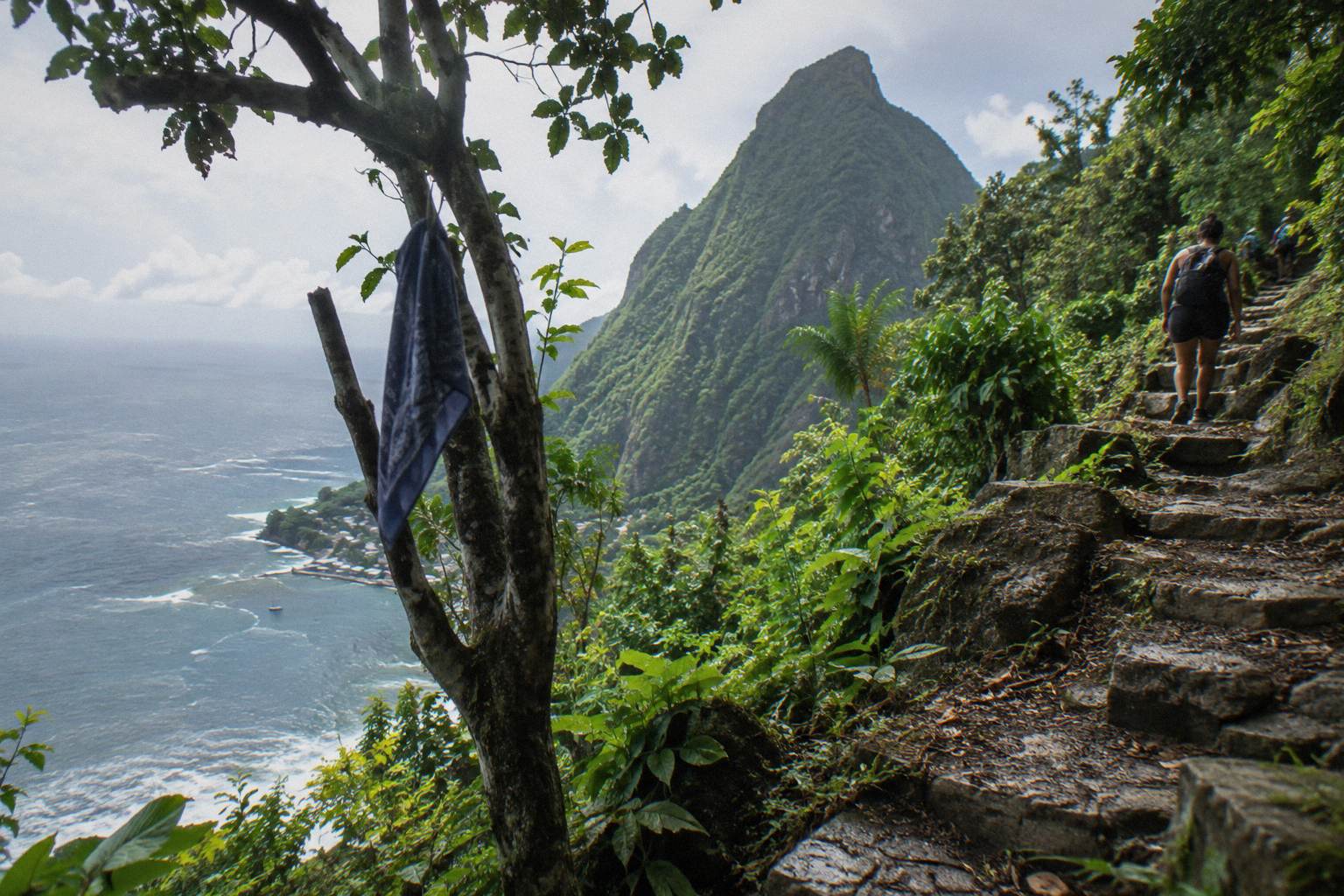
Hydration planning follows from the clock. Tours that list water in their inclusions are doing part of this work for you: the Dannyboy Guided Hike, 5 Hours lists water for the hike plus a cold Piton beer after, the St. Lu Taxi Private 4-Hour Hike from St. Lu Taxi And Tours, from US$118.75 per person, includes bottled water, and the Private Hike, 4 To 5 Hours from Cool Vibes Taxi and Tours lists 1.5 litres per person. Check your tour's inclusions before you buy water at the hotel shop, but carry more than you think you need on any late start. The packing guide on what to wear and bring for the climb goes deeper on this.
How Rain And Wet Ground Affect Your Timing
Rain can fall in any month in St Lucia, and its effect on Gros Piton is about traction, not temperature. The steeper upper stages become genuinely slippery when wet, whenever the rain fell, so a dawn start after overnight showers can be a bigger footing problem than a dry afternoon. No official weather closure rules exist.
The decision to climb in or after rain sits with your guide on the day, and listening to that call is part of the safety contract.
This is where honesty matters more than sales copy. Pages that promise "dry season summit views" are selling a fiction. The verified position is that no rainfall statistics for the trail are published by any official source, and cloud can sit on the ridge regardless of month. What you can do is pick footwear accordingly, accept that a wet start may mean a slower, more careful pace, and choose a tour whose length gives you slack. The World Heritage Hike, 8 Hours from Lush Excursions, from US$195 per person, carries a whole-tour length of 8 hours, which means a cautious pace on greasy rock does not pressure the driver's schedule.
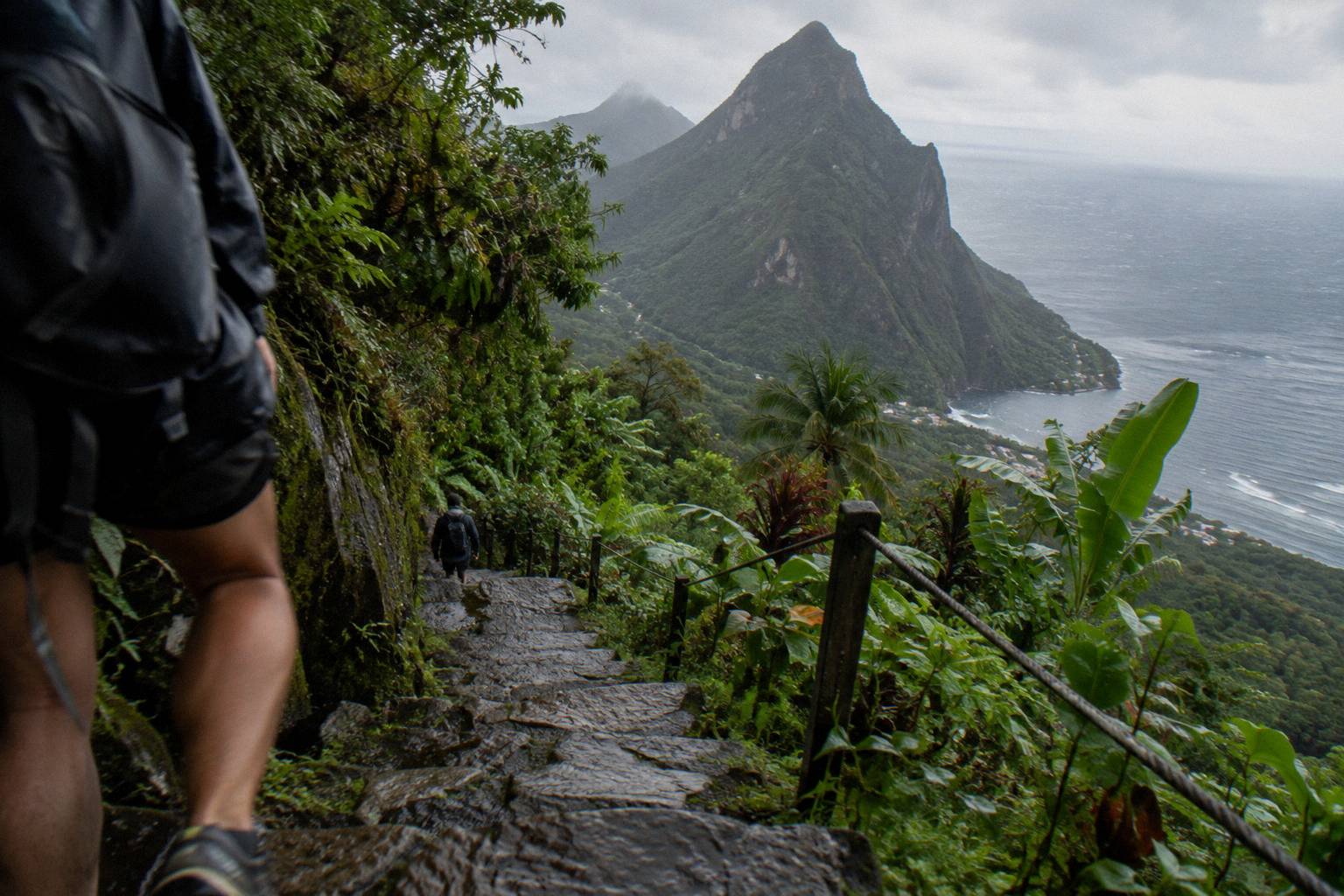
Wet ground is also the strongest argument for the certified guide requirement, which the Pitons Management Area, a UNESCO site inscribed in 2004 under criteria (vii) and (viii), makes concrete by routing every climb through Fond Gens Libres where the USD 50 adult fee and guide arrangement are handled. Locals know which sections hold water, which rocks are reliably grippy and which turns are easy to miss in cloud. The guide to what your Gros Piton guide actually does unpacks the role.
| Condition | Effect on the trail | Sensible response |
|---|---|---|
| Overnight rain, dry morning | Upper stages stay slick for hours | Grip-focused footwear, slower pace, guide's judgment |
| Showers during the climb | Rock becomes slippery immediately | Pause in shade, let the guide set timing |
| Dry spell, clear morning | Typical footing for the season | Use the good window, start early anyway |
| Summit cloud | Route-finding gets harder, views limited | Stay with the guide, no summit-view promises |
Choosing Between A Guided Group And A Private Tour For Timing
If controlling your start hour is your priority, a private climb gives you the most say, at a price premium. If getting a sensible early start without negotiating anything is the priority, a guided group departure does it for you and usually costs less. The price spread across the tours covered here runs from US$90 per person for the Dannyboy Guided Hike, 5 Hours to US$300 per person for the Both Pitons, 10 Hours double climb.
The format choice is really a control-versus-simplicity choice. Private climbs, like the Travelers Env Private Hike from Travelers Env, from US$120 per person with a 4 hour whole-tour length, let you set the day around your own pace. Guided groups, like the Tour For The Day Guided Hike from Tour For The Day, from US$139 per person, hand the schedule to an operator who runs it daily. Neither is better in the abstract; the question is which failure mode worries you more, missing an early start you never asked for, or paying for flexibility you will not use.
Price comparisons need the fee caveat repeated once: the USD 50 per adult trail fee covers entry and the certified guide, paid at Fond Gens Libres, and tours differ in whether their listed price bundles fees. Some, like the Private Hike, 5 To 6 Hours from IslandTime SLU, from US$150 per person, list all fees and taxes in their inclusions. Others leave the arrangement to the day. Read the inclusions list on the booking page before you treat two headline prices as comparable, and see the full Gros Piton cost and entrance fee guide for the arithmetic.
| Tour | Operator | Format | Whole-tour length | Price |
|---|---|---|---|---|
| Dannyboy Guided Hike, 5 Hours | St. Lucia Best Experience Tours & Airport Transfers | Guided group | 5 hours | From US$90 |
| Travelers Env Private Hike | Travelers Env | Private | 4 hours | From US$120 |
| St. Lu Taxi Private 4-Hour Hike | St. Lu Taxi And Tours | Private | 4 hours | From US$118.75 |
| Private Hike, 5 To 6 Hours | IslandTime SLU | Private | 5 to 6 hours | From US$150 |
| World Heritage Hike, 8 Hours | Lush Excursions | Guided group | 8 hours | From US$195 |
| Both Pitons, 10 Hours | Lush Excursions | Not stated | 10 hours | From US$300 |
Note that booked durations are whole-tour lengths including transport, not hiking time; the authority band for the climb itself is 4 to 6 hours, and Gros Piton Hike treats that distinction as the single most misread number in trip planning. A "4 hour" tour is not promising a 4 hour summit push, it is promising a 4 hour door-to-door experience, which on a fast private run with a nearby hotel is entirely realistic.
Mistakes That Trip People Up When Timing Gros Piton
The five recurring timing errors: booking the cheapest slot without checking its departure hour, trusting invented monthly rainfall charts, promising a summit view as the payoff, squeezing the climb into the last day of a trip with no buffer, and assuming the booked duration equals hiking time. Each one is avoidable at the booking stage, before the trail has any say in the matter.
The first mistake is the most expensive in comfort terms. A late-departure tour in peak season can put you on the upper ridge at the hottest point of the day, turning a moderate-to-challenging climb into something harder than it needed to be. When comparing tours, ask which departure slots the operator runs and where your hotel sits relative to Soufriere, without inventing a drive time, because none is verified. The second mistake, trusting rainfall charts, was covered above but bears repeating: no official source publishes them for this trail, and this page will not manufacture them.
The buffer-day mistake deserves its own paragraph. Weather on a tropical ridge is a coin you can only partly weight. If the climb is a headline goal of the trip, schedule it on the first or second full day, not the last, so a washed-out morning has a fallback slot later in the week. Cruise visitors cannot do this, which is exactly why the cruise-port guide exists and why cruise travellers should weight the operator's punctuality record heavily. The FRAM Soufriere Hike, 6 Hours from FRAM Tours & Taxi Services lists hotel, port, Airbnb and villa pickup and a driver who waits for the full hike duration, the kind of clause that matters on a tight day.
The duration mistake is quieter but shapes expectations. Travellers book a 4 hour tour, hear "4 hour hike", and budget water and effort for a 4 hour climb. The actual climb typically runs 4 to 6 hours regardless of the tour wrapper around it. The how long the climb takes guide separates these numbers properly, and the Gros Piton difficulty guide explains what the moderate-to-challenging rating means in practice.
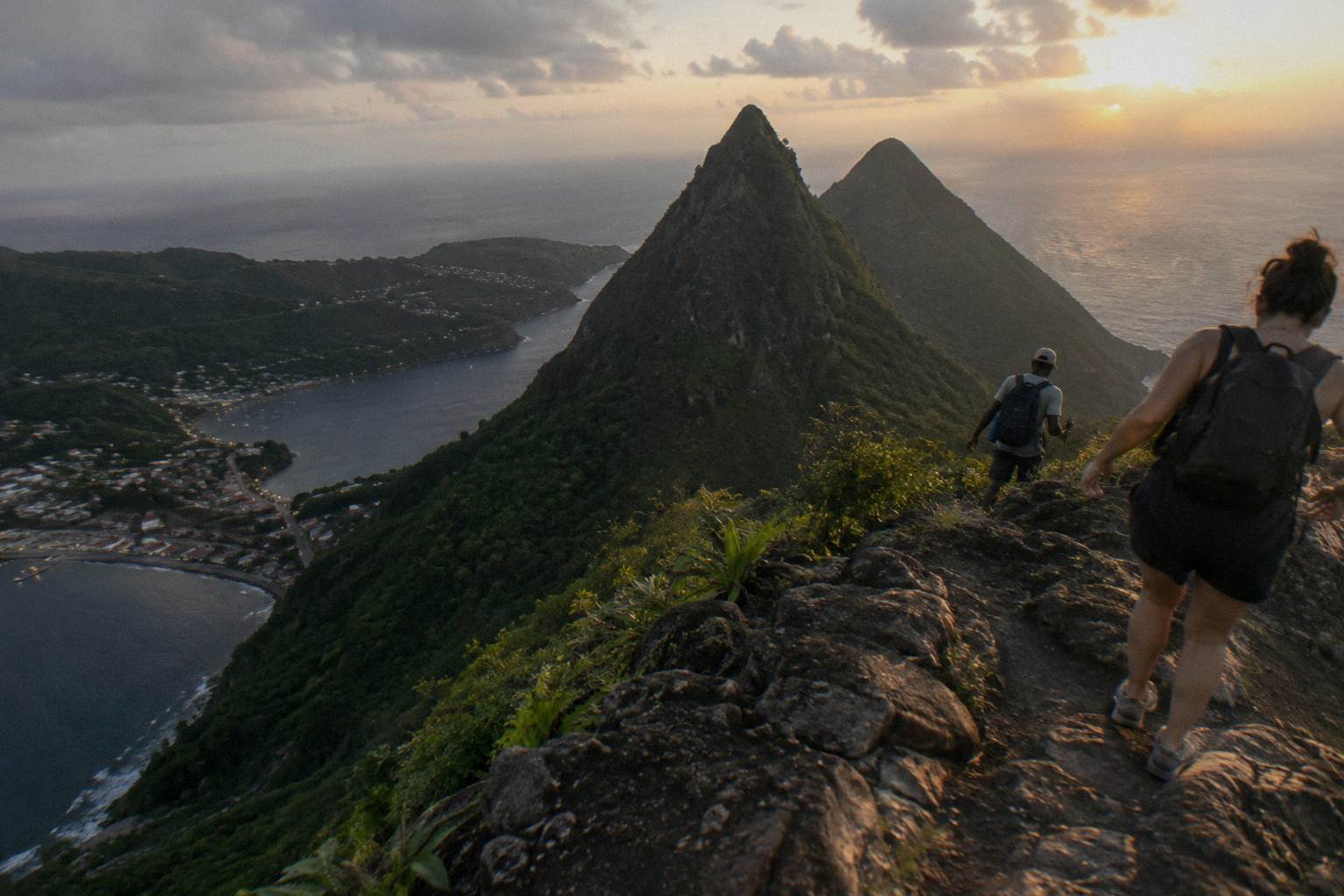
If a late or tight slot is all that remains and heat is the concern, one structural note: the descent is where tired legs meet slippery stone, so leave more in reserve than the climb up seemed to demand. Guides see it constantly, a confident ascent followed by a slow, careful descent. Budget your energy for the whole round trip, not the summit.
Common Questions About Timing The Gros Piton Climb
When Is The Best Time To Hike Gros Piton?
There is no verified "best month": no official source publishes weather closure rules or monthly figures for the trail. Structurally, earlier starts beat later ones in every season because they move the steepest stages ahead of the day's peak heat, and a buffer day in your itinerary protects against a wet or clouded morning.
What Time Of Day Should You Start The Gros Piton Climb?
As early as your tour's departure slot allows. The climb typically takes 4 to 6 hours, so an early start finishes the exposed upper section before the strongest heat. No official last start time is published; the constraint is your operator's schedule.
Does Gros Piton Have A Rainy Season That Makes Climbing Unsafe?
Rain can fall in any month and makes the steeper stages slippery whenever it falls. There are no official weather closure rules, and the go-or-wait call sits with your certified guide on the day. Footwear with grip matters in every season.
Is It Too Hot To Climb Gros Piton At Midday?
St Lucia is tropical and heat builds through late morning, peaking early to mid afternoon, exactly when a late-starting climber is on the upper section. It is not a ban, but it is the least comfortable window on the trail, and pacing, shade stops and hydration become more important.
Do I Need A Guide Regardless Of When I Start?
Yes. A certified local guide is required on the Gros Piton climb. The USD 50 per adult trail fee covers entry and the certified guide and is paid at the Fond Gens Libres interpretive centre near Soufriere.
Which Tours Give Me The Most Control Over My Start Time?
Private climbs, such as the Private Hike, 6 To 7 Hours from A1 Transfer & Tours SLU or the Travelers Env Private Hike, let you arrange the departure with your driver. Guided group tours like the Dannyboy Guided Hike, 5 Hours set the hour for you, usually early and sensibly.