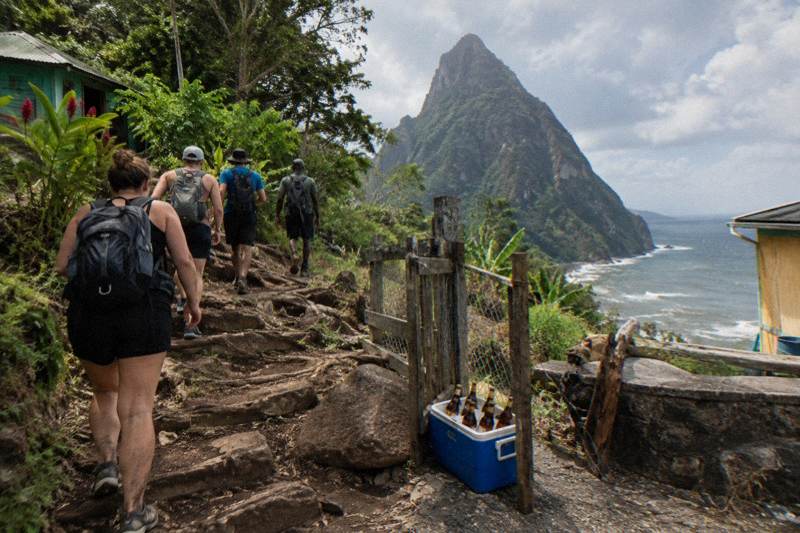
Gros Piton Climb Difficulty: How Hard The Climb Is
Gros Piton is a moderate to challenging climb of 798 m that takes most people 4 to 6 hours on the trail. Here is what that actually feels like, stage by stage, and how to judge whether you are ready for it.
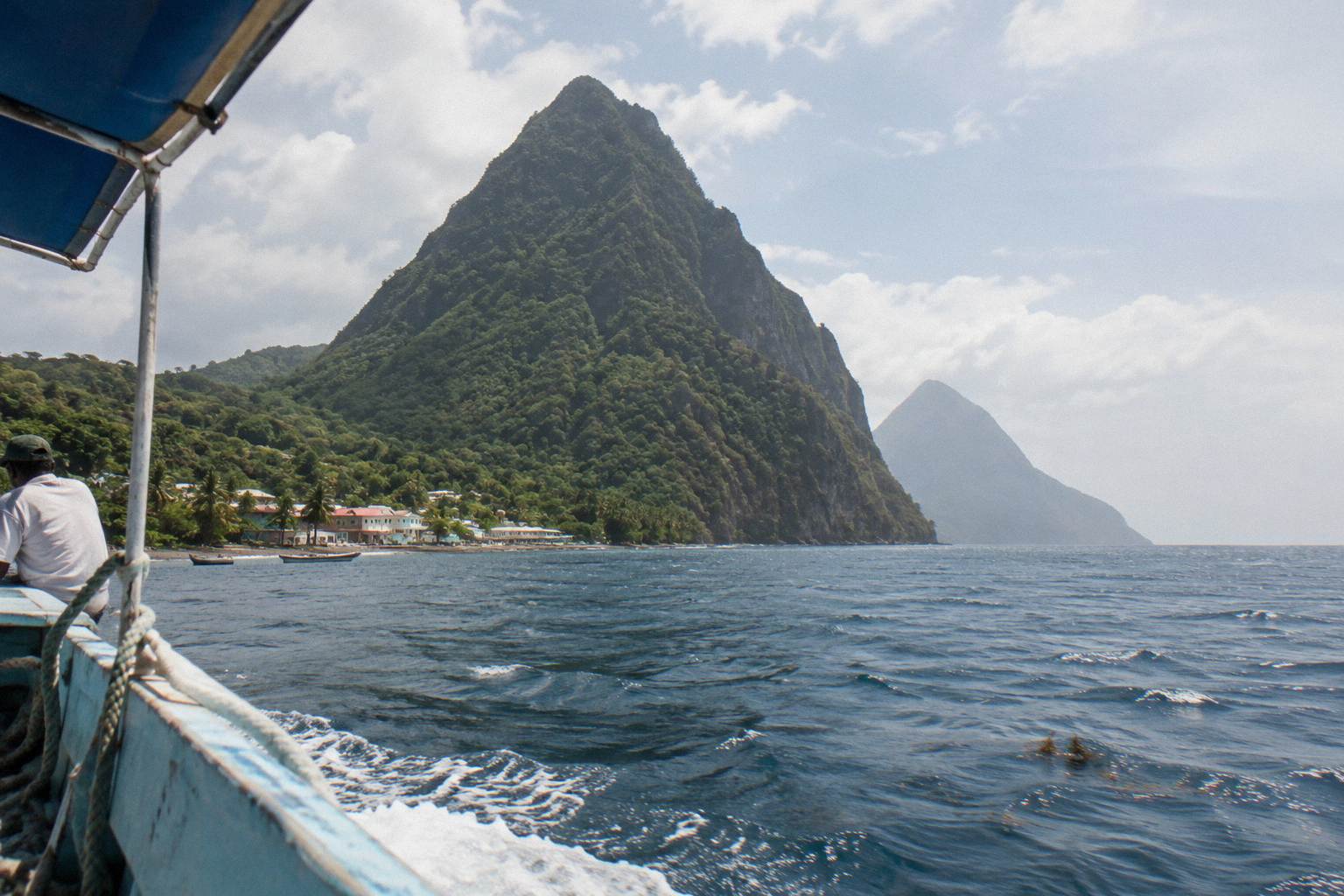
Short answer
Gros Piton is a moderate to challenging climb: 798 m high, 4 km round trip, typically 4 to 6 hours of hiking with a certified local guide required. Fit first-timers complete it. The steep upper section and tropical heat are what make it hard, not technical climbing skill.
Gros Piton stands 798 m, or 2,619 ft, above the southwest coast of St Lucia, and the round trip on its trail is 4 km. The Saint Lucia Tourism Authority classifies the climb as moderate to challenging, typically taking 4 to 6 hours, and a certified local guide is required. Those four numbers answer most of the question. The rest of the answer is about terrain, heat, and honest self-assessment, which is what this guide works through.
One framing point before the detail. "Moderate to challenging" is not a marketing hedge, it is a real band, and where you land inside it depends on things you control: your start time, your pacing, your footwear and your water. Two walkers of identical fitness can have completely different days on the same trail, one finishing comfortably inside four hours and the other grinding through six. The difference is almost never the mountain. It is preparation.
This page is part of the wider Pitons hiking guide; the difficulty angle is covered in depth below.
| Quick fact | Figure |
|---|---|
| Summit height | 798 m (2,619 ft) |
| Round-trip distance | 4 km |
| Typical time on trail | 4 to 6 hours |
| Official difficulty grade | Moderate to challenging |
| Guide requirement | Certified local guide required |
| Trail fee | US$50 per adult (about XCD 125), covers entry and guide |
| Trailhead | Fond Gens Libres interpretive centre near Soufriere |
How Difficult Is The Gros Piton Climb Really?
The honest grade is moderate to challenging: a steep, sustained uphill walk on rock and root, 4 km round trip, taking most walkers 4 to 6 hours with a certified guide. The tourism authority describes steep, rocky sections that need a certified guide; unlike Petit Piton, no fixed ropes are listed for the climb. What beats people is the gradient in the upper third combined with Caribbean heat and humidity, not technical difficulty.
The Saint Lucia Tourism Authority's own Piton climbs page uses exactly that wording, moderate to challenging, and pairs it with the 4 to 6 hour window. That window matters more than the raw distance. Four kilometres sounds like an easy morning stroll in temperate country; on a slope that gains most of a mountain's height over 2 km of trail, in air that rarely drops below steamy, it is a different proposition altogether.
Think of it as three categories of effort stacked together. There is cardiovascular load: hours of continuous climbing with little flat relief. There is footing: the upper section crosses bare rock slabs and boulder steps that are slick when wet, which in the rainforest interior is often. And there is heat: shade is generous on the lower half, but the mid-section clears into open sun where the mountain cooks.
Humidity deserves its own sentence, because visitors from temperate climates consistently underestimate it. The trail sits inside a rainforest management area, and even in the dry season the air under the canopy holds moisture. Sweat does not evaporate efficiently, so the body cools poorly and perceived effort climbs. This is why the same slope that feels like a solid workout in Alpine air can feel punishing at sea level in the tropics, and why hydration strategy matters as much as leg strength.
Who finishes it? A rough but fair profile: anyone who walks or runs regularly, takes the stairs rather than the lift, and can sustain an hour of hard effort with rest breaks, will reach the summit section conditions allowing. Complete sedentary travellers sometimes make it, slowly, with a patient guide. What turns a hard-but-fine day into a miserable one is usually starting too late, carrying too little water, or assuming the 4 km figure means 4 km of effort.
It is also worth separating difficulty from danger, because the two get conflated. A certified guide is required, and guides know the ground intimately. Difficulty on Gros Piton means sustained physical discomfort and fatigue. Managing that is a training and pacing problem, and those are solvable in the weeks before you fly.
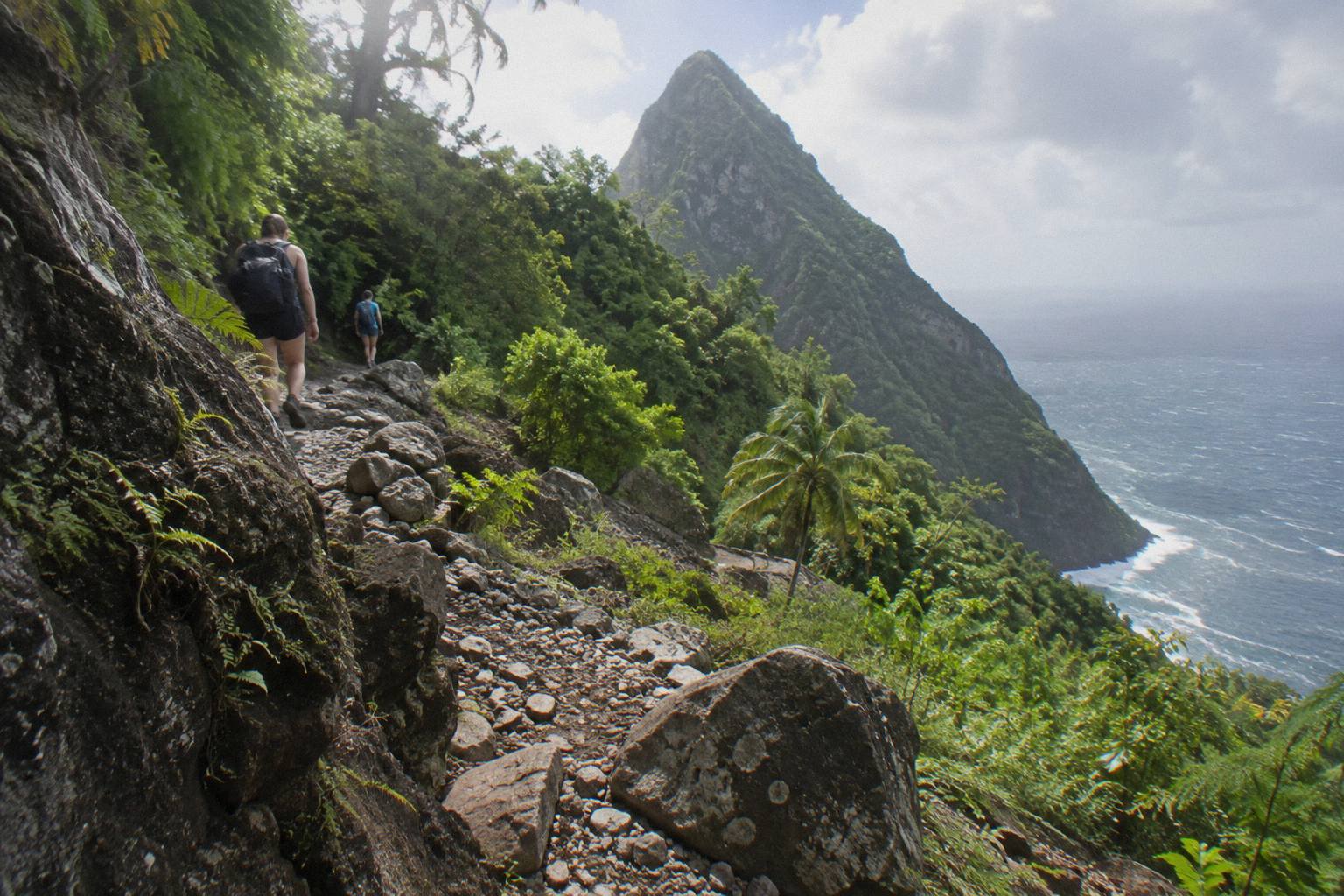
For a fuller stage-by-stage description, see the Gros Piton trail route and stages guide.
Which Parts Of The Trail Are The Hardest?
The hardest ground is the upper third, above the mid-trail rest point, where the forest thins and the route crosses steep bare rock steps and boulder fields. The lower third is shaded, graded and steady. Most of the total effort, and most of the elapsed time, is spent on the steep middle and upper sections rather than at the start.
The walk begins at Fond Gens Libres, the interpretive centre near Soufriere inside the Pitons Management Area, where the US$50 adult fee is paid and the certified guide is assigned. From there the first section climbs gently through cultivation and shade. It is the part everyone enjoys and almost no one remembers.
The middle section is where the trail earns its grade. Steps cut into earth and stone steepen, roots cross the path, and the pace drops. This is where guides set the rhythm, and where walkers who charged off at the trailhead start paying for it. Then comes the section people describe afterwards with their hands: steep rock slabs, big boulder steps, and short scrambly moves that use hands for balance even though no rope or harness is ever needed.
A guide changes the difficulty arithmetic in quiet ways. Local guides set a sustainable pace, know which lines across wet rock are safest, and point out handholds that are invisible to a first-time visitor. That is one practical argument for the guided format over self-arranged transport: the Dannyboy Guided Hike, 5 Hours by St. Lucia Best Experience Tours & Airport Transfers, from US$90 per person, includes hotel pickup, water for the climb, and a cold Piton beer afterwards, plus help coordinating the forestry guide. The same operator's cruise-port pickup makes it workable from a ship day. It is the most reviewed trip of the tours listed here, 4.7 across 230 reviews.
The final stretch deserves honesty too. The uppermost section narrows and steepens before it releases, and the last twenty minutes are where tired legs and slick rock meet. Guides slow groups down here deliberately. There is no shame in a long rest before the top; the summit does not move, and the descent, which is where most slips happen, deserves fresher legs than a rushed arrival leaves you.
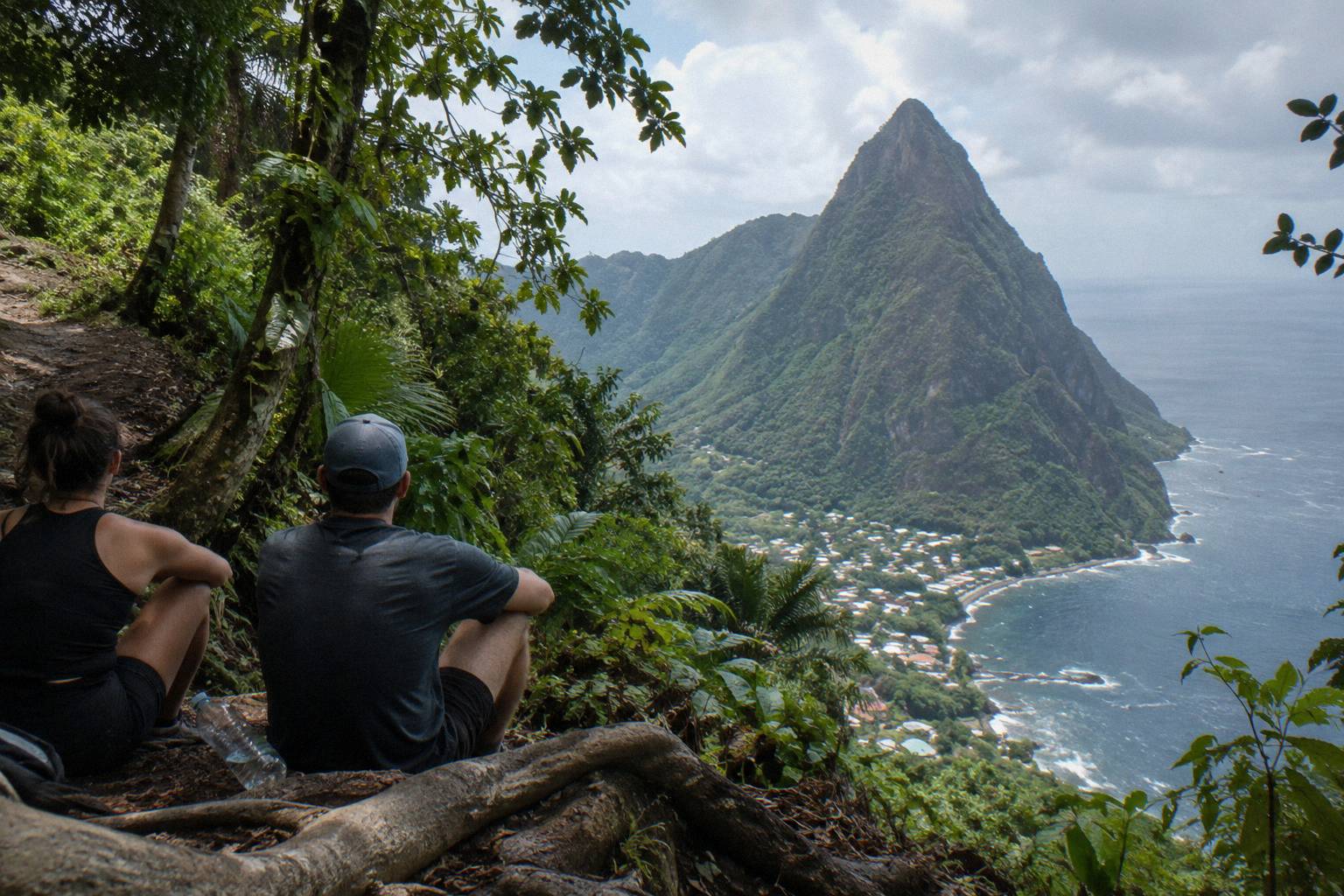
Do You Need To Be Fit To Climb Gros Piton?
You need genuine baseline fitness, not athleticism. If you can walk uphill for two hours with breaks, climb stairs without distress, and recover between efforts, you are in range. The climb rewards steady pacing and hydration far more than raw strength, and no climbing skill or upper-body power is required at any point on the route.
Preparation advice is uncontroversial: build up over four to six weeks with hill walks, stair sessions or incline treadmill work, aim for two-hour continuous efforts close to your travel date, and practise drinking while moving. The fitness and preparation guide expands on this in detail.
A workable training template, for readers who want one: start with three sessions a week of forty-five minutes on any incline, add a longer weekend hill or stair session of ninety minutes, and in the final fortnight complete at least one two-hour uphill walk carrying the daypack you will take on the trail. Add step-downs and slow squats for the descent, because eccentric leg strength, not just climbing power, is what saves knees on the way down. Nothing here requires a gym.
Age is not a barrier in itself; no official age or fitness limit is published for the trail. The limiting factors are knees on the descent, which takes real toll on steep rock, and heat tolerance. Walkers with cardiac or respiratory conditions, or anyone who struggles on stairs at home, should treat the full climb as a serious proposition and talk it through with a doctor first.
Booking format can offset fitness anxiety. A private trip lets you set a slower pace without holding up a group: the Private Hike, 6 To 7 Hours by A1 Transfer & Tours SLU, from US$130, is rated 4.7 across 18 reviews and includes private transport, with the operator's inclusions noting a US$50 per-person hike and guide fee within the arrangement. By contrast the Private Hike, 4 To 5 Hours by Cool Vibes Taxi and Tours, from US$140, rated 3.9 across 102 reviews, packs the same climb into a shorter overall window, which suits confident walkers.
If even that sounds like more than wanted, the honest alternative is not to shrink Gros Piton but to change mountain: the Tet Paul Nature Trail, covered in the Tet Paul nature trail guide, delivers Piton panoramas for a fraction of the effort.
How Does Gros Piton Compare With Petit Piton And Other St Lucia Hikes?
Gros Piton is the taller of the two Pitons at 798 m against 743 m, but it is the easier climb: a guided walk graded moderate to challenging. Petit Piton is a 3.2 km round-trip scramble with fixed ropes, rated very challenging, taking 3 to 5 hours with a professional guide mandatory. Gros Piton is the right first Piton for almost everyone.
The comparison matters because the two spires sit side by side in every photograph and look interchangeable. They are not. Gros Piton has a constructed trail, benches, and a guiding system run from Fond Gens Libres. Petit Piton is a steeper, looser, roped route where a professional guide is mandatory and the tourism authority's own grade is very challenging. Petit Piton remains a permitted climb, listed openly by the authority; it is simply a harder one, as the Petit Piton versus Gros Piton comparison sets out.
The height difference tells only part of the story, and arguably the least important part. Gros Piton stands at 798 m over a 4 km round trip. Petit Piton compresses nearly as much ascent into 3.2 km of scramble with fixed ropes, which concentrates the effort into brutal, technical sections. In plain terms: Gros Piton tires you out, Petit Piton tests you.
| Hike | Height | Round trip | Typical time | Grade | Guide rule |
|---|---|---|---|---|---|
| Gros Piton | 798 m (2,619 ft) | 4 km | 4 to 6 hours | Moderate to challenging | Certified local guide required |
| Petit Piton | 743 m (2,438 ft) | 3.2 km | 3 to 5 hours | Very challenging | Professional guide mandatory |
| Tet Paul Nature Trail | Low-level ridge walk | Not published | Not published | Not published | Not published |
For climbers who want both spires in one committed day, Lush Excursions runs Both Pitons, 10 Hours, from US$300 per person, which is the most expensive priced Gros Piton climb on the tours listed here; the same operator's World Heritage Hike, 8 Hours, covers the single Gros Piton climb from US$195 with lunch and entrance fee included. Both are booked as whole-tour lengths, not hiking time, and a both-Pitons day is a proposition for experienced, heat-acclimatised walkers only.
The setting itself is part of the draw. The Pitons Management Area was inscribed on the UNESCO World Heritage list in 2004 under criteria (vii) and (viii), recognising both the scenic drama and the volcanic science of the twin spires; the UNESCO listing covers the whole managed area around the trailhead.
What Trips People Up On The Day?
The five recurring mistakes are starting too late in the day, carrying too little water, wearing slippery footwear, underestimating the descent, and ignoring the guide's pacing. Each one converts a manageable moderate-to-challenging climb into an abandoned or painful one, and none of them has anything to do with fitness levels.
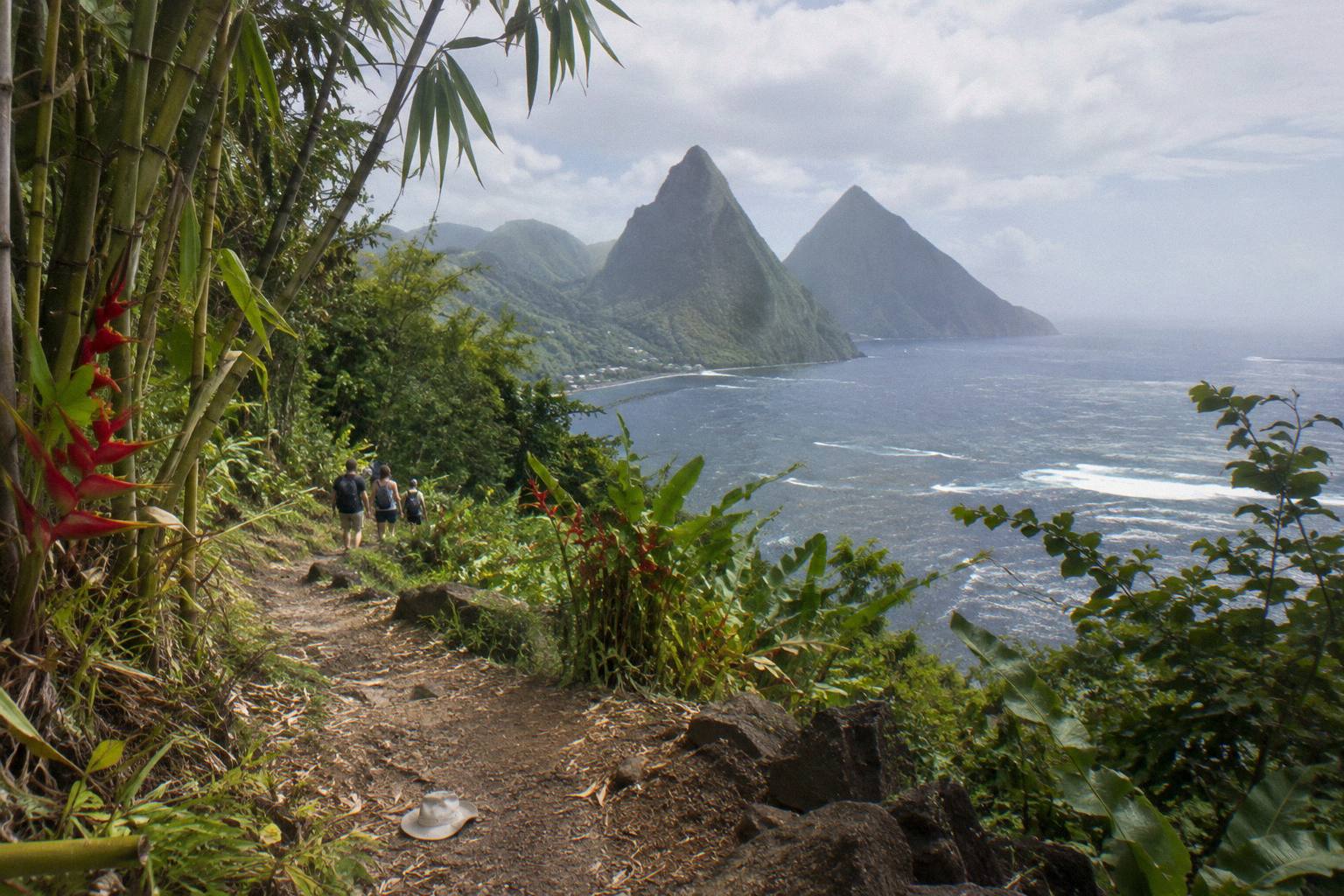
Late starts are the big one. The trail is hottest and most exposed in the middle of the day, and the 4 to 6 hour window assumes steady movement, not a midday launch. Water is the second: tropical sweating empties a litre faster than most visitors expect, and only some tours include it, so check the inclusions before assuming. Footwear is the third; worn-out trainers on wet rock slab are the most common cause of the slow, careful, hour-long descents guides describe.
The descent deserves its own warning. Gravity does most of the work and none of the cushioning: knees and quads take a pounding on the rock steps, and more people limp off Gros Piton from the way down than the way up. Poles help, and Treasure tours Ltd. St. Lucia's All Inclusive Hike, 4 Hours, from US$150, lists walking sticks and backpacks among its inclusions for exactly this reason. Budget your energy accordingly: the summit is only the halfway point of the effort, and walkers who empty the tank on the climb pay for it within minutes of turning around.
A fourth mistake is treating the guide as a porter or an optional extra. The certified guide is required, included in the US$50 Fond Gens Libres fee, and doubles as the person who reads the weather, the rock and your face. The Gros Piton safety guide covers this in full. A fifth is overpacking: everything you bring climbs the mountain with you, and heavy packs are the quiet cause of many a turned-back group.
Which Tour Format Suits Your Difficulty Tolerance?
Guided group trips suit first-timers who want pacing, company and a fixed price from around US$90; private trips suit slower or faster walkers who want the mountain to themselves, from US$112 upward. Combo trips add attractions like Sulphur Springs or a boat approach, which lengthens the day but spreads the effort.
Format choice is quietly a difficulty choice. A guided group sets a pace aimed at the middle of the pack, which most people find steadying on the steep sections. A private trip means no waiting and no being waited for. A combo means your legs do the same climb inside a longer, fuller day, so it suits confident walkers rather than nervous ones.
| Trip (operator) | Format | Whole-tour length | Price | Rating | Cancellation |
|---|---|---|---|---|---|
| Dannyboy Guided Hike, 5 Hours (St. Lucia Best Experience Tours & Airport Transfers) | Guided group | 5 hours | from US$90 | 4.7, 230 reviews | Free, 24 hours |
| Hotel Or Cruise Pickup Hike (St Lu Taxi and Tours) | Guided group | 4 to 6 hours | from US$130 | No reviews yet | Free, 24 hours |
| Private Hike, 4 To 5 Hours (Cool Vibes Taxi and Tours) | Private | 4 to 5 hours | from US$140 | 3.9, 102 reviews | Free, 24 hours |
| Private Hike, 6 To 7 Hours (A1 Transfer & Tours SLU) | Private | 6 to 7 hours | from US$130 | 4.7, 18 reviews | Free, 24 hours |
| Tour For The Day, 6h 45m (Tour For The Day) | Private | 6 hours 45 minutes | from US$112 | 1 review | Free, 24 hours |
| FRAM Soufriere Hike, 6 Hours (FRAM Tours & Taxi Services) | Private | 6 hours | from US$200 | 7 reviews | Free, 24 hours |
| Travelers Env Private Hike (Travelers Env) | Private | 4 hours | from US$120 | 1 review | Free, 24 hours |
Two rows deserve a comment. Tour For The Day's 6h 45m private trip, from US$112, is one of the lower private prices on record here and includes bottled water, soda or local beer, and a driver who stays with the vehicle. FRAM Tours' 6-hour private version, from US$200, includes the Gros Piton entrance fee and a driver who waits for the duration of the hike regardless of time. Every trip in the table carries free cancellation up to 24 hours before.
Note what the table does not say: none of these durations is hiking time. The authority's 4 to 6 hour figure is time on the trail; the booked lengths include transport, pickups and, in some cases, stops. A 4-hour booked private tour is a tight container around a 4 to 6 hour trail experience, so read the whole-tour length as a schedule commitment, not a promise of an easier mountain.
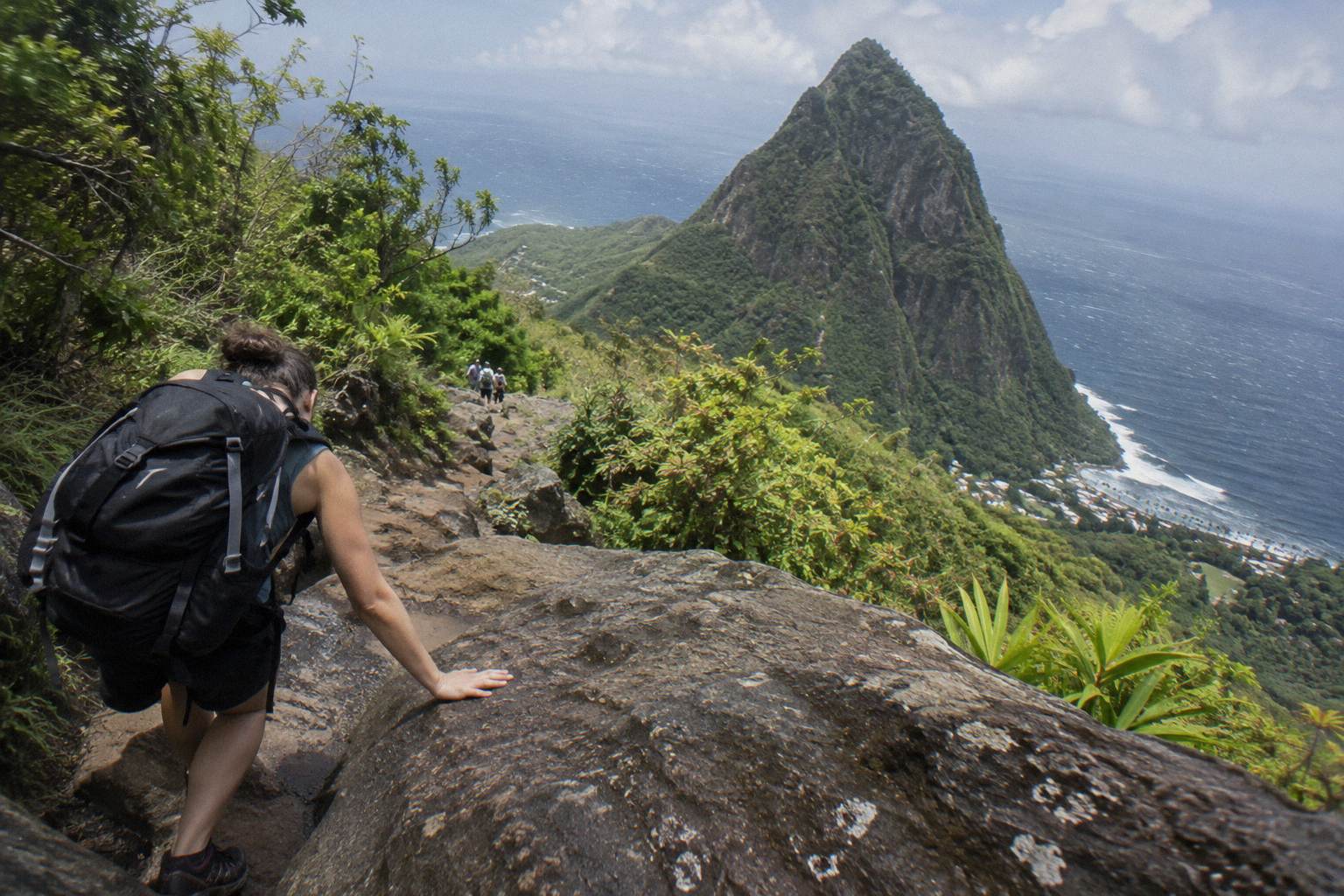
What Should You Wear And Carry For A Hard Climb?
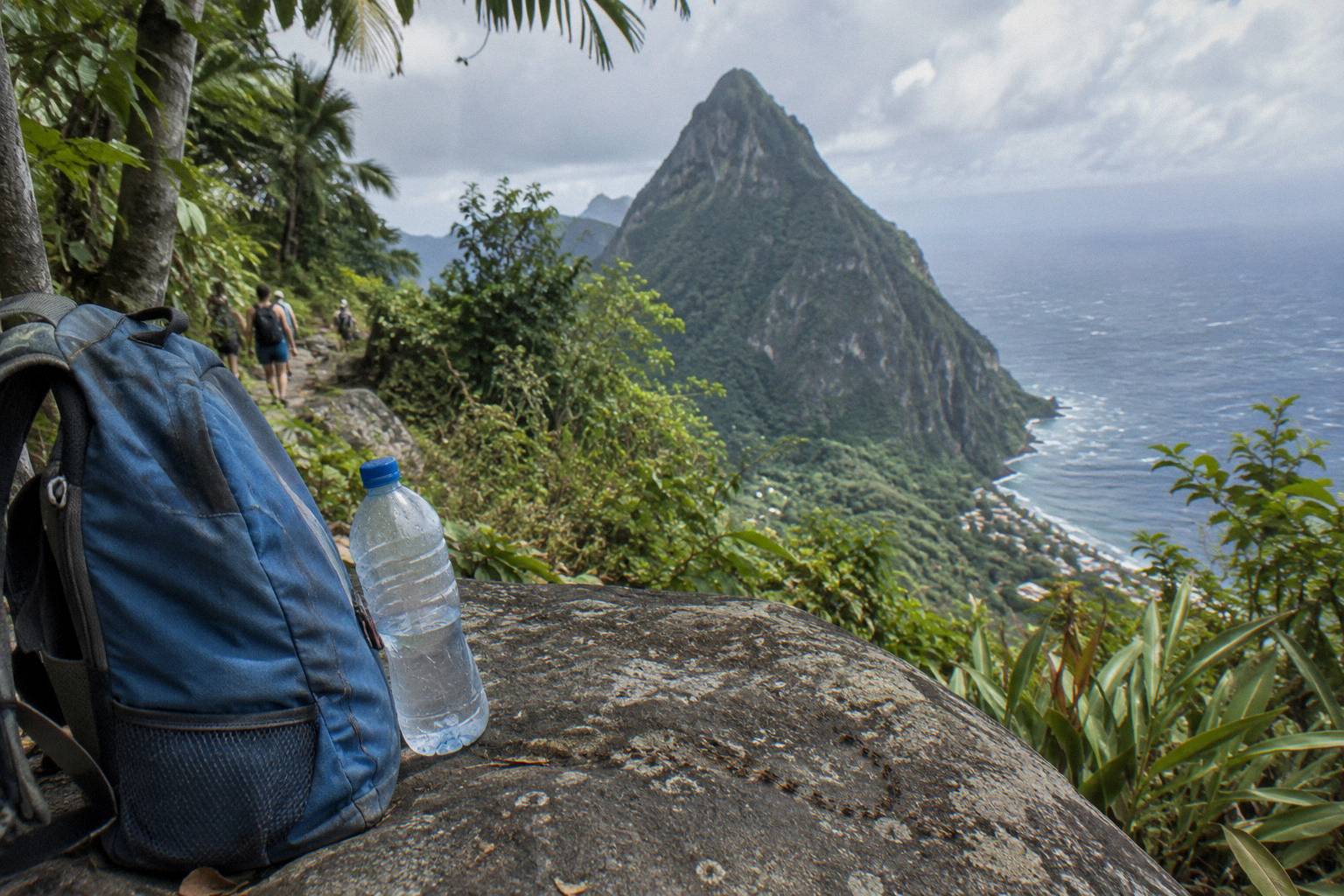
Wear grippy broken-in shoes with real tread, light clothing that covers shoulders from sun and rock, and carry at least 2 litres of water per person, the tourism authority's own minimum, plus a cap and light rain layer. The full kit reasoning, including what to skip, is in the dedicated what to wear and bring guide, but the difficulty-relevant point is simple: footwear failures and dehydration cause more abandoned climbs than legs do.
Footwear is worth the money. The upper rock sections demand tread, and the forest sections demand something that tolerates mud. A small daypack beats anything in hand, because the scramble sections want both hands free. Hire options exist: as noted above, Treasure tours' All Inclusive Hike lists walking sticks and bag packs for rent among its inclusions.
Timing interacts with kit. The lower forest is cool and damp; the open middle section is hot and bright. Layers that work in both, plus enough water to cover the 4 to 6 hour window rather than a 2-hour one, close the gap between a challenging day and a dangerous one. Salt or electrolyte replacement is worth a thought too, since hours of tropical sweating strip more than fluid.
Who Should Not Attempt The Full Climb?
Anyone who cannot comfortably climb stairs for an hour, walkers with unstable knees or cardiac conditions they have not cleared with a doctor, and visitors with only a sliver of a day to spare should pick a different experience. Gros Piton is a mountain, not an attraction, and the difficulty grade of moderate to challenging is earned honestly on the upper rock.
This is where this site's gentler options earn their place. Fond Doux Eco Resort's Heritage Tour runs the Fond Doux View Trail, 1 Hour, from US$10, a private one-hour view trail that looks at Petit Piton without climbing anything. The nearby Tet Paul Nature Trail offers a similar easy Piton panorama. Neither is a summit, and neither pretends to be.
For cruise passengers with a tight window, the honest reading of the numbers matters: a 5-hour booked tour is the whole-tour length, transport included, while the authority's 4 to 6 hour figure is time on the trail itself. The cruise port day guide works through that arithmetic.
Finally, if the difficulty question is really a worth-it question, read is the Gros Piton hike worth it before committing; the answer from most finishers is an emphatic yes, delivered with sore legs. The site's home base, Gros Piton Hike, holds the full list of tours if you want to compare every option at once.
Common Questions About Gros Piton Climb Difficulty
How Hard Is The Gros Piton Climb?
It is graded moderate to challenging: 798 m of height on a 4 km round trip, typically taking 4 to 6 hours with a certified guide. It is a strenuous uphill walk rather than a technical climb, and no ropes or scrambling skills are needed.
Can A Beginner Climb Gros Piton?
Yes, if the beginner has baseline fitness: the ability to walk uphill for around two hours with breaks. Fit first-timers complete the climb regularly with a guide. Sedentary walkers should train for four to six weeks first or choose an easier trail such as Tet Paul.
How Long Does The Climb Take?
Typically 4 to 6 hours on the trail, per the Saint Lucia Tourism Authority. Booked tour durations of 4 to 10 hours are whole-tour lengths including transport, not hiking time.
Is Gros Piton Harder Than Petit Piton?
No. Gros Piton is taller, 798 m against 743 m, but Petit Piton is the harder climb: a 3.2 km round trip scramble with fixed ropes, rated very challenging, with a professional guide mandatory. Gros Piton is the recommended first Piton.
Do You Need A Guide For Gros Piton?
Yes, a certified local guide is required, and the US$50 per adult trail fee paid at Fond Gens Libres covers both entry and the guide. Many tours also coordinate or include this.
What Is The Hardest Part Of The Climb?
The upper third: steep bare rock slabs and large boulder steps above the mid-trail rest area, combined with heat and humidity. The descent is also punishing on the knees and catches many walkers out.