Gros Piton Climb Fitness And Preparation
Gros Piton is a moderate to challenging 798 m climb on a 4 km round trip that takes most people 4 to 6 hours. Here is how to judge your fitness for it, train for it, and pick a tour pace that matches your legs.
Short answer
Gros Piton is a 798 m (2,619 ft) climb over a 4 km round trip, rated moderate to challenging, typically taking 4 to 6 hours with a certified local guide required. The trail fee is USD 50 per adult, paid at Fond Gens Libres. Fit hikers manage it comfortably; regular walkers who train for a few weeks manage it too.
The Saint Lucia Tourism Authority describes the Gros Piton climb plainly: 798 metres (2,619 ft), a 4 km round trip, moderate to challenging, typically 4 to 6 hours, with a certified local guide required on the trail. That single sentence answers most of the fitness question, but not all of it. What separates the people who enjoy this climb from the people who merely survive it is rarely talent. It is preparation, pacing, and choosing a tour format that matches how your legs actually behave on a steep morning.
This page sits inside the full Gros Piton trail and stage guide, which breaks the route itself into its sections if you want the terrain detail first.
| Quick fact | Figure | Source basis |
|---|---|---|
| Summit height | 798 m (2,619 ft) | Tourism authority |
| Round trip distance | 4 km | Tourism authority |
| Typical hiking time | 4 to 6 hours | Tourism authority |
| Difficulty rating | Moderate to challenging | Tourism authority |
| Guide requirement | Certified local guide required | Tourism authority |
| Trail fee | USD 50 per adult (about XCD 125) | Soufriere Foundation |
| Trailhead | Fond Gens Libres interpretive centre, near Soufriere | Tourism authority |
| Protection | UNESCO Pitons Management Area, inscribed 2004 | UNESCO listing |
How Fit Do You Need To Be For The Gros Piton Climb?
The honest answer is that no official fitness standard or age limit exists for this trail, and anyone who quotes one to you is inventing it. The only verified descriptors are the authority's own: moderate to challenging, 4 to 6 hours, with a certified guide required. In practice that means being able to walk uphill continuously for an hour, recover in a few minutes, and repeat, in heat, on uneven rock, using your hands in places.
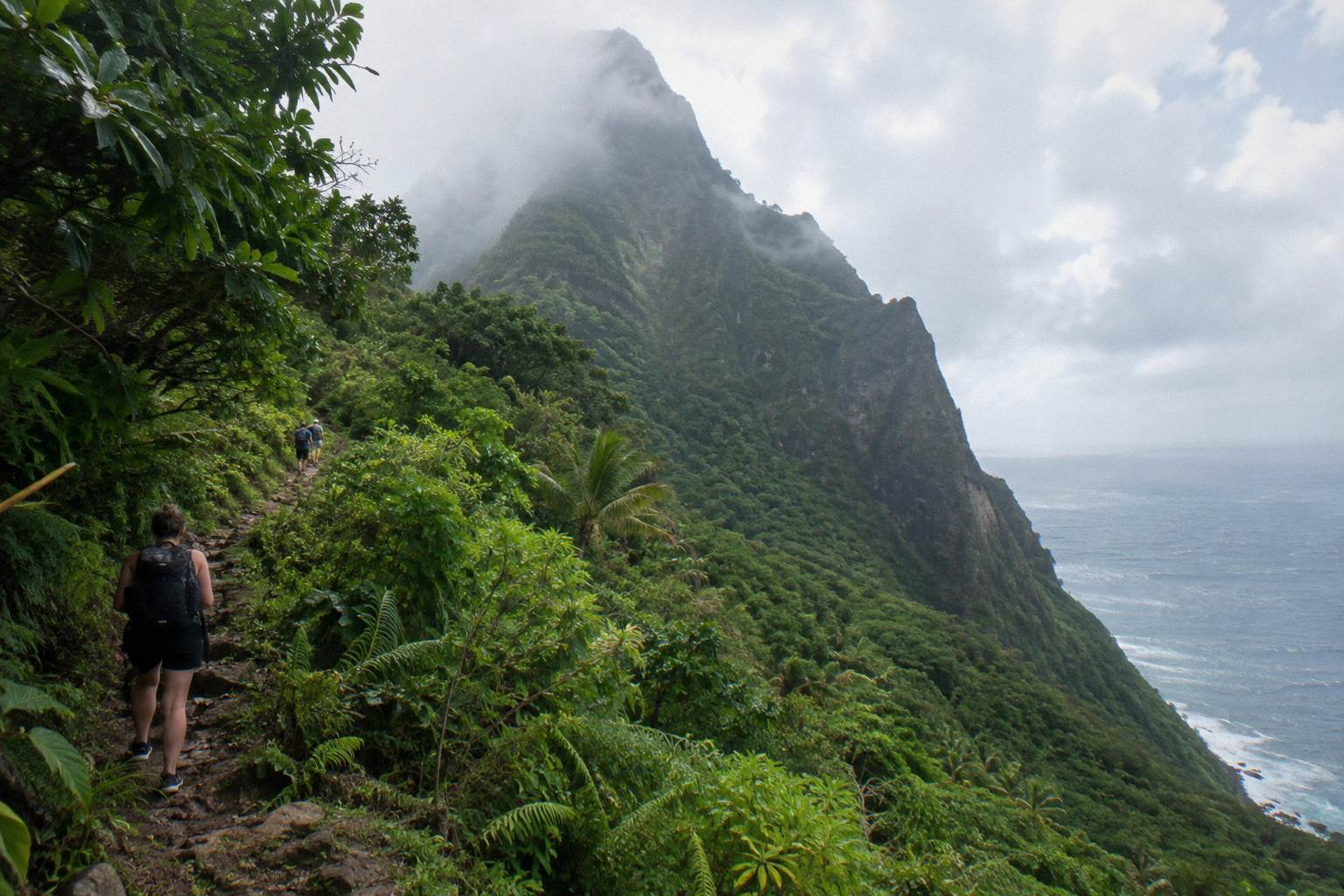
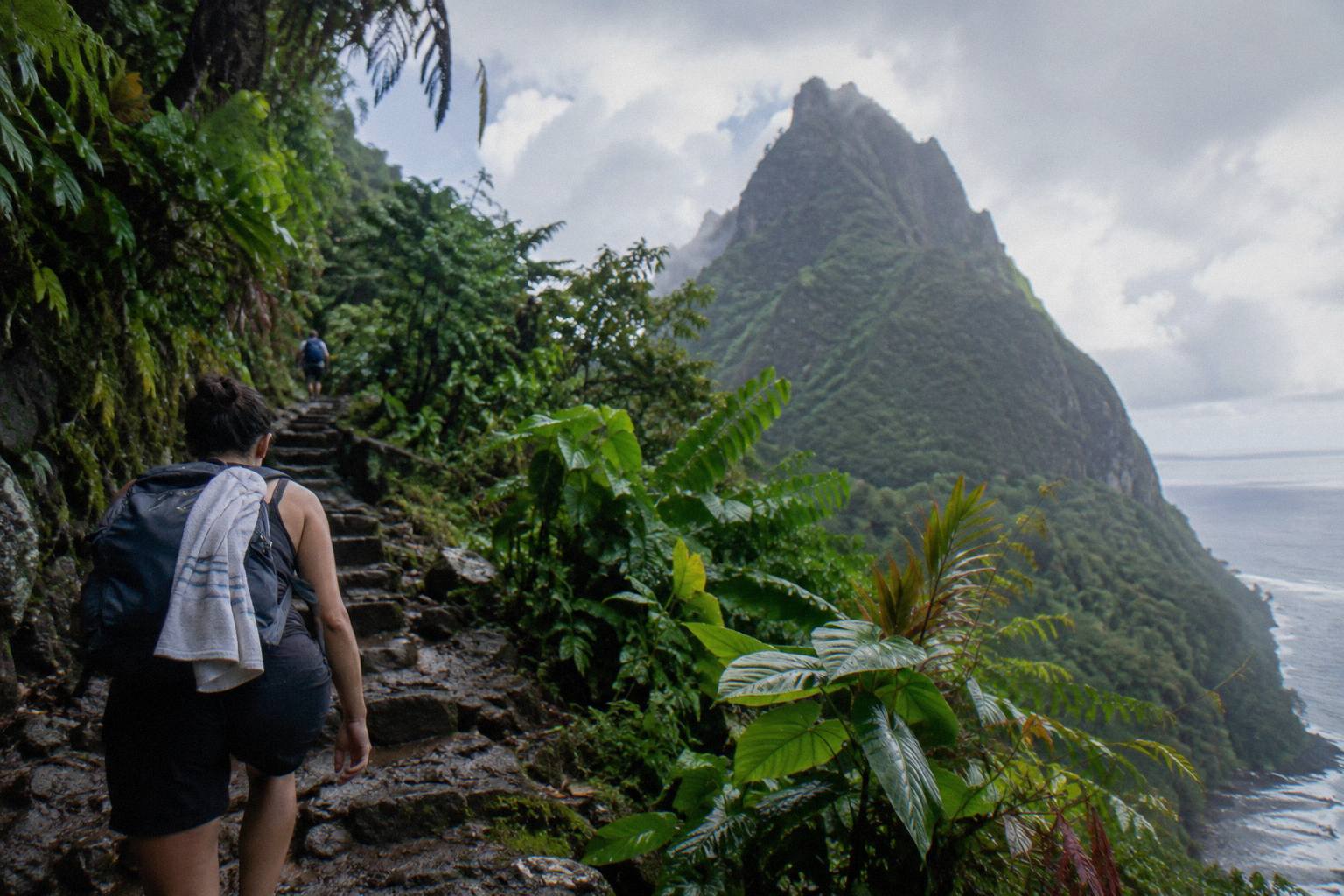
What the rating does not capture is the texture of the effort. The 4 km round trip is short on paper, and the vertical gain to 798 metres is squeezed into it. Sections near the upper half involve steep stone steps, exposed root, and short scrambles where you push off your palms. Descending is its own workout: quads and knees take a pounding for a long stretch of the return, and more people complain afterwards about the down than the up. If you can do a long hilly walk at home without stopping every few minutes, you are in the right neighbourhood for this climb.
Humidity is the hidden factor. The trail sits inside the Pitons Management Area, the UNESCO site inscribed in 2004 under criteria (vii) and (viii), and its forest cover holds moisture in a way that surprises visitors from drier climates. You can be aerobically comfortable on a European hill walk and still feel the air thicken here. Training in warm conditions, or at least indoors without a fan blasting, narrows that gap.
A useful self-test, and it is only a self test, not a rule: walk uphill on any steep path or treadmill incline for sixty minutes without a seated break. If your legs and breathing recover within five minutes of stopping, the climb is realistic with a guided pace. If they do not, you have your training target defined for you. Nobody official will screen you at Fond Gens Libres, which is exactly why the difficulty breakdown for the Gros Piton climb deserves a read before you book anything.
What The Climb Actually Demands Of Your Body
Expect four distinct physical demands: sustained uphill walking on uneven ground, short scrambling moves using hands and arms, heat management over roughly half a day, and a long controlled descent that loads the knees. The 4 to 6 hour band is not hiking time you can compress by being fast, because the guide sets the pace and the terrain sets the rhythm.
Booked tour durations are longer still, from 4 hours to 10 hours across the island's operators, because they include transport and the whole outing, not just the trail. That distinction matters when you plan your day around the climb, and it is worth repeating: the hours on the mountain are the 4 to 6 hour band, everything else is logistics.
The ascent itself is the headline act. From the Fond Gens Libres interpretive centre the trail climbs through forest toward the summit ridge, and the gradient steps up markedly in the second half. Your calves, quads and glutes do the lifting; your ankles do the stabilising on loose rock. Trekking poles help on the descent more than the ascent, and several operators rent them, including Treasure tours Ltd. St. Lucia, whose All Inclusive Hike, 4 Hours lists walking sticks and backpacks as rentable inclusions.
The scramble sections are brief but real. They arrive where the steps give way to bare rock, and they reward anyone who has done even basic upper body work: push ups, planks, carrying shopping bags up stairs. Nothing on Gros Piton requires climbing technique or equipment. Petit Piton, its neighbour at 743 metres, is the technical one, a 3.2 km scramble with fixed ropes rated very challenging with a professional guide mandatory, and it is a different conversation entirely; the Gros Piton versus Petit Piton comparison covers that split in full.
Heat and hydration deserve their own paragraph because they end more climbs than legs do. The trail fee of USD 50 per adult covers entry and the certified guide, paid at Fond Gens Libres, but water is your own affair unless a tour lists it. Many do: Dannyboy Guided Hike, 5 Hours includes water for the hike, Cool Vibes Taxi and Tours' Private Hike, 4 To 5 Hours includes 1.5 litres per person, and A1 Transfer & Tours SLU lists bottled water. Check inclusions on the booking page rather than assuming, and carry more than you think you need regardless.
With the demands clear, the practical question becomes which tour format paces the mountain for your level, and the three below span the range most climbers actually choose from.
Preparing In The Weeks Before You Fly
Give yourself four to eight weeks if your baseline is ordinary desk fitness, and two to four if you already walk or train regularly. The core of the block is simple: one long hilly walk each week, getting progressively longer, plus two shorter sessions of uphill intervals. Add one stair or step session weekly for the descent, because going down is a skill your knees learn slowly. Nothing exotic, no gym required, just consistency on inclines.
The long walk is the anchor. Start at ninety minutes on any route with hills, and extend toward three to four hours by the final week. The point is not distance but time on legs: teaching your body to keep moving uphill after the point where it would prefer to stop. Do it in the shoes you will climb in, which matters more than any other gear decision, and carry the day pack you plan to take so your shoulders adapt too.
Uphill intervals build the engine. Find a hill, a long stair flight, or set a treadmill to a 10 to 15 percent incline: walk up hard for three to five minutes, recover on the flat for two, repeat six to ten times. Twice a week is plenty. If you want a strength supplement, step ups onto a knee height box, lunges and calf raises cover the specific muscles the trail will call on, and a basic plank and push up routine covers the scramble sections.
Timing matters as much as content. Book your climb for the back end of your trip if you can, so a week of walking and swimming on the island acts as a taper. Two operators structure long days that reward that approach: Lush Excursions runs the World Heritage Hike, 8 Hours from US$195, an 8 hour guided outing with entrance fee, water and lunch included, and Barefoot Holidays offers the Barefoot Holidays Hike, 8 Hours from US$175 with hotel pickup and drop off. Longer booked days mean earlier starts and steadier pacing, which suits anyone still building fitness.
Training Walks And Workouts That Transfer
The best preparation is walking uphill, outdoors, for progressively longer stretches, in the shoes you will climb in. Second best is stair climbing, which reproduces both the stepping rhythm and the descent load. Treadmill incline walking, hill repeats and step ups all transfer well; flat running transfers poorly, because it trains neither the steep calf and quad work nor the eccentric knee control that a 798 metre descent demands.
There is a hierarchy here, and it is worth being blunt about it. Hours on steep ground beat everything, because they train the exact movement patterns, foot placement decisions and heat tolerance at once. Stairs are the strong substitute: a multi storey stairwell gives you unlimited repeats, and going down them is arguably the more valuable half. Treadmill incline walking works the engine but flatters the ankles, since the belt is perfectly uniform and the trail is not.
| Session | What it is | Weekly dose | What it trains |
|---|---|---|---|
| Long hilly walk | 90 min building to 3 to 4 hr outdoors | Once | Time on legs, endurance, gear testing |
| Uphill intervals | 3 to 5 min hard climbs, 2 min recovery, 6 to 10 reps | Twice | Climbing engine, recovery between efforts |
| Stair repeats | Up and down a full stair flight, 20 to 30 min | Once or twice | Steps, eccentric quad and knee control |
| Step ups and lunges | 3 sets of 10 to 15 per leg | Twice | Specific leg strength for steep sections |
| Plank and push ups | 3 sets, 2 to 3 times weekly | Twice | Core and arms for scramble moves |
Two honest caveats. First, if you have knee problems, the descent is the section to respect, and a consultation with a physiotherapist before booking is worth more than any training plan. Second, heat acclimatisation is real and trainable: in the final two weeks, do at least one session per week in the warmest part of your day, layered if your climate is cool, so the first Caribbean morning does not come as a shock.
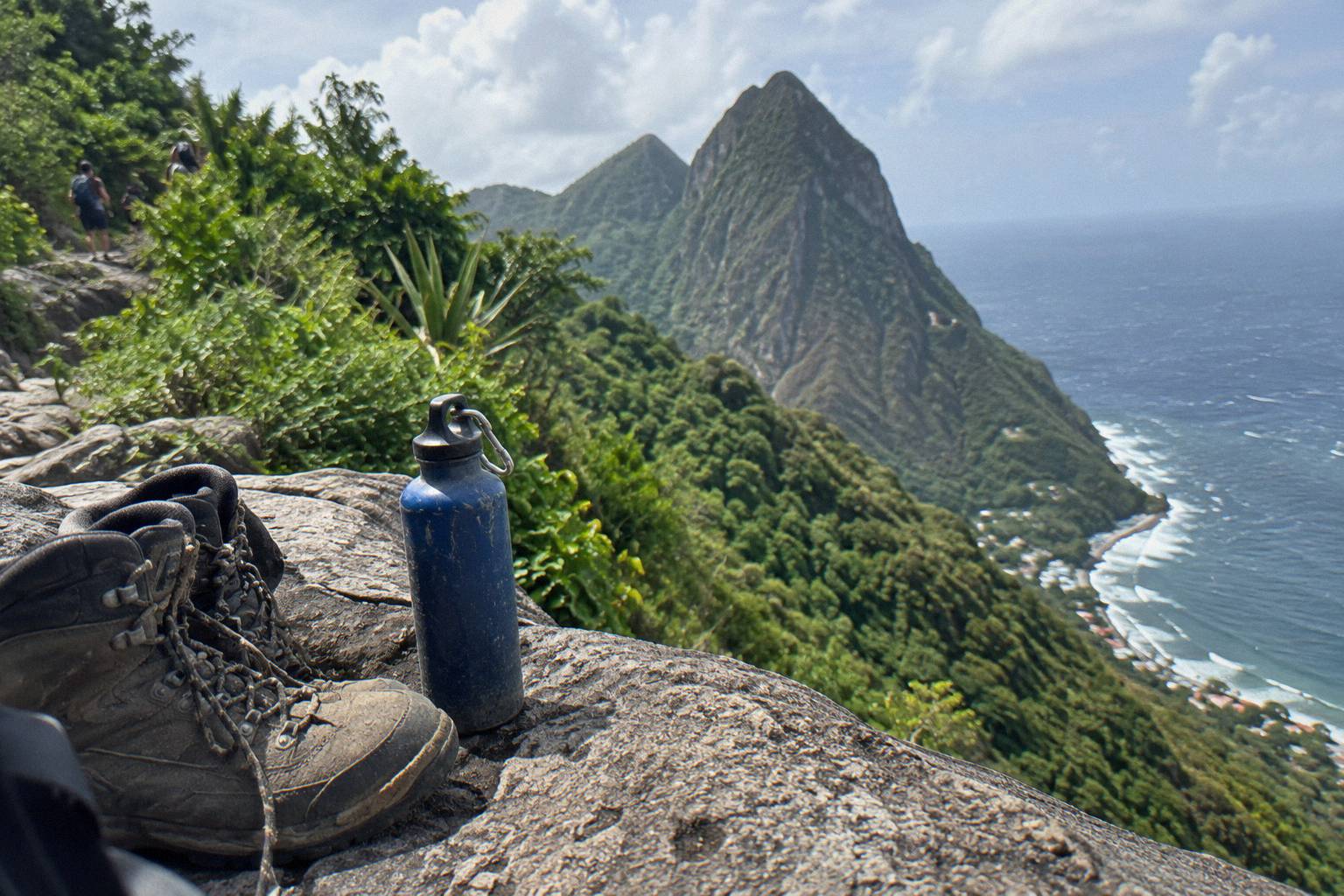
Fitness questions and packing questions converge on the same page, and the what to wear and bring guide for the climb covers the kit side in depth. The short version for training purposes: broken in trail shoes with grip, and nothing cotton.
Guided Pace, Private Pace, Or Combo: Matching The Format To Your Fitness
Guided group climbs set a steady, managed pace with rest stops, and they suit most fitness levels, including nervous ones. Private climbs let you set the pace, which suits confident hikers who want to move fast or slower walkers who want to stop on their own schedule. Combos bolt the climb to a second activity such as a mud bath or a boat transfer, and they reward good fitness because the day gets longer and hotter.
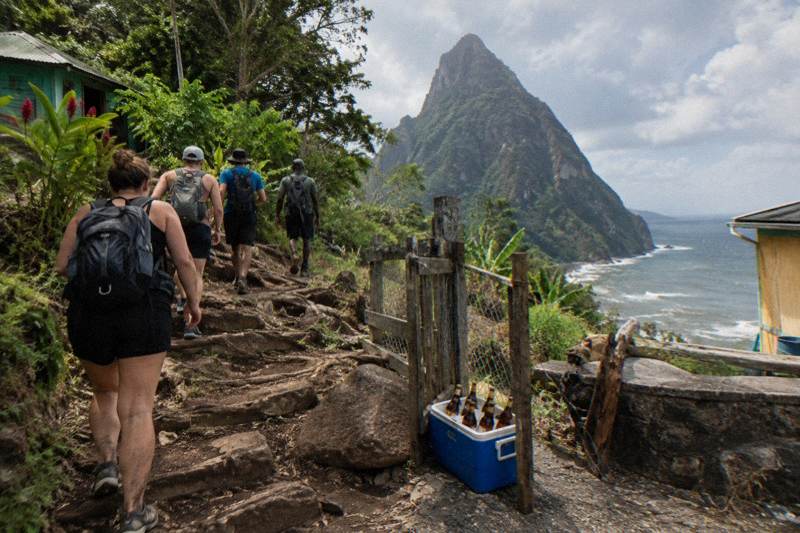
The guided group format is the volume choice for a reason. Dannyboy Guided Hike, 5 Hours by St. Lucia Best Experience Tours & Airport Transfers, from US$90 with hotel and cruise port pickup, water and a cold Piton beer after the hike, is the most reviewed climb on this site, rated 4.7 across 230 reviews, and a group moving at a guide's pace is forgiving terrain for anyone still gauging their legs. Free cancellation applies within a 24 hour window.
Private formats trade company for control. Cool Vibes Taxi and Tours runs the Private Hike, 4 To 5 Hours from US$140, rated 3.9 across 102 reviews, with private transport, entrance fee, beer and 1.5 litres of water per person included. A1 Transfer & Tours SLU offers the Private Hike, 6 To 7 Hours from US$130, rated 4.7 across 18 reviews, which lists the hike and guide fee of USD 50 per person as an inclusion. Slower walkers and strong walkers both tend to prefer private: the difference is only who benefits.
Combos add a second demand. The Sulphur Springs Mud Bath Hike by St. Lucia Taxi Service, from US$127 for a 7 hour 30 minute private day, pairs the climb with a mud bath, and Cool Vibes' By Sea Hike Combo from US$250 adds round trip boat transport and snorkelling gear. Fit climbers treat combos as the reward tier; if the climb alone is your ceiling, book the climb alone.
| Format | Best for | Example tour | Booked duration | Price shown |
|---|---|---|---|---|
| Guided group | Steady managed pace, most levels | Dannyboy Guided Hike, 5 Hours | 5 hours | From US$90 |
| Guided group | Hotel or cruise pickup flexibility | Hotel Or Cruise Pickup Hike, St Lu Taxi and Tours | 4 to 6 hours | From US$130 |
| Private | Setting your own pace | Private Hike, 4 To 5 Hours, Cool Vibes | 4 to 5 hours | From US$140 |
| Private, long day | Slower pace with buffer | Private Hike, 6 To 7 Hours, A1 Transfer & Tours SLU | 6 to 7 hours | From US$130 |
| Combo | Fit climbers wanting more | Sulphur Springs Mud Bath Hike | 7 hours 30 minutes | From US$127 |
Common Preparation Mistakes That Trip People Up
The recurring mistakes are: training only on flat ground, wearing new or unsuitable shoes on the day, carrying too little water, underestimating the descent, booking a tight schedule with no recovery window, and assuming a tour's booked duration equals hiking time. Every one of these is avoidable with a decision made before departure, and none of them is fixed by enthusiasm at the trailhead.
Flat training is the classic. Runners arrive aerobically strong and calf weak, because pavement trains neither sustained incline nor the ankle micro corrections of root and rock. If your only options are flat, stairs and an inclined treadmill are the correction, done consistently for the full block, not the week before.
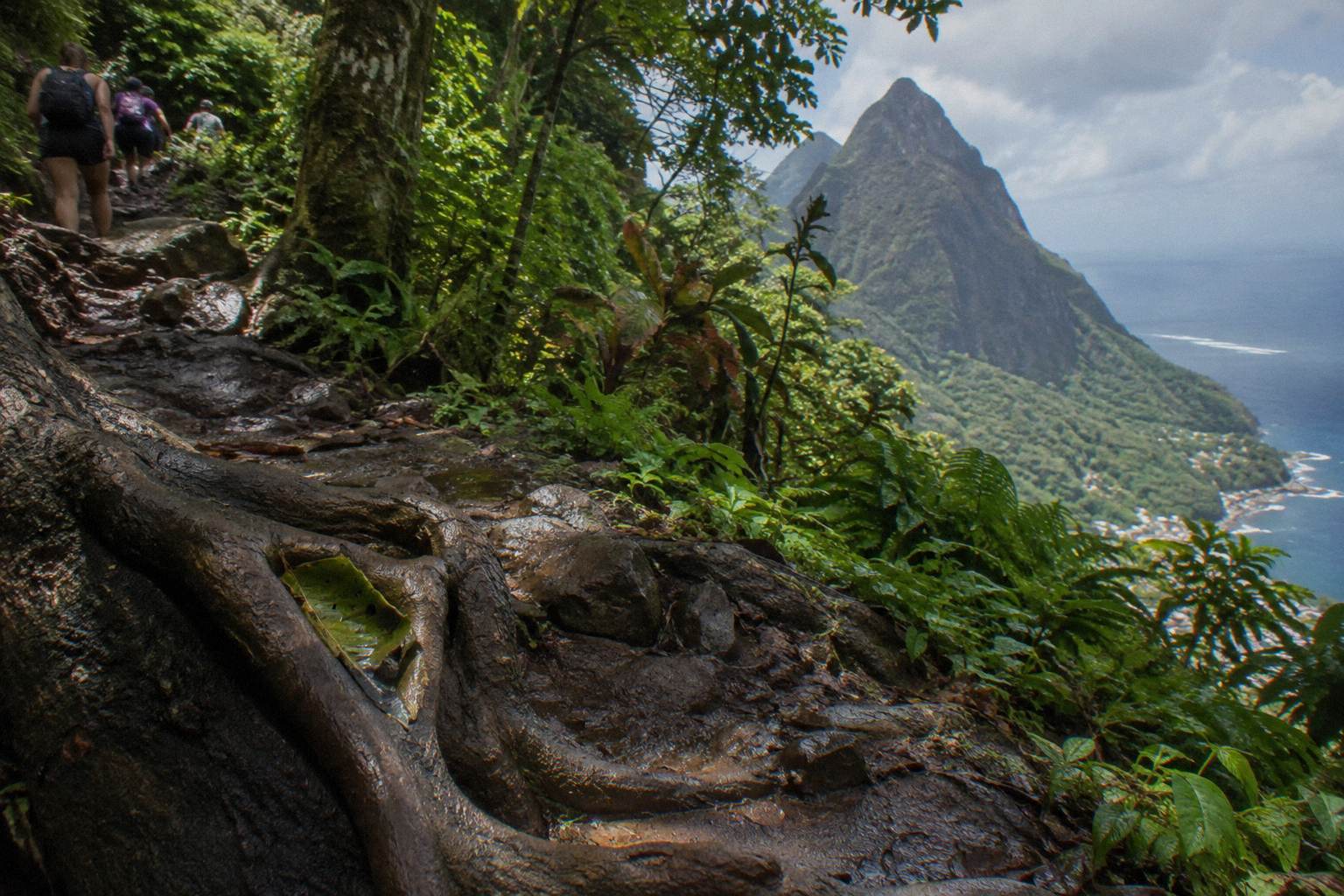
The schedule mistake deserves special attention for cruise passengers and short stay visitors. Booked durations run from 4 hours to 10 hours across the island's operators, and those figures are whole tour lengths including transport, not hours on the trail; the hiking band itself is 4 to 6 hours. If a port day leaves no cushion around a 6 hour 45 minute outing such as Tour For The Day's Tour For The Day, 6h 45m from US$112, the answer is a shorter booked format, not a faster climb. The cruise port day planning guide works through those timings.
On The Day: Pacing, Food, And Managing The Heat
Start slow, eat before you are hungry, drink before you are thirsty, and treat the descent as a second hike that happens to be downhill. A light breakfast an hour or two before, a litre or more of water per person on the trail, and small snacks rather than one big meal are the working formula. The guide sets the pace; your job is to protect your energy across the full 4 to 6 hour band, not the first hour.
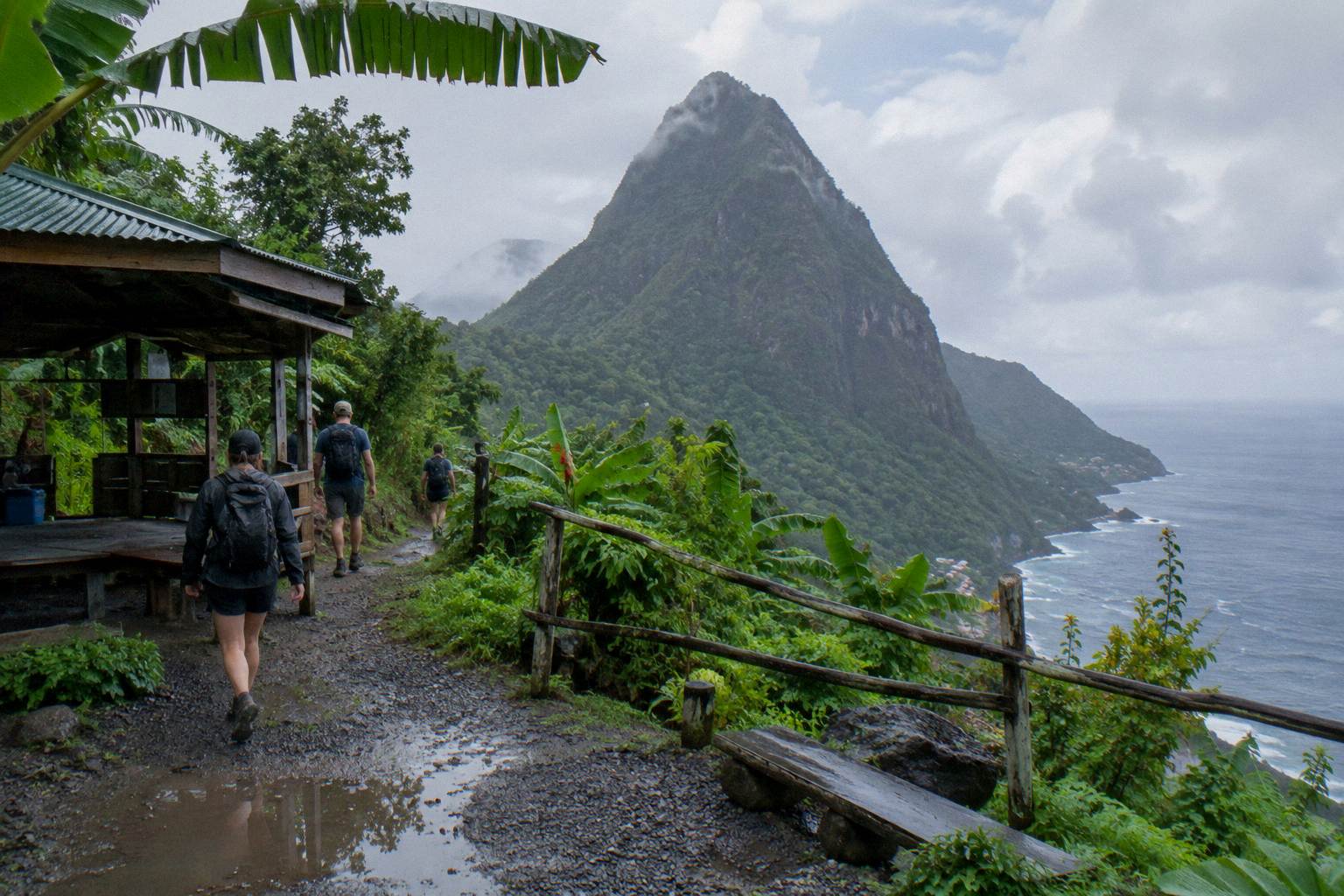
Pacing discipline is mostly about the first forty minutes. The trail leaves Fond Gens Libres on gentler ground, and the instinct is to stride. Climbers who bank easy minutes early pay for them at the steep middle. Keep a pace at which you could still hold a short sentence, take the guide's rest stops in full, and use them to drink rather than to check a phone.
Food is minor but underrated. A banana, a granola bar, a handful of nuts at a rest stop: small and repeated beats a large packed lunch, which sits heavily in heat. Save the proper meal for after. Several tours include one, among them Lush Excursions' World Heritage Hike, 8 Hours, which lists lunch in its inclusions, and Treasure tours Ltd. St. Lucia's All Inclusive Hike, 4 Hours from US$150, which covers all fees and taxes plus water and soda.
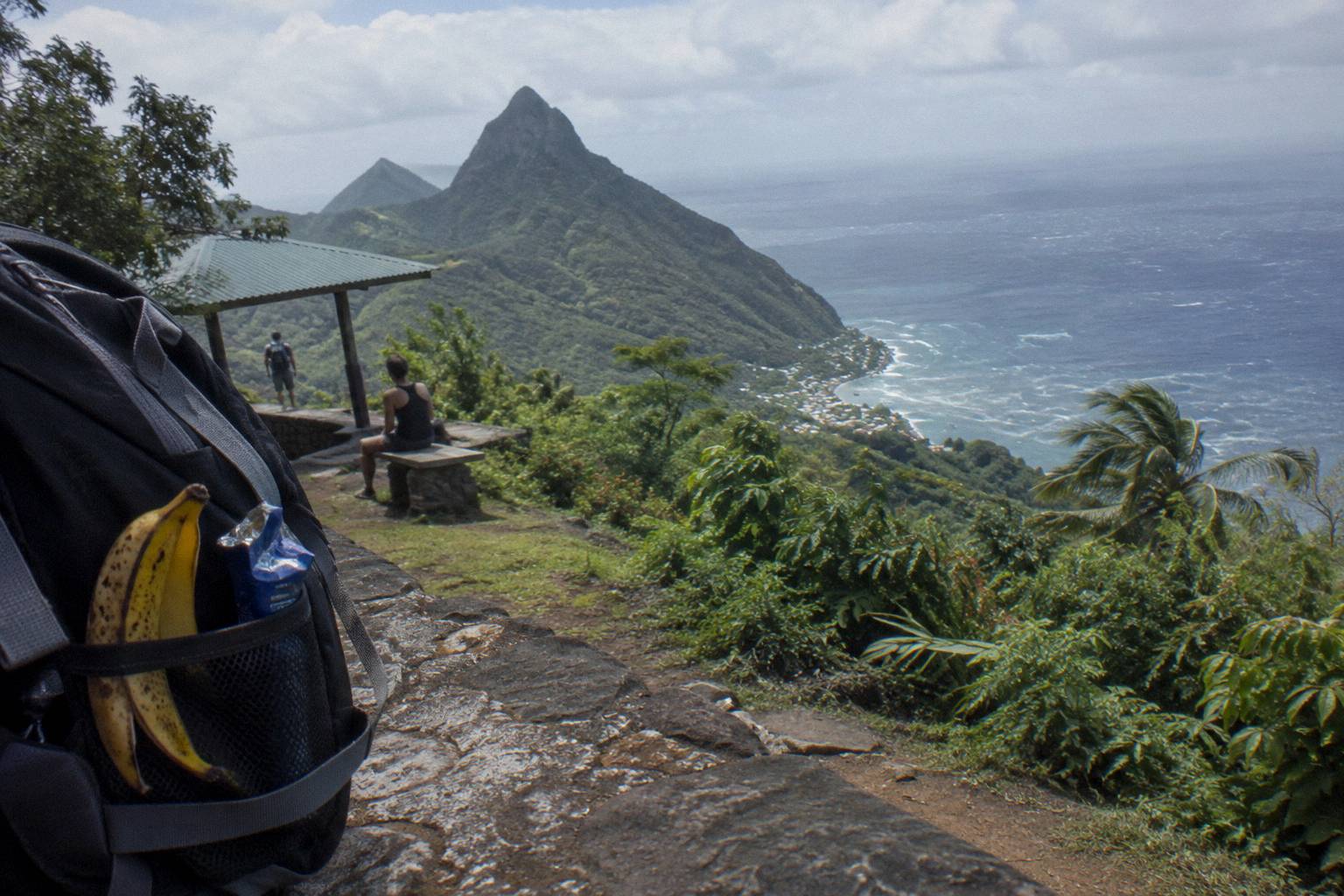
Heat management on the day is behavioural: shaded rest stops when the guide offers them, a hat, sunscreen applied before the forest section ends, and sipping on a schedule. If anyone in your party struggles, say so to the guide early. Guides turn people around safely and without drama; that is part of what the certified guide requirement exists for, and part of why the authority mandates one, as the official Piton climbs page states.
The Week Before And The Day After
In the final week, cut volume and keep frequency: short easy walks, no heroic sessions, everything packed and tested by three days out. After the climb, plan a low key day if your schedule allows, because the descent will have left its mark on your quads. Rehydration, a swim, and an easy evening beat a second strenuous outing, and anyone stacking Petit Piton or a combo tour onto the next morning should think hard about recovery first.
Tapering feels counterintuitive to freshly motivated trainees, but the fitness you have built is already banked. The last week adds nothing and risks everything: a twisted ankle on a training run two days before flying is the grimmest possible preparation failure. Walk, stretch, sleep, and check your kit against the packing guidance.
The recovery question grows teeth for ambitious itineraries. Climbing both Pitons in one outing exists: Lush Excursions' Both Pitons, 10 Hours from US$300 is the most expensive priced climb on this site, and ten booked hours should tell you everything about the fitness it assumes. Most people are better served by Gros Piton, a day of rest, and then Petit Piton as a separate decision, with the how long the Piton climbs take rundown informing the arithmetic.
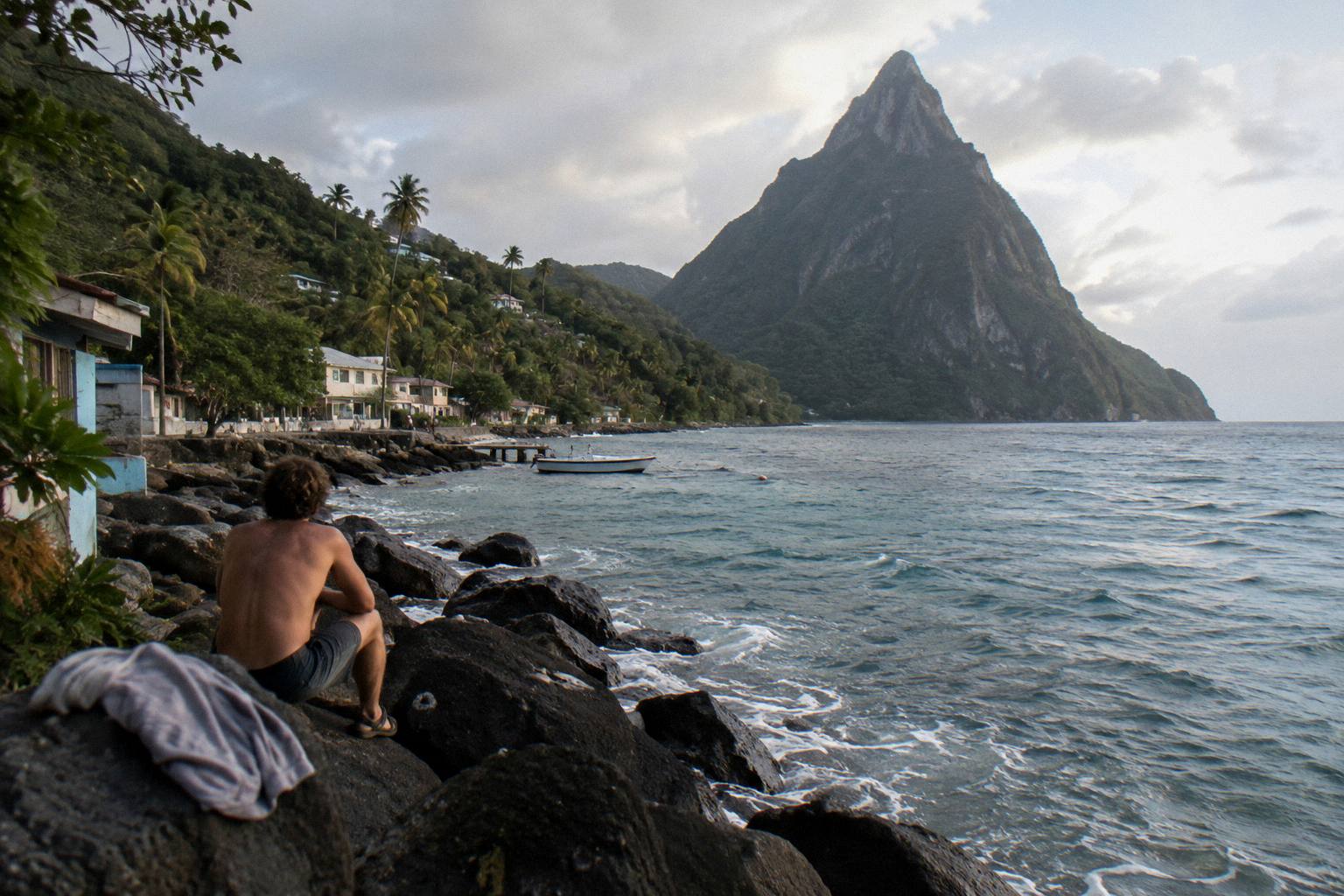
Preparation done well is quiet. The mountain was there before your training block and will be there after, and the Gros Piton Hike pages on this site exist so you meet it ready. Whether you end up on a shared guided pace, a private climb at your own speed, or a combo day that stacks the rewards, the fitness question is the same one, answered weeks before you land.
Common Questions About Gros Piton Climb Fitness And Preparation
How Fit Do I Need To Be To Climb Gros Piton?
No official fitness standard exists. The verified rating is moderate to challenging over a 4 km round trip, typically 4 to 6 hours, with a certified guide required. If you can walk uphill for an hour, recover quickly, and repeat, you are in range; a few weeks of hill or stair training closes most remaining gaps.
How Long Does It Take To Get Fit Enough For The Climb?
Most people with ordinary baseline fitness need four to eight weeks of one long weekly hilly walk plus two interval sessions. If you already train or walk regularly, two to four weeks of sharpening is usually enough.
Is The Descent Harder Than The Climb?
For many hikers, yes. The controlled descent loads the quads and knees for a long stretch, and it is where trekking poles and stair training earn their keep. Train down as well as up.
Does The Tour Duration Equal Hiking Time?
No. Booked durations from 4 to 10 hours across operators are whole tour lengths including transport. The hiking band itself is 4 to 6 hours for Gros Piton.
Can I Train For The Climb On Flat Ground?
Partly. Stairs, an inclined treadmill at 10 to 15 percent, step ups and lunges reproduce most of the climbing demand, but real uneven uphill walking is the best transfer, so take any hilly option you have.
Is A Guided Or Private Climb Better For My Fitness Level?
Guided group climbs such as Dannyboy Guided Hike, 5 Hours set a managed pace with rest stops and suit most levels, while private climbs let faster or slower walkers control the schedule. Check availability on the booking page for whichever suits you; free cancellation within a 24 hour window applies to the tours discussed here.