Which Hike Should I Do, Petit Piton Or Gros Piton?
A straight comparison of the Petit Piton and Gros Piton climbs: height, difficulty, time, cost and which guided tour suits which hiker.
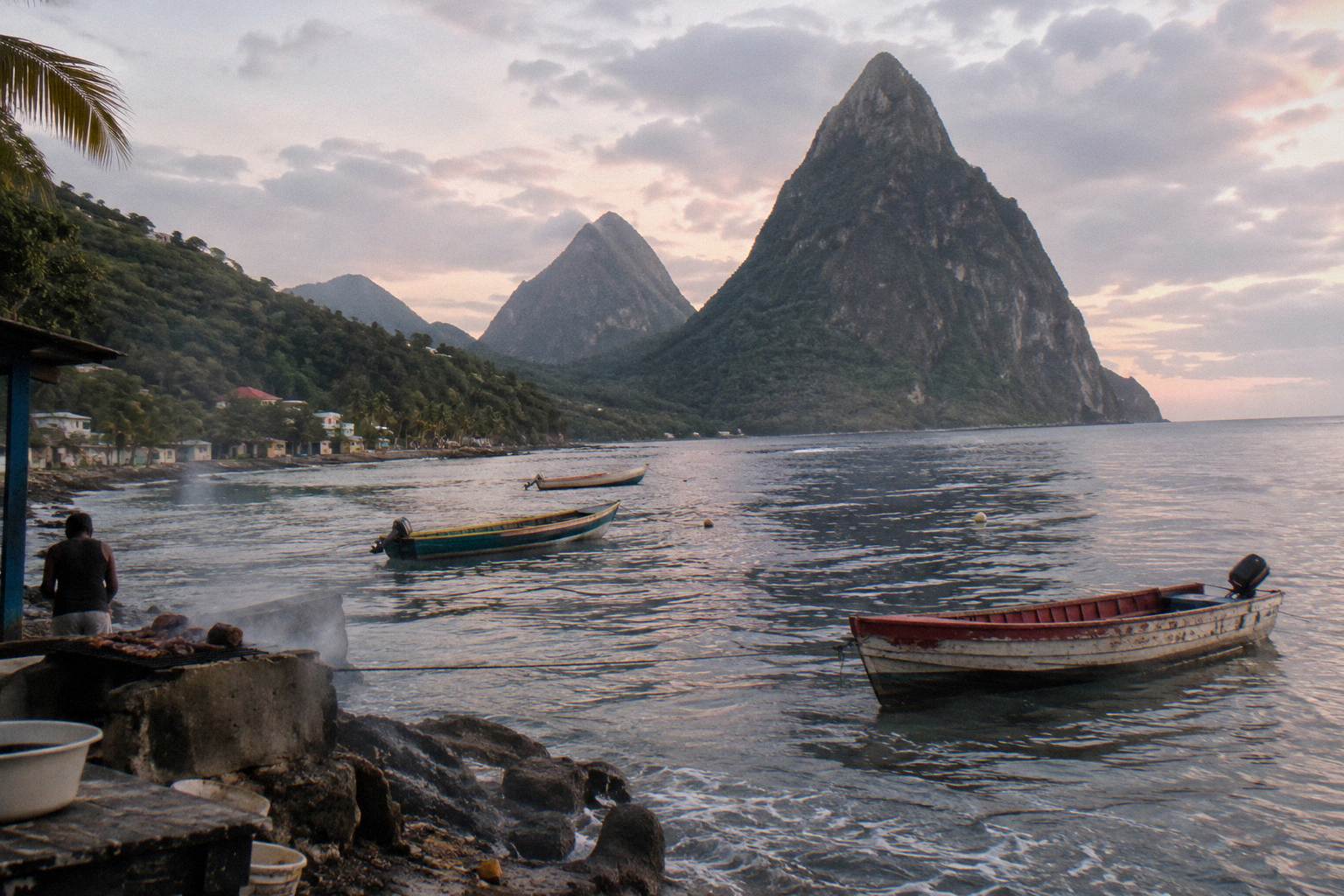
Two volcanic spires stand three kilometres apart on St Lucia's southwest coast, and almost every hiker planning a trip here asks the same question: which one deserves the boot time. The honest answer is that Gros Piton and Petit Piton are not really two versions of the same hike. One is a long, steady mountain walk with a certified guide. The other is a steep scramble on fixed ropes that the tourism authority classifies as very challenging and technical. Choosing between them is less about which peak is prettier and more about which style of effort your legs, your schedule and your nerve are built for.
Both peaks sit inside the Pitons Management Area, a UNESCO World Heritage site inscribed in 2004 for its outstanding natural beauty and geological value, and both start from trailheads near Soufriere. A certified local guide is required on Gros Piton; a professional guide is mandatory on Petit Piton, and the difference in those two words is not accidental. The Saint Lucia Tourism Authority's own piton climbs page describes exactly what each trail involves, and this comparison leans on those official figures throughout.
If the short version matters most: most first time visitors to St Lucia should climb Gros Piton, and most confident, fit hikers who have already done a big Caribbean climb should take on Petit Piton. There is also a third path, doing both in one booked day through a trip such as the Both Pitons, 10 Hours from Lush Excursions, which we will come back to below.
How Do The Two Pitons Compare On Paper?
On paper, Gros Piton is taller at 798 m (2,619 ft) over a 4 km round trip typically taking 4 to 6 hours and rated moderate to challenging, while Petit Piton is lower at 743 m (2,438 ft) over a shorter 3.2 km route typically needing 3 to 5 hours but rated very challenging and technical for its scramble with fixed ropes. Height alone tells you almost nothing; the steepness gap is the real story.
That contrast deserves unpacking, because a lot of travellers read "798 versus 743 metres" and conclude the two climbs are near enough identical. They are not. Gros Piton covers its extra height across a longer, more forgiving route, with sections of stone steps, forest track and steadier gradients between the steep pushes. The tourism authority band for it, 4 to 6 hours, is a genuine hiking window that most reasonably active adults can land inside.
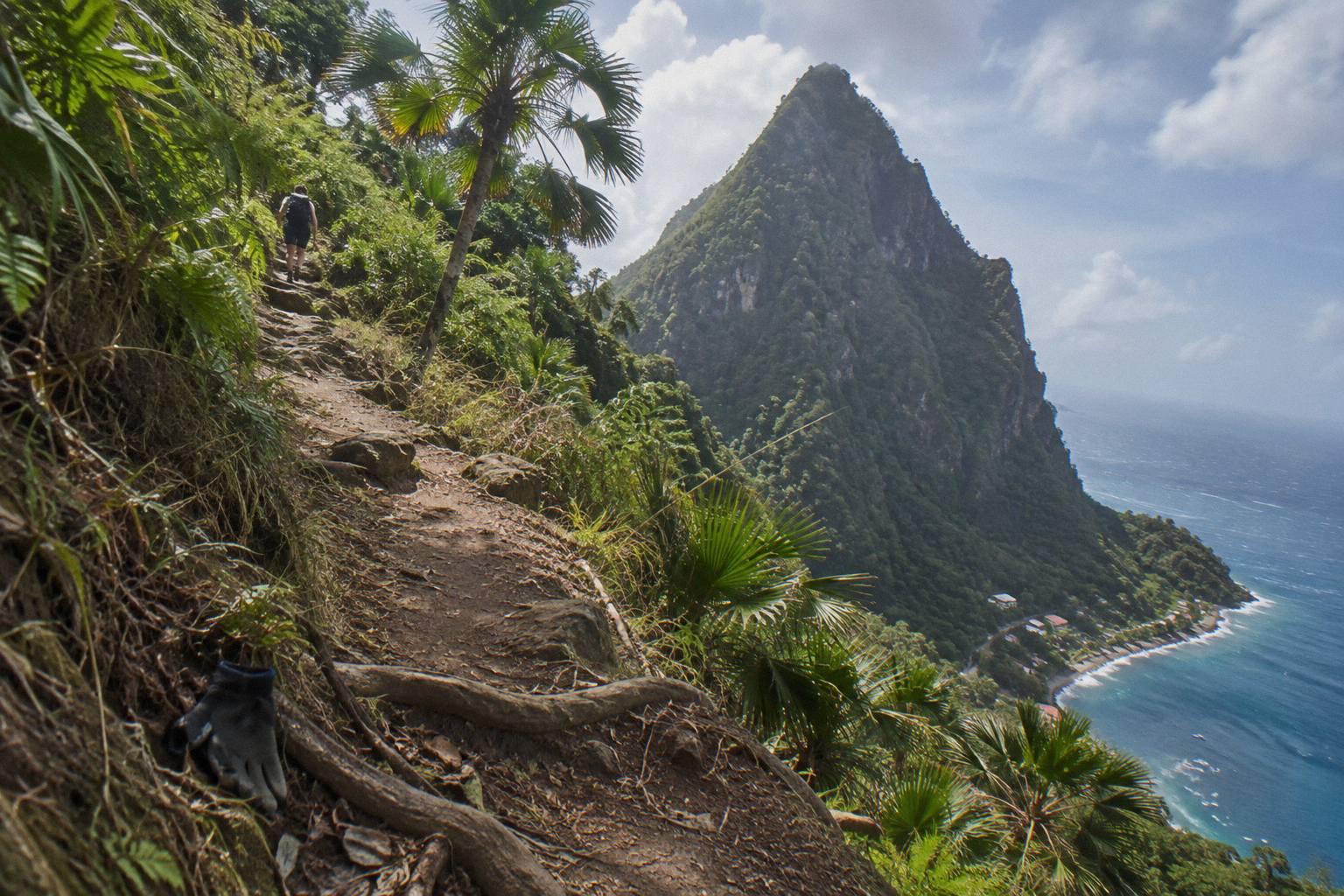
Petit Piton packs almost the same elevation into a shorter distance, which is the arithmetic way of saying it is relentlessly steep. The route involves scrambling on rock with the help of fixed ropes, and the authority calls it very challenging and technical, with a professional guide mandatory. Where Gros Piton rewards steady pacing, Petit Piton rewards upper body strength, a head for exposure and dry rock.
There is a persistent rumour that Petit Piton is closed to climbers. It is not. The tourism authority lists it as a permitted climb with a mandatory professional guide. The confusion likely comes from how much harder it is, and from operators who choose not to run it. One operator that does is Lush Excursions, whose Petite Piton Summit, 4 Hours trip is a private booked climb of that peak from US$275 per person.
The trail fee structure is the same at both: USD 50 per adult visitor, about XCD 125, paid at the Fond Gens Libres interpretive centre near Soufriere, covering entry and the certified guide. Some booked tours list that fee as included and some do not, so the price you compare on a booking page is not always the full picture.
| Feature | Gros Piton | Petit Piton |
|---|---|---|
| Height | 798 m (2,619 ft) | 743 m (2,438 ft) |
| Round trip distance | 4 km | 3.2 km |
| Typical time on trail | 4 to 6 hours | 3 to 5 hours |
| Official difficulty | Moderate to challenging | Very challenging, technical |
| Terrain | Steps, forest track, steep sections | Steep scramble with fixed ropes |
| Guide requirement | Certified local guide required | Professional guide mandatory |
| Trailhead | Fond Gens Libres, near Soufriere | Within the Pitons Management Area |
If comparing the two climbs has already convinced you that both belong on your list, it is worth asking the question directly before booking either one alone. Gros Piton Hike as a site exists because that single climb is the island's signature walk, but the paired option is real too, and the decision framework below applies to it just as much.
Does The Taller Peak Feel Harder From Below?
Visually, no. Petit Piton is the more intimidating silhouette from Soufriere and from the water, a near vertical wedge of green that looks impossible from certain angles. Gros Piton reads as a big, rounded mountain. First impressions flip once you are on the rock: the friendly looking peak gives you a long but manageable day, while the dramatic one asks for ropes.
How Hard Is Each Climb Really?
In practice, Gros Piton is a strenuous but conventional mountain hike: steep in places, sweaty throughout, and achievable for anyone who walks hills regularly. Petit Piton is a different activity altogether, with rope assisted scrambling, exposed sections and terrain where a slip matters. Fitness gets you up Gros Piton; fitness plus technique plus composure gets you up Petit Piton.
Gros Piton's trail begins at the Fond Gens Libres interpretive centre and climbs through dry forest before the steeper mid sections. The going is uneven underfoot and the heat is the main adversary rather than any technical move. Most guided groups move at a walk and scramble pace with breaks, and the certified local guide requirement means you are never reading the route alone. Hikers who train with stair climbs or hill walks beforehand routinely finish comfortably.
Petit Piton keeps a rope in your hands for much of the upper mountain. The 3.2 km round trip number sounds gentle until you notice what the vertical does across it. The authority's description, a scramble with fixed ropes rated very challenging, is accurate rather than cautious. Rain changes everything on that rock, and conditions on the day decide more about your experience than your training does.
The site's longer difficulty write ups go deeper on this, including how to judge readiness. See how hard each Piton climb really is for the big peak and the Petit Piton difficulty guide for the steep one.
A useful rule of thumb: if you would happily describe your last hike as "a proper workout but fine", Gros Piton is your climb. If your last hike involved scrambling, via ferrata or anything with exposure and you loved it, Petit Piton is the one you will remember.
Which Hike Suits Your Fitness And Experience?
Choose Gros Piton if you hike occasionally, are building confidence, or want a big summit day with a lower chance of turning back. Choose Petit Piton if you scramble regularly, handle exposure calmly, and accept that weather or rock conditions can end the attempt. Cruise passengers and casual walkers should default to Gros Piton without much agonising.
The fitness question gets asked more than any other, and the honest framing is about margin for error. Gros Piton leaves margin: you can go slow, take breaks, and the guide adjusts pace to the group. Dannyboy Guided Hike, 5 Hours from St. Lucia Best Experience Tours & Airport Transfers, a guided group trip rated 4.7 across 230 reviews and the most reviewed climb on this site, is built exactly for that paced, supported approach, from US$90 per person with hotel and cruise-port pickup both offered.
Petit Piton consumes margin. The ropes demand grip strength and the steepness demands knees that forgive descent. It is a poor choice as a first ever mountain, and a poor choice for anyone whose knees have opinions about stairs. For experienced hikers it is the more interesting climb of the two, and the reward is standing on the smaller peak looking across at the bigger one.
Age limits, fitness thresholds and weather closure rules are not published on the official sources, so treat any forum claim about them with suspicion and raise fitness questions directly with the operator before booking. What is published is the guide requirement on both peaks, and no level of experience removes it.
| If you are... | Better pick | Why |
|---|---|---|
| A first time or once a year hiker | Gros Piton | Conventional trail, paced groups, guide support |
| A regular hillwalker | Gros Piton | Still a full day, low technical risk |
| An experienced scrambler | Petit Piton | Ropes, exposure, the technical challenge you want |
| Short on time in country | Petit Piton or a short Gros trip | 3 to 5 hours on trail either way |
| Unsure about exposure | Gros Piton | No rope sections on the main route |
| Wanting photos from the top | Either | Both summits reward the camera, conditions allowing |
What Does Each Trip Cost To Book?
Booked Gros Piton trips on this island run from US$90 to US$195 per person depending on format and inclusions, with the most reviewed guided group option at the bottom of that range. Booked Petit Piton climbs sit higher, from US$275 for the private summit trip, and the both peaks day tops the scale at US$300. The USD 50 trail fee is separate unless a listing names it as included.
The price spread on Gros Piton is wide because the formats differ. At the value end, the Dannyboy guided group trip at from US$90 includes hotel pickup and drop-off, water, a Piton beer afterwards and a driver who waits during the hike. Mid range private options include the Private Hike, 4 To 5 Hours from Cool Vibes Taxi and Tours at from US$140 per person, rated 3.9 across 102 reviews, with the entrance fee listed among its inclusions alongside private transport and hotel pickup.
At the upper end of the Gros only range sits the World Heritage Hike, 8 Hours from Lush Excursions at from US$195 per person, listing bottled water, the entrance fee and lunch. That trip appears again below as a single recommendation because it suits hikers who want the logistics handled end to end. For a longer private day, the Private Hike, 6 To 7 Hours from A1 Transfer & Tours SLU runs from US$130 per person and lists its guide fee of USD 50 per person as an inclusion, which usefully shows how the trail fee is being handled inside the price.
Petit Piton has far fewer bookable options, which is itself information. The peak is harder, fewer operators run it, and the Petite Piton Summit, 4 Hours trip from Lush Excursions at from US$275 per person reflects the specialised guiding it needs.
Never assume the trail fee is inside a tour price unless the listing says so. Some rows name it, some cover it under "all fees and taxes", and some leave it for you to pay at Fond Gens Libres. It is a five minute question to the operator and it saves an awkward surprise at the trailhead.
The mid range private Gros option deserves a closer look if group pace worries you.
And the full service longer day is the other single worth weighing against it.
Can You Do Both Pitons In One Day?
Yes, and one booked trip exists for exactly that: Both Pitons, 10 Hours from Lush Excursions, from US$300 per person, listing the entrance fee, lunch, water and air conditioned transport among its inclusions. It is the most expensive priced climb on the island's tour pages for good reason: it stacks a 4 to 6 hour mountain and a 3 to 5 hour scramble into a single very long day.
Ten hours is the whole booked tour length, not time on foot. Add the two authority hiking bands together and the walking alone can reach 9 to 11 hours at the outer edges, which is why this trip belongs to the seriously fit. Descent fatigue on the second peak is the real risk, and most sensible itineraries climb Gros Piton first while legs are fresh and Petit Piton second, when the shorter distance and rope sections suit tired quads better than a long grind would.
Not everyone wants, or can physically manage, the double. A softer alternative for travelers who want both peaks in their week without two summits is to hike one and view the other. The Fond Doux View Trail, 1 Hour from Fond Doux Eco Resort's Heritage Tour, from US$10 per person, is a gentle private one hour walk on a plantation estate with Petit Piton perspectives, no summit involved. Pairing a Gros Piton climb with that stroll gives you both peaks' personalities for a fraction of the legs.
If a double is tempting but the ten hour format sounds excessive, splitting the two across separate days is the usual compromise, and the two climbs make a satisfying pair that way: conquer the big one, recover, then test yourself on the steep one.
What Mistakes Trip People Up When Choosing?
The most common mistake is picking Petit Piton because it is shorter, reading 3.2 km as easy and ignoring the word "scramble". Others assume the trail fee is always included, show up in worn out sneakers, or book a tight cruise day against a 4 to 6 hour trail window. A few still believe Petit Piton is banned, which it is not.
The distance trap deserves its own warning. On flat ground 3.2 km is a forty minute walk; on Petit Piton it is most of a morning of steep, roped climbing. Distance is the least useful number on either mountain. Time bands and difficulty ratings predict the day far better.
Footwear and kit failures are the second cluster. Both trails punish thin soled shoes, and wet rock on Petit Piton punishes anything without grip. The site's kit guide covers this properly in what to wear and bring for the climb. Money is the third: the USD 50 per adult trail fee is real, is paid at Fond Gens Libres, and is only covered when a listing says so.
| Mistake | Why it bites | The fix |
|---|---|---|
| Choosing Petit for the shorter distance | Steepness, not distance, is the cost | Compare difficulty bands, not kilometres |
| Assuming the trail fee is included | USD 50 per adult surprises at the trailhead | Confirm inclusions before booking |
| Thin or worn shoes | Wet rock and stone steps punish them | Grippy, broken in trail shoes |
| Underestimating heat | Humidity adds hidden difficulty | Water, early start where the day allows |
| Believing Petit Piton is closed | It is a permitted, guided climb | Book with an operator that runs it |
| One peak for two very different hikers | The scramble suits one of you, not both | Split up, or pair a summit with a view trail |
The last mistake is a couples problem. When one partner scrambles and the other does not, forcing a shared Petit Piton booking risks a miserable day for both. The split solution works well: one climbs while the other takes the Fond Doux view trail or a beach morning, then swap stories at dinner.
Which Should You Actually Book?
Book Gros Piton if this is your island highlight walk, your first big Caribbean climb, or you are bringing a mixed ability group. Book Petit Piton if you are an experienced scrambler chasing the harder line. Book the both peaks day only if ten hours of stacked climbing sounds like fun rather than a threat. Most readers should start with the guided group Gros trip at from US$90.
That recommendation is not fence sitting, it is arithmetic. Gros Piton has the deepest bench of bookable options, from the 230 review guided group trip upward, which means more formats, more pickup combinations and more price points than Petit Piton's thin selection. It is also the climb the island is known for, the one visible from your beach chair, and the one whose summit day most active travelers finish proud rather than rattled.
Petit Piton is the connoisseur's pick. Fewer operators run it, the guiding is more specialised, and the from US$275 private summit trip prices accordingly. If that sentence describes a day you want rather than fear, the smaller peak will hand you the sharper memory.
The deeper route and stage breakdowns live elsewhere on the site if you have decided: the Gros Piton trail route and stages guide for the big peak, and the full Petit Piton hike guide for the steep one. Whichever you choose, conditions on the day get the final word, so keep your plans flexible and talk to your operator about the weather picture before you lace up.
For a final side by side, here are the three ways into these mountains most readers weigh against each other.
Common Questions About Choosing A Piton Hike
Which Hike Should I Do, Petit Piton Or Gros Piton?
Most travelers should climb Gros Piton: it is the taller peak at 798 m, a 4 km round trip typically taking 4 to 6 hours, rated moderate to challenging with a certified guide required. Choose Petit Piton only if you are an experienced scrambler comfortable with fixed ropes, exposure and a very challenging, technical 3.2 km route.
Is Petit Piton Harder Than Gros Piton?
Yes, clearly. Petit Piton packs 743 m of height into a 3.2 km rope scramble rated very challenging and technical, with a professional guide mandatory. Gros Piton is longer on foot, 4 to 6 hours typically, but it is a conventional steep hike rated moderate to challenging rather than a technical climb.
Is Petit Piton Closed To Hikers?
No. The Saint Lucia Tourism Authority lists Petit Piton as a permitted climb with a professional guide mandatory. Its reputation for difficulty, and the smaller number of operators running it, likely fuelled the closure rumour.
Do I Need A Guide On Either Peak?
Yes on both. Gros Piton requires a certified local guide, and Petit Piton requires a professional guide. The USD 50 per adult trail fee, paid at Fond Gens Libres, covers entry and the certified guide on the Gros side.
Can I Book One Trip That Does Both Pitons?
Yes. Both Pitons, 10 Hours from Lush Excursions is a booked 10 hour day covering both peaks, from US$300 per person, listing the entrance fee, lunch and transport as included. It demands serious fitness since the two trails together can mean up to 11 hours on foot.
Which Climb Is Better For A Beginner?
Gros Piton, without hesitation. Booked guided group options such as the 5 hour trip rated 4.7 across 230 reviews include pickup and a paced group format, which suits occasional hikers. Petit Piton's ropes and exposure make it a poor first mountain.