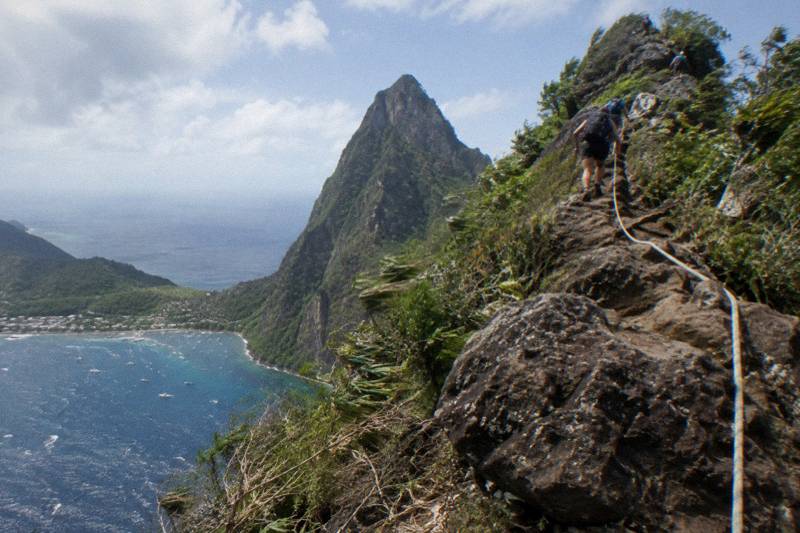
How Hard Is A Petit Piton Hike?
A straight answer on Petit Piton difficulty: 3.2 km of rope-assisted scrambling, 3 to 5 hours, very challenging and technical per the Saint Lucia Tourism Authority, with a professional guide mandatory.
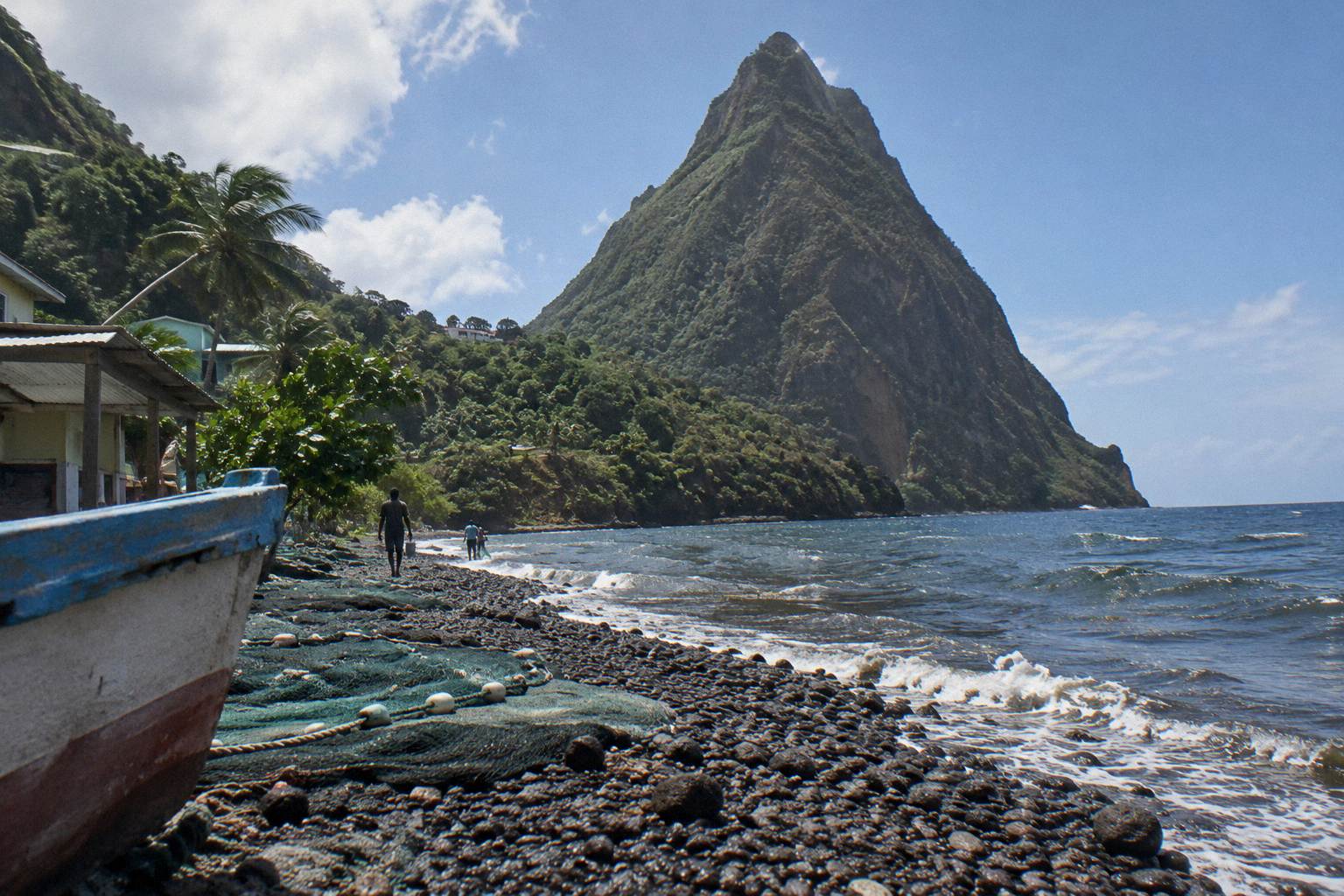
A Petit Piton hike is very challenging, and the mountain is the tougher of Saint Lucia's two Piton climbs by a wide margin. The route is technical as well as physically demanding, so treat it as a serious undertaking rather than a casual stroll, and plan for a genuinely tough climb. The route covers 3.2 km round trip and typically takes 3 to 5 hours of steep, exposed scrambling, with fixed ropes on the steepest sections, and a professional guide is mandatory rather than optional. The Saint Lucia Tourism Authority classes it a full tier above Gros Piton, which is rated moderate to challenging on a walkable step trail. Fit, confident hikers manage Petit Piton; casual walkers usually do not, and the mountain offers no easy version of itself.
That one word, "technical", does a lot of work. Gros Piton is a long, sweaty, sustained climb on rock steps and forest trail, but the footing is mostly walkable and your hands stay free. Petit Piton compresses similar elevation into roughly three quarters of the distance, which means the average gradient is steeper throughout, and parts of the upper route are closer to scrambling than walking. Fixed ropes are bolted along the worst sections, and you will use them with your hands as well as your legs.
It is also the shorter mountain, which surprises people. Petit Piton stands at 743 m (2,438 ft) against Gros Piton's 798 m (2,619 ft). The difficulty comes not from the summit height but from how directly the trail attacks the slope. There is very little gentle contouring, almost no flat recovery ground, and the descent is arguably harder on the legs than the climb because of the rope work and the loose surface.
For booking purposes, the mountain is a permitted climb and is not closed, despite what older forum threads claim. Lush Excursions runs the Petite Piton Summit, 4 Hours, from US$275 per person with bottled water, entrance fee, air-conditioned transport and lunch at the Market Place included, and the same operator offers Both Pitons, 10 Hours, from US$300 per person for the rare visitor who wants both summits in one long day.
What Makes The Petit Piton Trail Technical?
The Petit Piton Trail earns its technical reputation through three compounding challenges: a relentless gradient that never lets your legs recover, real exposure where the consequences of a slip are severe, and rope work that demands your hands as much as your footing. Each factor alone is manageable; combined, they require focus, strength, and steady nerves. The 3.2 km round trip packs nearly all of its vertical gain into a slope that rarely eases off, the upper sections are open rock with genuine drop-offs beside the line, and the fixed ropes exist because feet alone are not enough to progress safely. The tourism authority calls the route a scramble rather than a walk, and that distinction is the honest one. If you have never moved over steep rock holding a line for balance, this trail will teach you the hard way, so it pays to know what the terrain actually involves before you book.
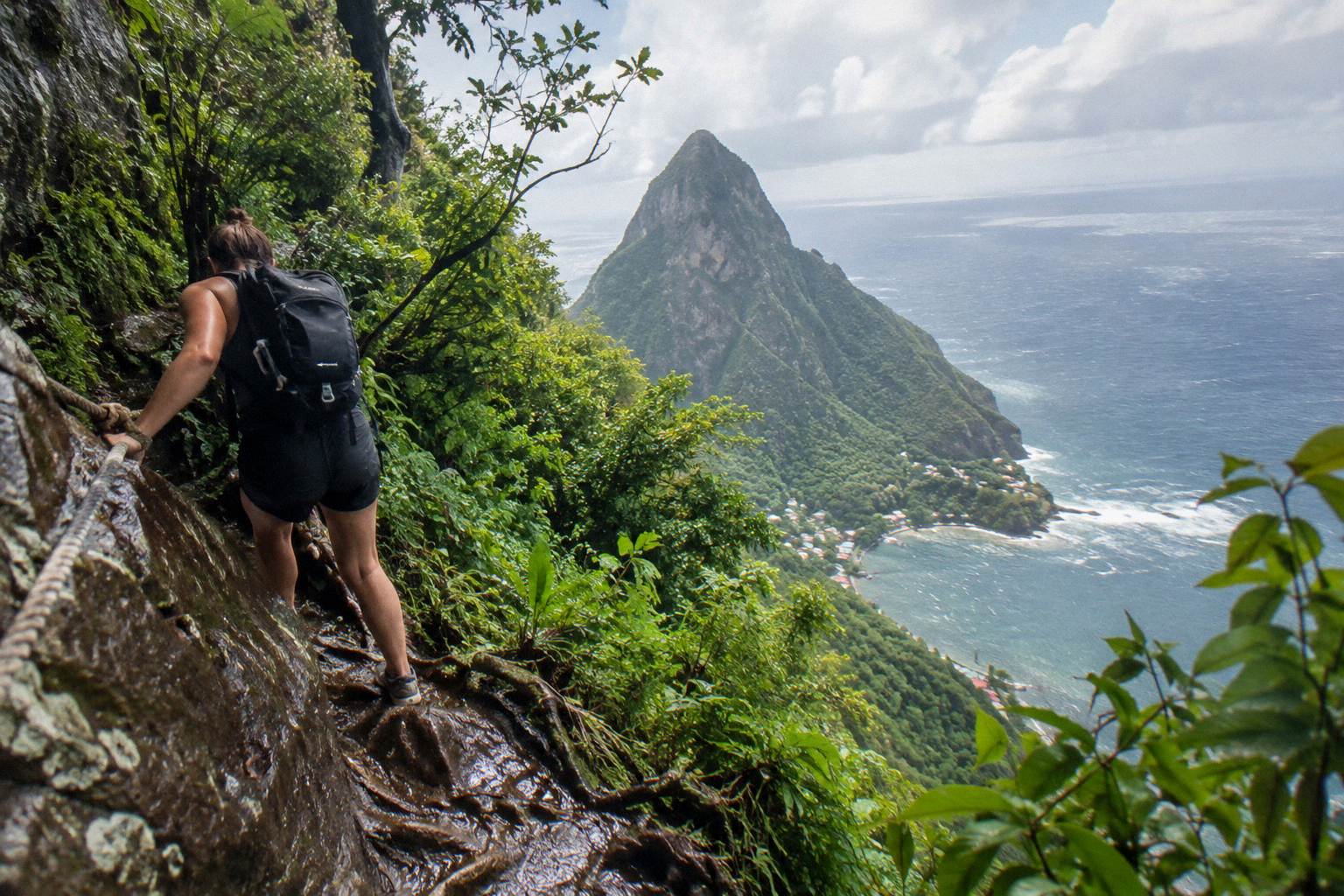
The trail starts in forest, and the first stretch feels like a steep ordinary hike. That changes as the trees thin. The rock becomes polished and angled, the steps disappear, and the ropes begin. On a dry day the rock grips reasonably well; on a wet day it becomes slick, which is why most operators and guides watch the weather closely and will reroute or postpone rather than push a wet rope section. The mountain does not publish formal weather closure rules, so the call sits with your guide on the day.
Exposure is the part photographs undersell. On several sections you are moving along rock with open air to one side, clipped to nothing, protected by your own balance and the rope in your hands. There is no via ferrata lanyard system here, the ropes are fixed lines you hold, not cables you clip into. Anyone with a real fear of heights should treat Petit Piton as a hard no, and anyone borderline should read the Petit Piton difficulty and closures guide before committing money.
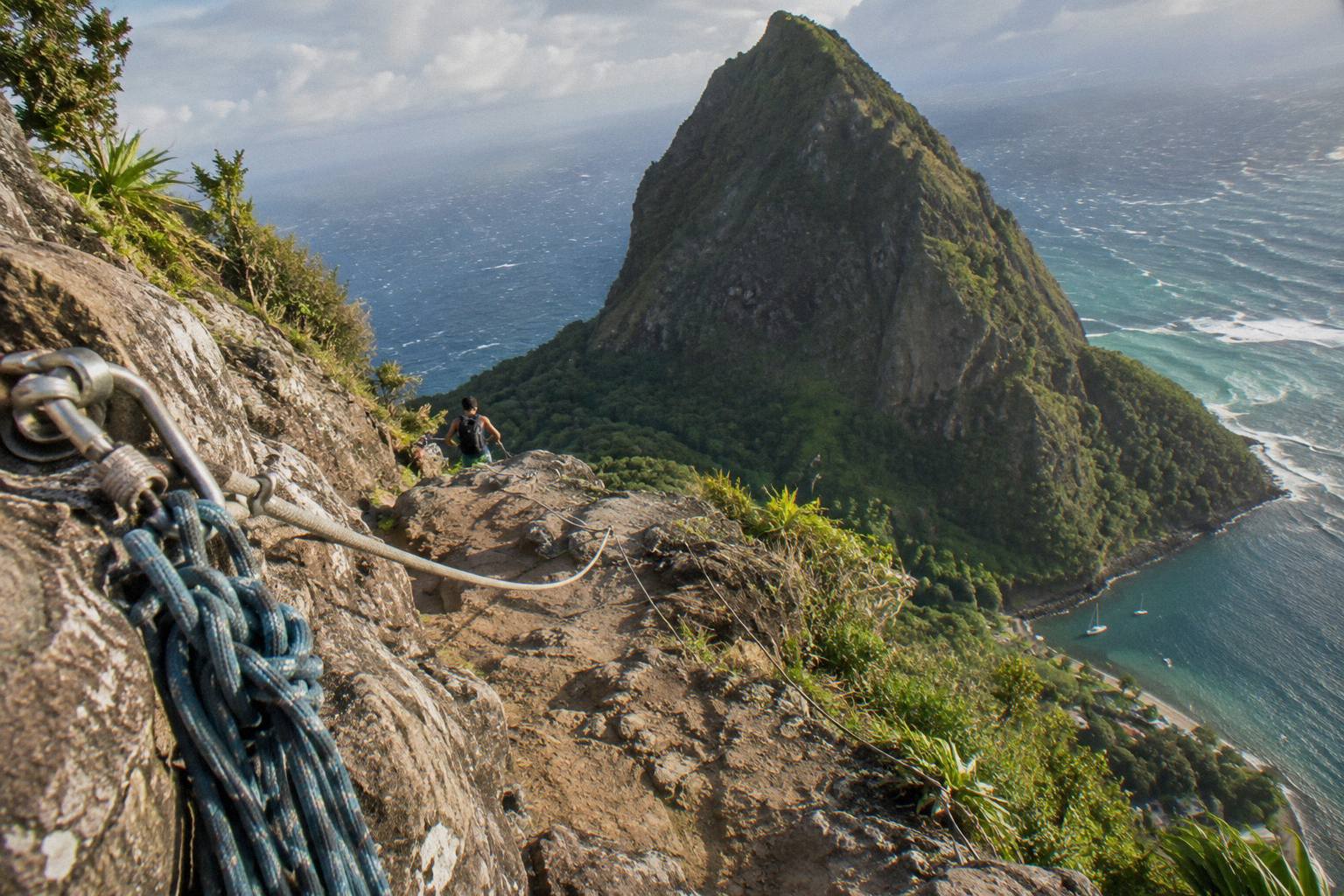
Time on the mountain is shorter than Gros Piton on paper, 3 to 5 hours against 4 to 6, but the effort per hour is higher. You are effectively doing interval work for most of the ascent, with short pauses at rope anchors rather than relaxed water stops. The descent takes a surprisingly large share of the total time because down-climbing ropes backwards, facing the rock, is slow and careful work.
Condition matters on every claim above. Views, dry rock and a summit arrival all depend on the day, and the operator's booking page is where weather calls and schedule changes are confirmed.
Petit Piton Vs Gros Piton: Which Is Harder?
Petit Piton is the harder climb by a wide margin, so if you are choosing between the two, that is the one that will test you; Gros Piton is the far more manageable option, and for most visitors it is the smarter pick, while Petit Piton rewards only those prepared for a genuinely tough ascent. Gros Piton is a moderate to challenging 4 km round trip over 4 to 6 hours on a trail of steps and switchbacks, requiring a certified local guide. Petit Piton is a very challenging 3.2 km round trip over 3 to 5 hours on steep scrambling terrain with fixed ropes, requiring a professional guide. Shorter distance, harder ground, and a stricter guide rule: on every dimension that matters to a walker deciding between them, the smaller peak asks more of you, even though it stands 55 m lower than its neighbour.
| Factor | Gros Piton | Petit Piton |
|---|---|---|
| Height | 798 m (2,619 ft) | 743 m (2,438 ft) |
| Round trip | 4 km | 3.2 km |
| Typical time | 4 to 6 hours | 3 to 5 hours |
| Official grade | Moderate to challenging | Very challenging |
| Terrain | Rock steps and forest trail | Steep scramble with fixed ropes |
| Guide rule | Certified local guide required | Professional guide mandatory |
The comparison matters because most visitors have time for one peak, not both. If your reference point is a tough day hike at home, something like a steep couloir route or a graded scramble, Gros Piton will feel like solid exercise and Petit Piton will feel like a mountaineering day without the crampons. If your reference point is a two hour woodland loop, Gros Piton is already a big ask and Petit Piton is off the menu.
The Gros Piton vs Petit Piton comparison breaks the choice down further for people torn between the two, and the Petit Piton hike guide covers the practical side of the smaller peak in detail. This site exists, at Gros Piton Hike, mostly because the bigger mountain suits far more visitors, and the tours listed here reflect that: far more operators run Gros Piton than Petit.
That imbalance shows up in what you can book. Dannyboy Guided Hike, 5 Hours by St. Lucia Best Experience Tours & Airport Transfers is the most reviewed climb on this site at 4.7 across 230 reviews, from US$90 per person, and it climbs Gros Piton, not Petit. Cool Vibes Taxi and Tours runs a Private Hike, 4 To 5 Hours on Gros Piton from US$140 per person, and a By Sea Hike Combo from US$250 that approaches the same mountain by boat. The Petit options are fewer and pricier, which is the market telling you something about demand and difficulty.
Do You Need A Professional Guide For Petit Piton?
Yes, you do. A professional guide is required for Petit Piton, and the rule here is stricter than the one that applies to Gros Piton, which means this is not a mountain you can simply show up and climb on your own without making arrangements for a guide first. The tourism authority lists Petit Piton as a climb where a professional guide is mandatory, one tier above Gros Piton's required certified local guide. This is not a paper formality or a box-ticking exercise: the ropes, the route finding and the descent all assume someone experienced is leading, and the terrain punishes guesswork. Booking without a guide is not an option the mountain offers, and no operator will take you up the rope sections on trust alone, so the professional guide line is the single most important rule on this page.
On the Gros Piton side the analogous rule is the certified local guide requirement, covered by the USD 50 per adult trail fee paid at the Fond Gens Libres interpretive centre near Soufriere, inside the Pitons Management Area, the same UNESCO inscribed area, listed since 2004, that contains both peaks. Petit Piton's fee and payment point work differently, and the operator you book handles the details, so the figure to hold in your head for planning is the tour price itself.
- Sulphur Springs Mud Bath HikeUS$127
- Mud Bath Hike, 5 HoursUS$220
- By Sea Hike ComboUS$250
This is where guided versus private matters in practice. A guided group spreads the cost and suits confident hikers who do not mind pace-setting by committee. A private climb lets you slow down on the ropes, which is genuinely valuable on a technical route where the rope sections are the bottleneck. The Gros Piton hiking tours guide walks through the same trade-off for the bigger peak.
The operator landscape gives you a clean read on relative difficulty. St. Lucia Taxi Service runs a Sulphur Springs Mud Bath Hike from US$127 per person that pairs Gros Piton with a mud bath, a combo format that exists because Gros Piton leaves enough in the tank for a second activity. Nobody sells a Petit Piton plus spa afternoon. The mountain consumes the day.
How Fit Do You Need To Be For Petit Piton?
No official fitness or age threshold exists for Petit Piton, and no verified or published standard exists for you to check yourself against. The honest test is therefore practical rather than bureaucratic: assess realistically whether you can complete a physically demanding mountain climb, because no rulebook will answer that question for you. You should be comfortable climbing steep ground for two to three hours without long rests, steady on your feet on loose and polished rock, and able to lower yourself down controlled drops using a rope while trusting your grip. If a stair-climbing session or a steep hill walk leaves you wrecked, train first or pick Gros Piton instead, because Petit Piton does not offer a shortcut or an easier line for tired legs.
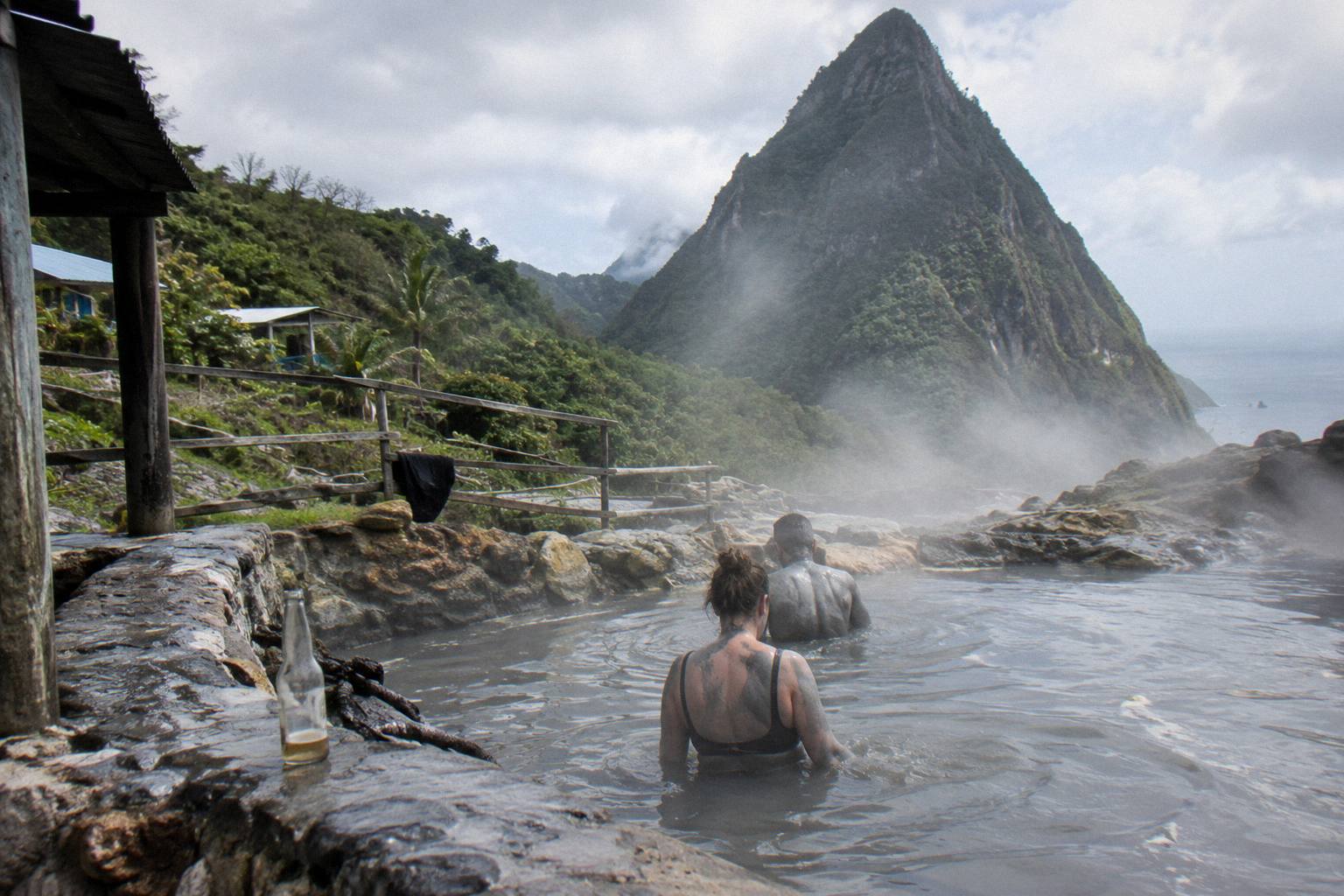
Because there is no verified age limit or fitness gate, the decision falls to you and your operator. Most people who complete Petit Piton comfortably describe a base of regular hill walking or gym work in the months before. Grip strength matters more than people expect, since the ropes take weight on the descent. Trekking poles help on the lower forest section and get stowed or handed off where the ropes start.
Preparation advice that actually moves the needle: stair and hill repeats twice a week, some loaded downhill training for the knees, and practice on any local scramble or rocky trail you can reach. The Gros Piton fitness and preparation guide covers the conditioning side in depth, and most of it transfers directly, with the caveat that Petit Piton adds the hand-and-rope element Gros Piton never demands.
One caution worth repeating: the descent is where tired hikers get hurt, not the climb. Fresh legs go up; shredded quads come down a polished slope on a rope. Budget your energy for the second half of the mountain, not the first, and tell your guide early if you are struggling rather than at the top, when every option left is downhill.
What Trips People Up On Petit Piton?
Most trouble on Petit Piton comes down to a few repeat mistakes: hikers underestimate how demanding the descent can be, wear shoes that are wrong for the job, bet their plans on a cruise-day schedule, and assume the guide rules for Gros Piton also apply to Petit Piton. Each one turns a hard climb into a harder day. None of these are exotic or unusual, and none of them require bad luck to ruin a day. All of them are avoidable with one afternoon of honest planning, and every single one shows up repeatedly in questions from first time visitors, which is why they get a section of their own rather than a footnote at the end of the page.
Footwear first. Smooth-soled trainers on wet rock are the single dumbest way to ruin the day. A grippy, broken-in trail shoe or lightweight boot is the right call; the packing detail sits in the what to wear and bring guide, and the same logic applies on the steeper peak. Gloves help on the ropes more than most people expect, and cost almost nothing.
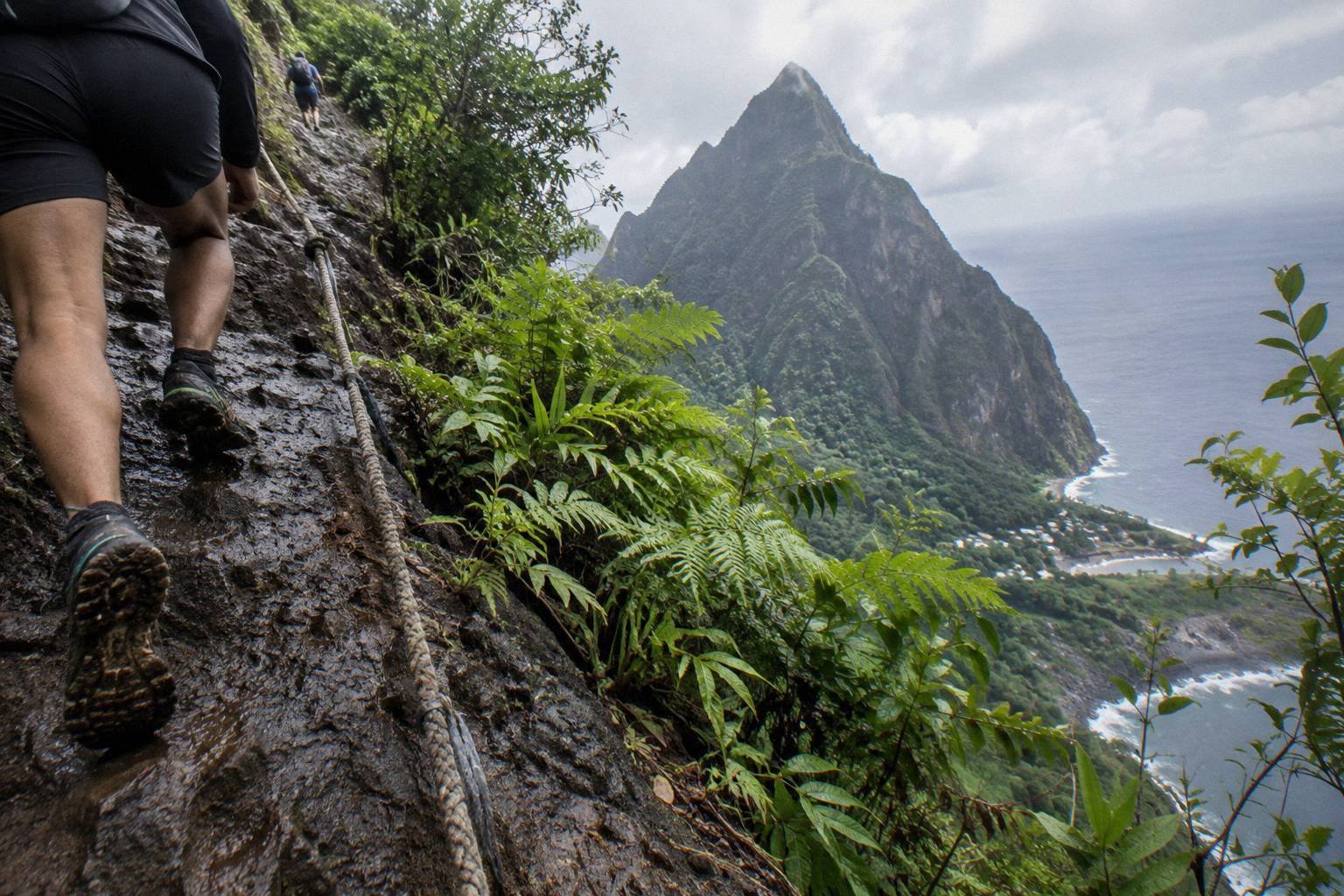
Schedule second. Petit Piton at 3 to 5 hours of mountain time sounds cruise compatible, but add transport, the guide briefing, and the reality that a slow party takes the full five hours, and a port day gets tight. The cruise port day guide works through the timing logic, and the honest version is that Gros Piton from a cruise call is routine while Petit Piton is a gamble with the ship.
| Common mistake | Why it bites | The fix |
|---|---|---|
| Trainers on wet rock | Polished rock loses grip when damp | Grippy trail shoes or boots |
| Budgeting only for the climb | Descent on ropes is slower and harder on legs | Save energy for the way down |
| Booking Petit as "the easy one" | It is the harder of the two peaks | Read the tourism authority grades first |
| Assuming any guide is fine | Petit requires a professional guide | Book through an established operator |
| Tight port-day timing | Slow parties take the full 5 hours | Allow the full window or pick Gros Piton |
The third trap is mental. People who handled Gros Piton fine sometimes assume the smaller mountain is a step down. It is a step sideways into a different kind of difficulty, and the rope sections concentrate the fear for anyone with mild vertigo. Going in knowing the route is a scramble, not a walk, is half the battle.
Quieter Alternatives If Petit Piton Sounds Too Much
Yes, there are two good quieter alternatives if Petit Piton sounds like more than you want to take on, and one of them costs US$10. Both give you a calmer, easier-paced experience instead of the demanding climb, so you can dial back the effort without giving up on the idea entirely. The Fond Doux View Trail, 1 Hour by Fond Doux Eco Resort's Heritage Tour is a private one hour trail from US$10 per person with all fees and taxes included, giving a Petit Piton view without the summit gamble and without a single rope to hold. The Tet Paul Nature Trail is the other easy option, a short stairway trail with the famous ridge perspective on both peaks, and together they cover most of what a non-climber actually wants from this corner of Saint Lucia: the view, the photograph and the legs to enjoy dinner afterwards.
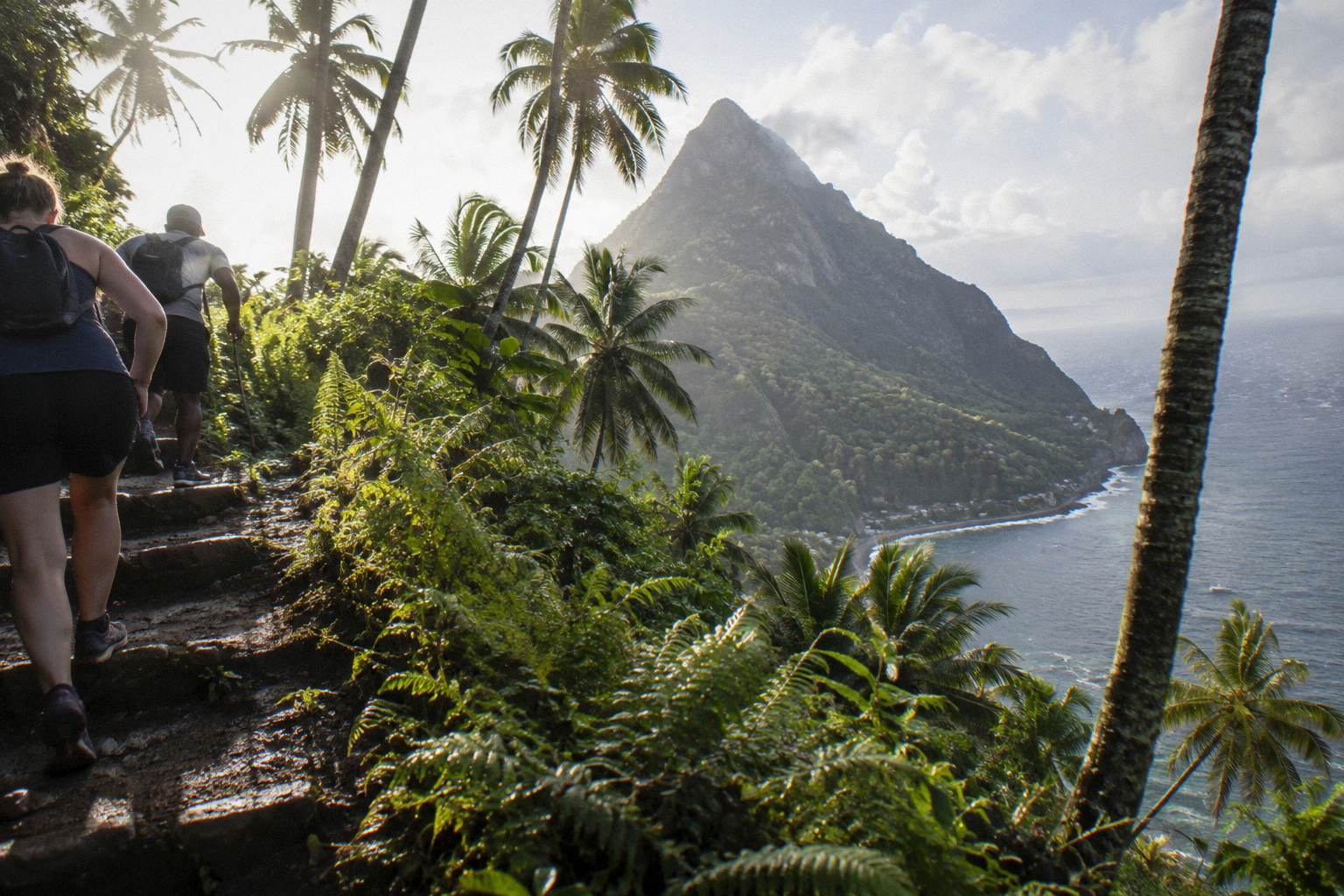
The view trail point matters more than it sounds. Plenty of visitors discover that what they actually wanted was the photograph and the perspective, not the rope work, and the Fond Doux trail delivers that for a tenth of the price of a summit climb. The Tet Paul vs Gros Piton comparison covers the same logic for the bigger peak.
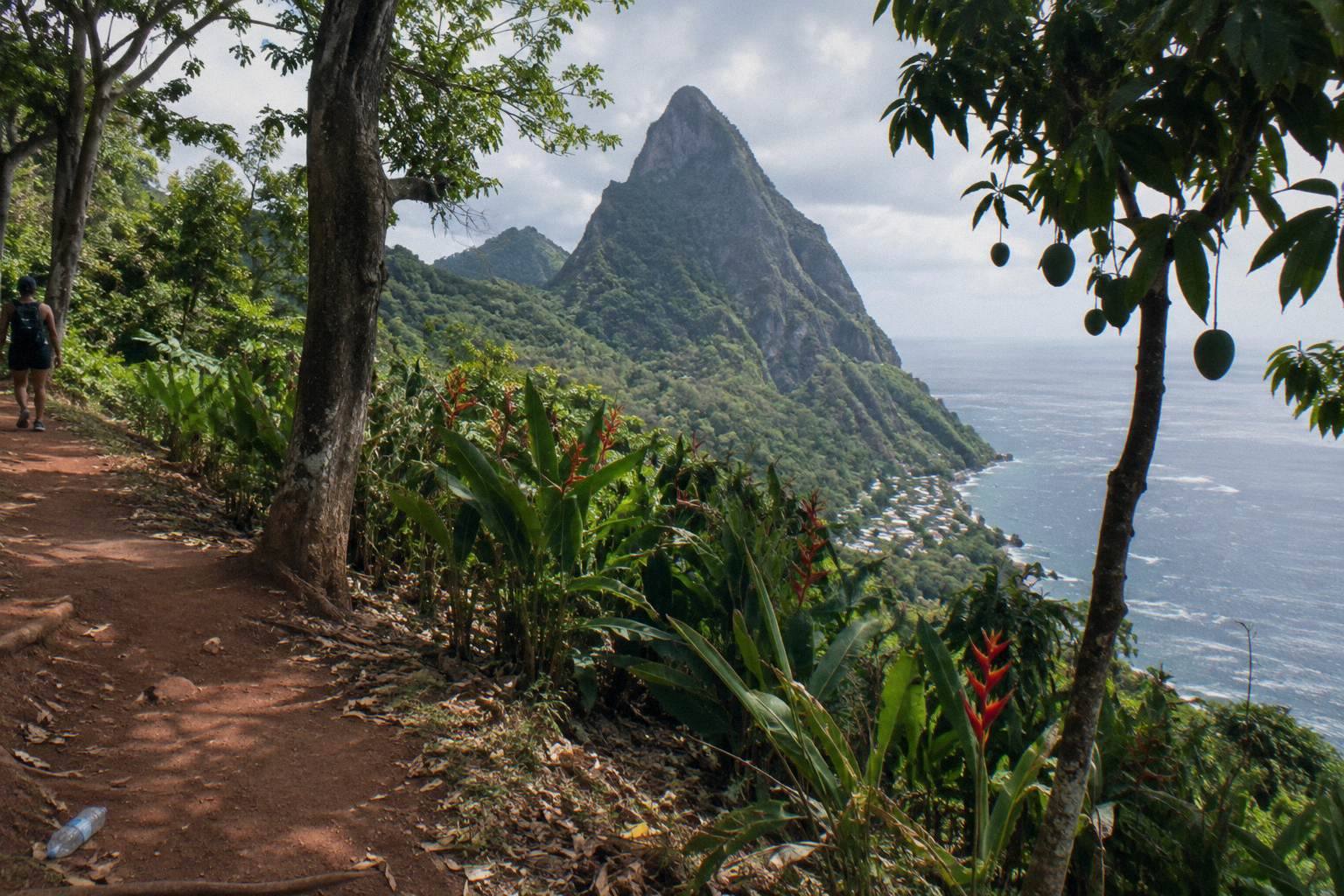
If the summit itch persists but the ropes do not appeal, Gros Piton remains the peak most visitors climb, and the tours listed here give you every format. Beyond Dannyboy's 5 hour guided trip already mentioned, Tour For The Day runs a Guided Hike from US$139 per person, and Treasure tours Ltd. St. Lucia offers an All Inclusive Hike, 4 Hours from US$150 per person with fees, taxes, water and walking sticks available to rent. Every one of these climbs Gros Piton under a certified guide.
The middle path is the combo. Lush Excursions' Both Pitons, 10 Hours from US$300 per person is the only realistic way to answer the Petit versus Gros question with your own legs on the same trip, with lunch, entrance fees and transport included. Ten hours is a serious day, and the hiking the Pitons overview is the right background reading before committing to it.
Whichever route you take, the area itself rewards the visit. The Pitons Management Area earned its UNESCO inscription in 2004 for both its scenic drama and its geological significance, and the volcanic complex around Soufriere, including the driveable Sulphur Springs, makes a full day of the region even without a summit.
Common Questions About A Petit Piton Hike
How Hard Is A Petit Piton Hike?
Very challenging and technical per the Saint Lucia Tourism Authority: a 3.2 km round trip scramble with fixed ropes, typically 3 to 5 hours, with a professional guide mandatory. It is harder than Gros Piton despite being 55 m shorter, because the terrain is steeper and more exposed throughout.
Is Petit Piton Harder Than Gros Piton?
Yes. Gros Piton is graded moderate to challenging on a step and switchback trail; Petit Piton is graded very challenging on steep scrambling ground with fixed ropes. The bigger mountain takes longer, but the smaller one demands more per hour, especially on the descent.
Can You Hike Petit Piton Without A Guide?
No. A professional guide is mandatory on Petit Piton, a stricter rule than Gros Piton's certified local guide requirement. Book through an established operator; the rope sections and route finding assume experienced leadership.
How Long Does The Petit Piton Hike Take?
Typically 3 to 5 hours for the 3.2 km round trip. The booked duration of a tour is longer because it includes transport and the whole outing, for example the Petite Piton Summit tour by Lush Excursions is booked as a 4 hour experience.
Is Petit Piton Closed To Climbers?
No. The tourism authority lists Petit Piton as a permitted climb. Older forum posts claiming a closure are out of date. The rule that matters is the mandatory professional guide, not a ban.
Is There An Easier Way To See Petit Piton?
Yes. The Fond Doux View Trail, 1 Hour by Fond Doux Eco Resort's Heritage Tour runs from US$10 per person and gives a Petit Piton perspective without the climb, and the Tet Paul Nature Trail offers the classic view of both peaks on an easy stairway route.