Gros Piton Climb Safety: Footing, Heat And Guides
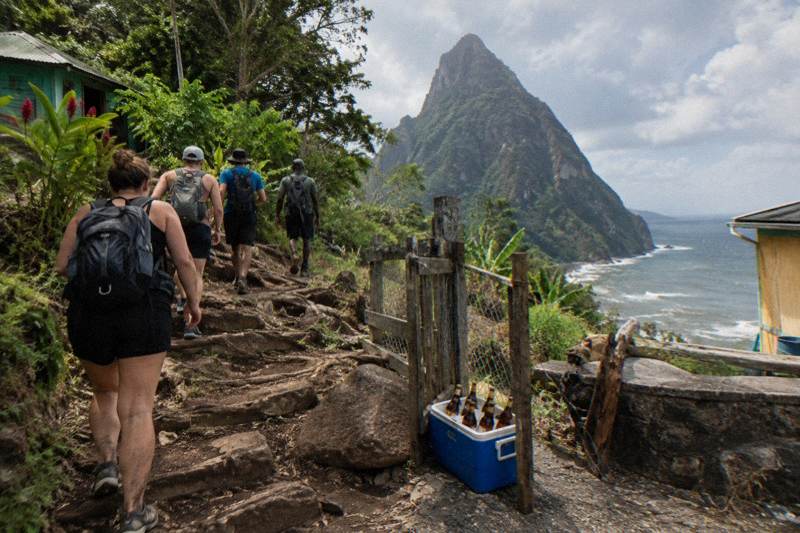
Gros Piton is a moderate to challenging 4 km round trip with a certified guide requirement, and most of the safety story comes down to footing, heat and going with the right guide.
Short answer
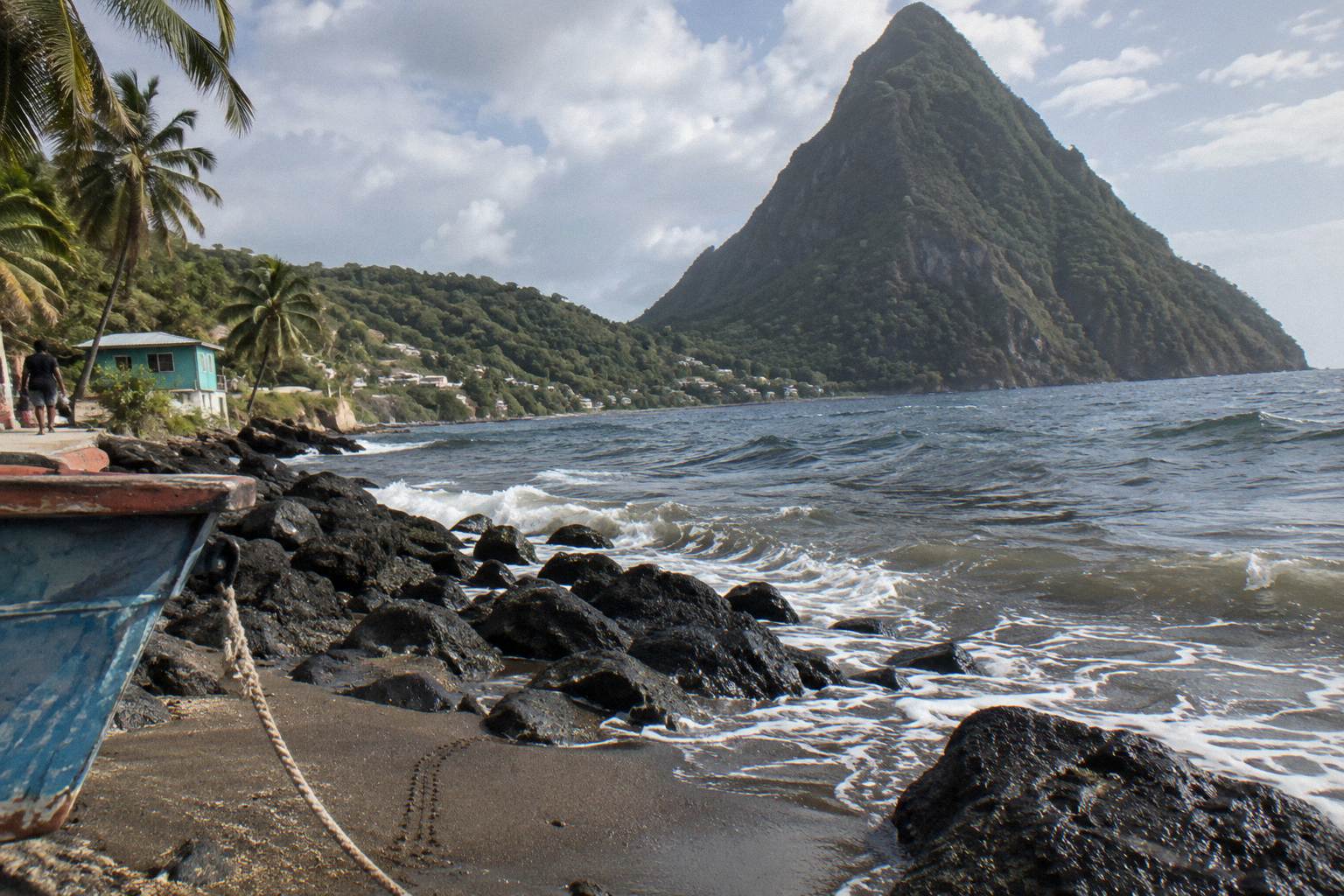
Gros Piton is 798 m (2,619 ft) with a 4 km round trip that typically takes 4 to 6 hours. The Saint Lucia Tourism Authority classes it as moderate to challenging and requires a certified local guide. The fee is US$50 per adult, paid at Fond Gens Libres, which covers entry and the guide.
Gros Piton stands 798 m (2,619 ft) above the southwestern coast of St Lucia, and the climb is a 4 km round trip that typically takes 4 to 6 hours. The Saint Lucia Tourism Authority describes it as moderate to challenging, and it requires a certified local guide from the trailhead at Fond Gens Libres, the interpretive centre near Soufriere inside the Pitons Management Area. That is the honest baseline: this is a real mountain walk on rough ground, not a stroll, and nearly every safety question readers ask comes down to three things, footing, heat and who is leading you up.
Readers planning the whole day can start with the parent overview at Gros Piton Hike, which links every guide on the site.
| Fact | Figure |
|---|---|
| Summit height | 798 m (2,619 ft) |
| Round trip distance | 4 km |
| Typical time on trail | 4 to 6 hours |
| Difficulty class | Moderate to challenging |
| Guide requirement | Certified local guide required |
| Trail fee | US$50 per adult (entry plus guide, paid at Fond Gens Libres) |
| Trailhead | Fond Gens Libres interpretive centre near Soufriere |
Is The Gros Piton Climb Safe?
The honest answer is that Gros Piton is a safe climb for reasonably fit, properly shod, well hydrated hikers who take a certified guide, and a risky one for anyone treating it like a beach walk. The tourism authority's framing, moderate to challenging with a mandatory certified local guide, is the official opinion. No verified incident statistics or closure rules exist in official sources, so anyone quoting numbers is guessing.
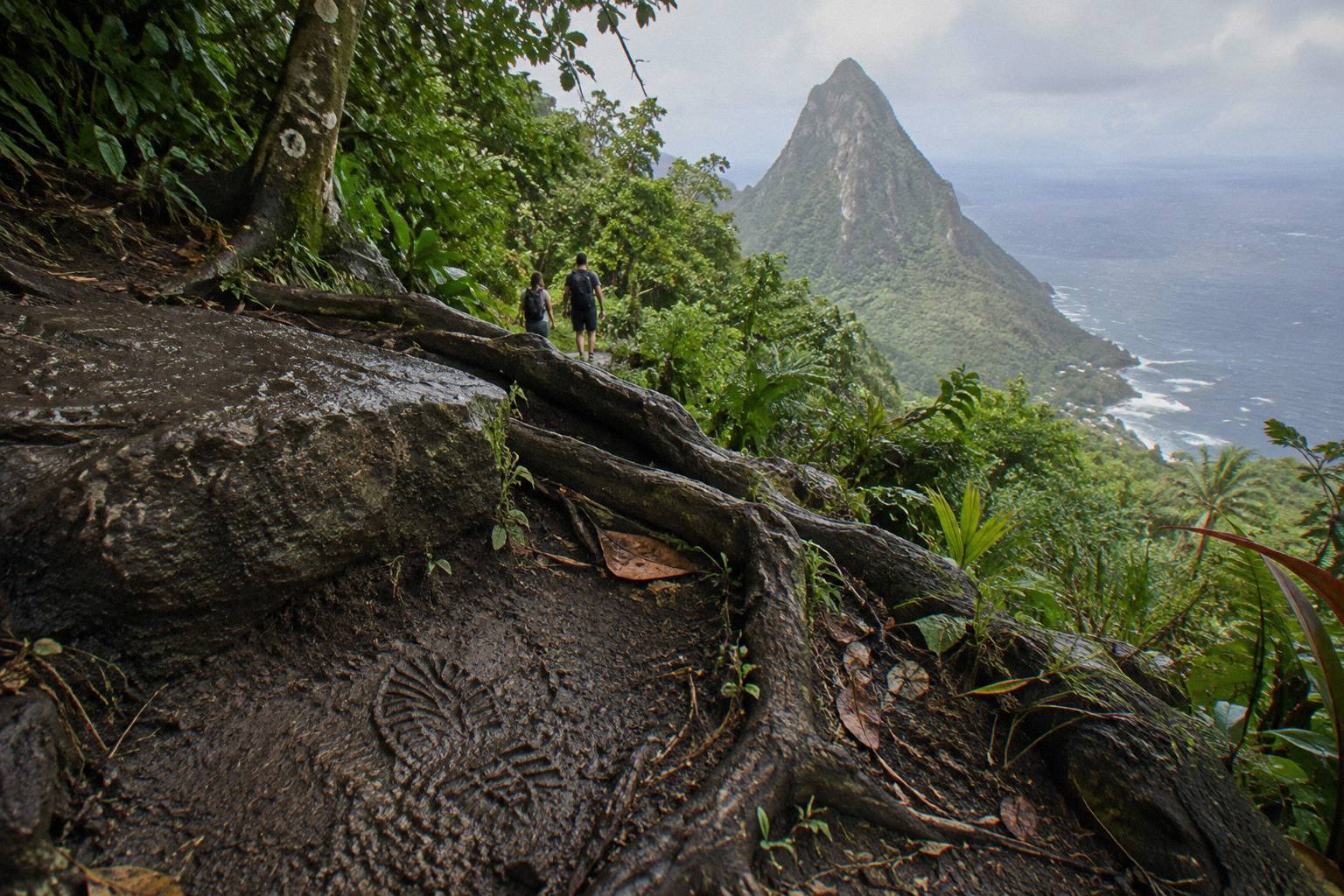
What makes this mountain manageable is that the risks are specific and mostly controllable. The trail climbs through forest on a mix of dirt, rock steps and bare stone, and it steepens sharply in the second half. Heat and humidity do more damage than the terrain: hikers who run out of water on the upper slopes are the classic casualty profile on tropical volcanoes. The 4 to 6 hour band is a hiking time, and it assumes you keep moving; a slower party can be out longer, which matters for both water and daylight.
None of this means the climb needs alpine experience. The authority's own piton climbs page lists Gros Piton as the more approachable of the two Pitons, with Petit Piton classed as very challenging and technical. For a first-timer weighing the pair, the comparison guide on Gros Piton versus Petit Piton breaks down why the bigger mountain is actually the easier day out.
Age is another question readers ask about, and the honest answer is that no official limit exists in the verified sources. The practical screen is stamina and heat tolerance rather than a number. Families weighing the decision can read the site's dedicated post on whether kids can climb Gros Piton, which works through the same variables, pace, footing and heat, from a parent's angle.
What The Official Rules Say About Guides And Access
A certified local guide is required for Gros Piton, full stop: it is a condition of access set out by the tourism authority, not an optional extra. The US$50 per adult trail fee, paid at the Fond Gens Libres interpretive centre, covers both entry and that guide. The mountain sits inside the Pitons Management Area, inscribed by UNESCO in 2004 under criteria (vii) and (viii), which is why access is managed rather than open.
The guide rule is the single biggest safety structure on the mountain. Local guides know the footing, the weather signs and the pace a struggling hiker can hold, and the fee system means the person leading you is accountable to the community that manages the trail. The arrangement is similar to guided-mandatory systems on other World Heritage peaks. The UNESCO listing for the Pitons Management Area explains the protected status behind it.
What the official sources do not say matters too. No published opening hours, last start times, age limits, fitness thresholds or weather closure rules appear in the verified sources, so this guide will not invent any. Practical takeaway: ask your operator about start times when booking, and treat the guide on the ground as the authority of the day.
Booking a trip that builds the guide arrangement in for you removes a whole layer of logistical risk. The trio below covers the main formats: the most reviewed guided climb among the tours listed here, a budget guided option with pickup, and a longer guided day with lunch.
The flagship pick, the Dannyboy Guided Hike, 5 Hours by St. Lucia Best Experience Tours & Airport Transfers, is the most reviewed Gros Piton climb on the tours listed here at 4.7 across 230 reviews, from US$90 per person, with hotel and cruise-port pickup, water for the hike and a cold Piton beer after. For a no-frills guided day, the Hotel Or Cruise Pickup Hike by St Lu Taxi and Tours runs 4 to 6 hours from US$130 with hotel and cruise-port pickup. The World Heritage Hike, 8 Hours by Lush Excursions, from US$195, adds entrance fee and lunch on a longer guided day.
Footing And The Steep Sections
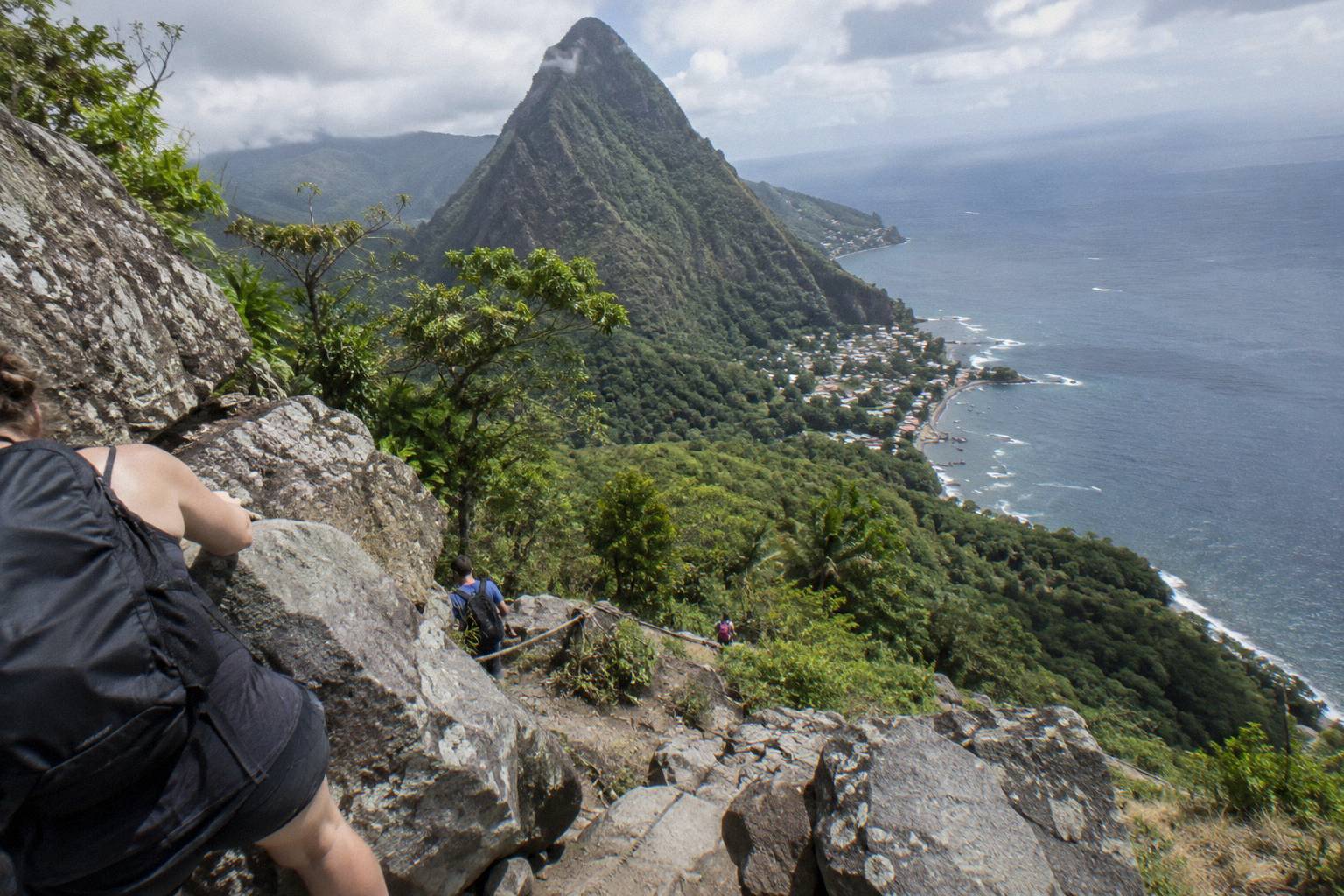
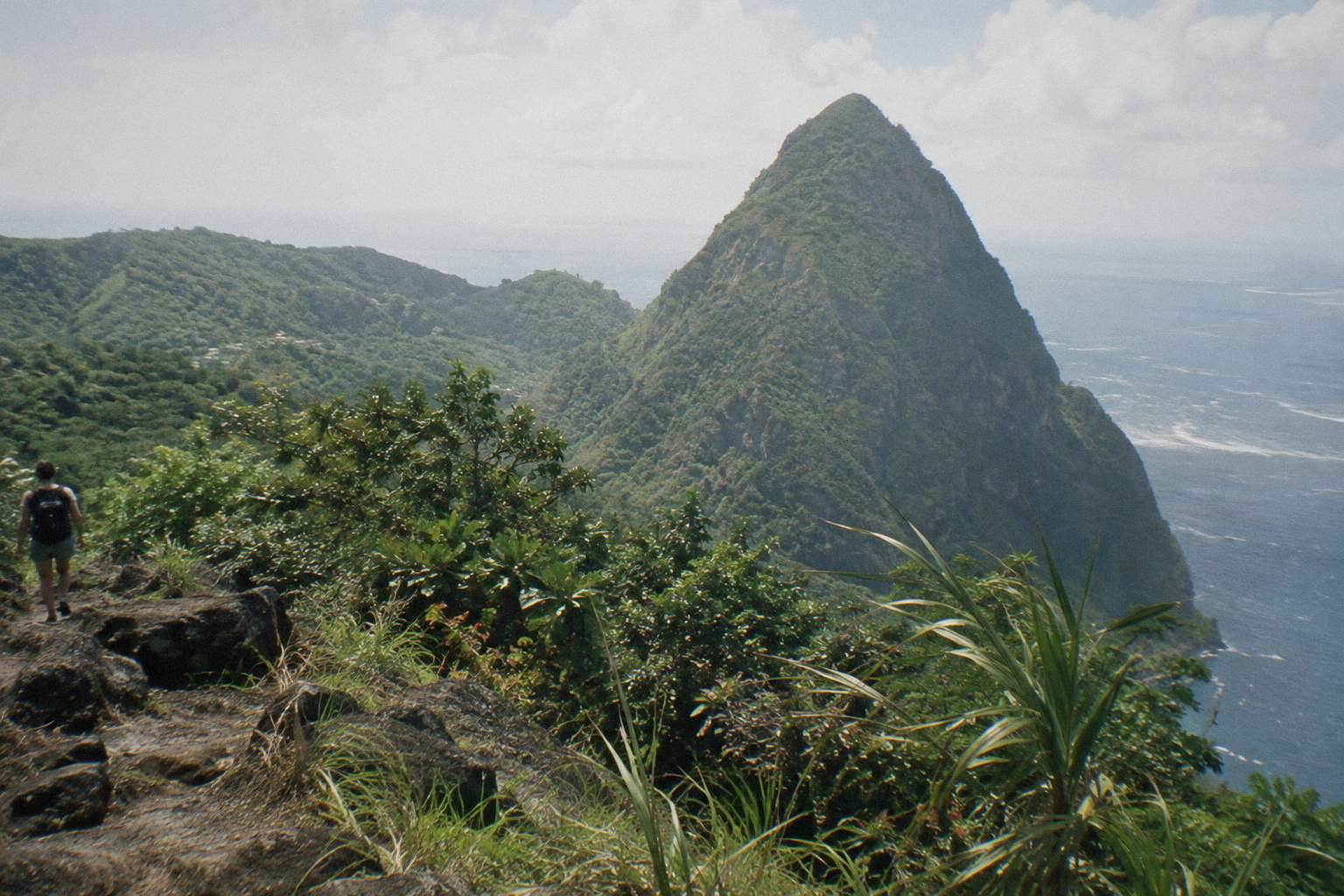
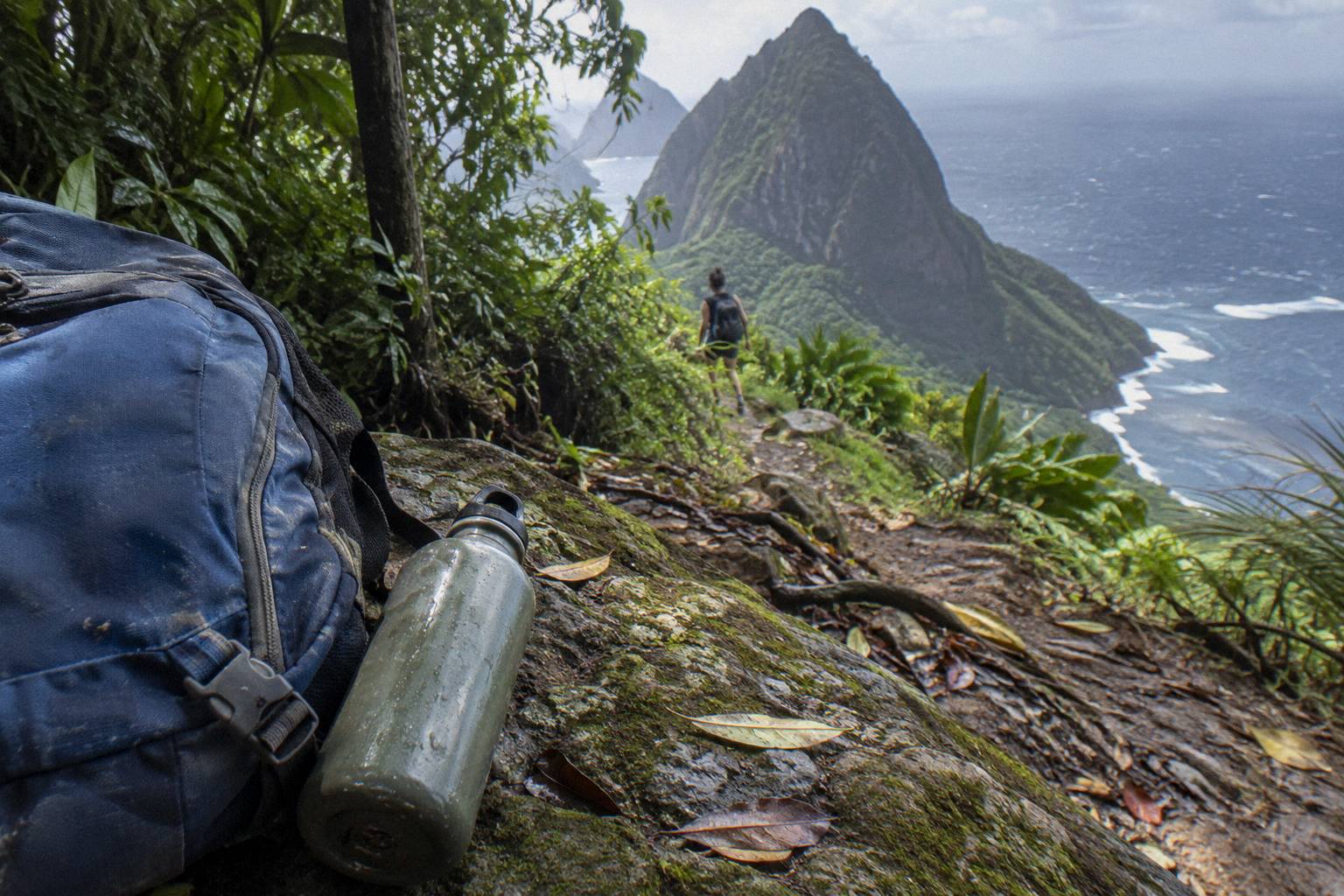
Most injuries on Gros Piton come from slips and stumbles on wet rock and root, not from falls from height. The lower half is forest path and stone steps; the upper half steepens considerably and includes bare, polished rock that turns slick in rain. A 4 km round trip sounds short, but nearly all of it is climbing or descending on uneven ground, and the descent is where tired legs get hurt.
The practical defence is footwear and pole discipline. Grip-soled trail shoes or light hiking boots beat trainers and absolutely beat anything smooth-soled. A walking pole, which Treasure tours Ltd. St. Lucia rents on its All Inclusive Hike, 4 Hours, buys knee relief on the descent. Step where your guide steps: local guides read the rock and routinely reroute around sections that are greasy after rain.
Timing your footing matters as much as choosing it. Early starts mean drier rock, cooler air and fewer parties bunched on the steep sections, which is one reason tour operators push morning pickups. If you want the full stage-by-stage picture before committing, read the detailed breakdown in the Gros Piton trail route and stages guide, and pair it with the difficulty assessment for the Gros Piton climb for what each stage demands of your legs.
| Trail feature | Where | Footing risk | Best defence |
|---|---|---|---|
| Forest dirt path | Lower third | Roots, mud after rain | Grippy shoes, watch footfall |
| Stone steps | Lower to middle | Wear on descents | Pole, slow pace down |
| Bare rock slabs | Upper half | Slick when wet | Follow guide's line, early start |
| Steep final pitches | Near summit | Fatigue, exposure to sun | Rest, hydrate, turn back if dizzy |
Heat, Hydration And Pacing
St Lucia's tropical heat and humidity are the most underestimated hazard on the climb, ahead of the terrain itself. You are hiking in equatorial sun on a slope that offers real shade only in the forested lower sections, and sweat loss runs far higher than a temperate hiker expects. Plan on carrying more water than you think you need, starting early, and treating a slow pace as a safety tool rather than a failure.
Operator inclusions tell you how seriously the locals take this. Cool Vibes Taxi and Tours packs 1.5 litres per person on its Private Hike, 4 To 5 Hours; the same operator's By Sea Hike Combo includes bottled water and snacks around the boat transfer; A1 Transfer & Tours SLU includes bottled water on its Private Hike, 6 To 7 Hours. Treat any included bottle as a base, not a ration: many hikers add a litre or more of their own on a hot day. Small, frequent sips beat gulping at rest stops.
Pacing is the other half of heat management. The 4 to 6 hour authority band covers a wide range of parties; if you are nearer six than four, plan food, water and daylight for that. Salt matters too, since plain water alone does not replace what you sweat out: a sports drink or salty snack on the trail is standard tropical practice. Signs to respect are headache, dizziness, nausea and a sudden stop of sweating, any of which means stop, cool down in shade and, if they persist, descend. The general background on the mountain covers its volcanic geology, which explains both the heat-retaining rock and the sparse soil on the upper slopes.
Clothing choices feed directly into heat tolerance. Light, loose, light-coloured shirts breathe better than cotton that soaks and stays wet; a hat and sunglasses make the exposed upper half noticeably more comfortable; and a small towel or bandana soaked at a stream crossing is an old tropical trick for cooling the neck. None of this is exotic gear, and all of it reduces the odds of the day ending early. The site's packing page goes deeper on what to wear and bring for the climb.
Why A Certified Guide Changes Your Risk Profile
The certified guide rule is not red tape: it is the mountain's main safety system. A Fond Gens Libres guide knows which rock is reliable, where the trail forks, when cloud is building into a storm, and how to pace a struggling visitor. The US$50 trail fee funds exactly this, entry plus guide in one payment, so bypassing a guide is both against the rules and against your own interests.
Guides also carry local knowledge no guidebook holds, from which fruit stand has water near the trailhead to which descent line suits aching knees. Several listed tours make the guide relationship the core of the product. The Dannyboy Guided Hike, 5 Hours includes assistance coordinating the forestry guide plus a driver who waits during the hike, meaning your ride down does not leave if you are slow. FRAM Tours & Taxi Services, on its FRAM Soufriere Hike, 6 Hours, explicitly states the driver waits for the duration of the hike regardless of time, which is a quietly important safety feature for anyone worried about being rushed.
For a fuller picture of what the person leading you actually does, from interpretation to pacing to first aid, see the dedicated page on what your Gros Piton guide does. If you are weighing whether skipping one is even legal or sensible, the answer is on hiking Gros Piton without a guide.
Private Or Guided Group: Which Feels Safer
Neither format is inherently safer; the fit is what matters. A private climb means the guide sets pace to your legs, stops when you need to stop, and turns back without a committee vote. A guided group spreads cost and adds morale, but the group moves at a compromise pace. Anxious, slower or older hikers should usually pay for private; confident, sociable hikers do fine in groups.
The private field on the tours listed here spans a real price range. Cool Vibes Taxi and Tours runs the Private Hike, 4 To 5 Hours from US$140 at 3.9 across 102 reviews, including the entrance fee, beer and 1.5 litres of water per person, with hotel and cruise-port pickup. St. Lu Taxi And Tours offers the St. Lu Taxi Private 4-Hour Hike from US$118.75 at 3.6 across 19 reviews. A1 Transfer & Tours SLU's Private Hike, 6 To 7 Hours, 4.7 across 18 reviews from US$130, buys a longer, unhurried window, and its inclusions list the hike and guide fee at US$50 per person.
On the group side, Barefoot Holidays' Barefoot Holidays Hike, 8 Hours is a guided shared day from US$175 with hotel pickup, while Tour For The Day's Tour For The Day Guided Hike runs 4 to 6 hours from US$139. Cancellation terms on both formats here follow the same pattern, free cancellation within a 24 hour window, so a nervous hiker can book early and still bail.
The middle ground is the combo day. Cool Vibes' By Sea Hike Combo, from US$250, approaches by boat with snorkelling gear and snacks included, which suits a party where one member would rather not climb at all. Rumie Tours St. Lucia's Mud Bath Hike, 5 Hours, from US$220, and the Sulphur Springs Mud Bath Hike by St. Lucia Taxi Service, from US$127, pair the climb with a warm soak, a soothing finish for muscles that just worked a mountain. For a wider angle on the formats, the overview of Gros Piton hiking tours compares every category on the site.
Common Mistakes That Trip People Up
The recurring safety failures on Gros Piton are boringly predictable: starting too late and climbing through midday heat, carrying too little water, wearing worn trainers, treating the descent as the easy half, and booking a tour whose duration or pace does not match the hiker. None of these involve freak weather or dangerous terrain; all of them are decisions made days or hours before the trailhead.
The late start deserves its own paragraph, because it cascades. A mid-morning start puts the steep upper half under the day's worst sun, extends the descent into the hottest hours, and removes the buffer for a slow party. Operators design their schedules around this, which is why the whole-tour durations among the tours listed here (4 to 10 hours) are longer than the 4 to 6 hour hiking time: the day includes pickup, the drive south, the fee stop at Fond Gens Libres and the return. If a tour's whole-tour length feels tight against your expected pace, pick a longer one.
| Mistake | Why it bites | Simple fix |
|---|---|---|
| Late start | Midday heat on the upper slopes | Book the earliest pickup slot offered |
| One small bottle | Humidity drives heavy sweat loss | Carry more than you think, plus salt |
| Smooth trainers | Slick rock and wet roots | Grip-soled trail shoes or boots |
| Rushing the descent | Tired legs, most stumbles happen here | Pole, short steps, follow the guide |
| Wrong tour format | Group pace or duration mismatch | Private for slow hikers, longer windows |
| Ignoring weather signs | Cloud builds fast on tropical peaks | Ask your guide, defer to their call |
Packing is its own discipline, and the site has a full page on what to wear and bring for the Gros Piton climb. Fitness preparation is covered in the training and preparation guide, which is worth reading a few weeks out rather than the night before.
Who Should Think Twice Before Climbing
Anyone with unstable knees, cardiac or respiratory conditions, or a history of heat illness should get a doctor's opinion first, because the climb is sustained, steep and hot for hours. No official age or fitness limits exist in the verified sources, so the honest screen is personal: if you cannot walk uphill steadily for a few hours in warm conditions, Gros Piton will test you. There is a strong alternative, a view trail.
The Fond Doux View Trail, 1 Hour by Fond Doux Eco Resort's Heritage Tour, from US$10, is exactly that: a one-hour private walk with Petit Piton views and no summit push. The Tet Paul Nature Trail, covered in the Tet Paul nature trail guide, offers the region's best effort-to-view ratio and a direct comparison in the Tet Paul versus Gros Piton breakdown. Neither replaces the climb, but both let a mixed group enjoy the Pitons together.
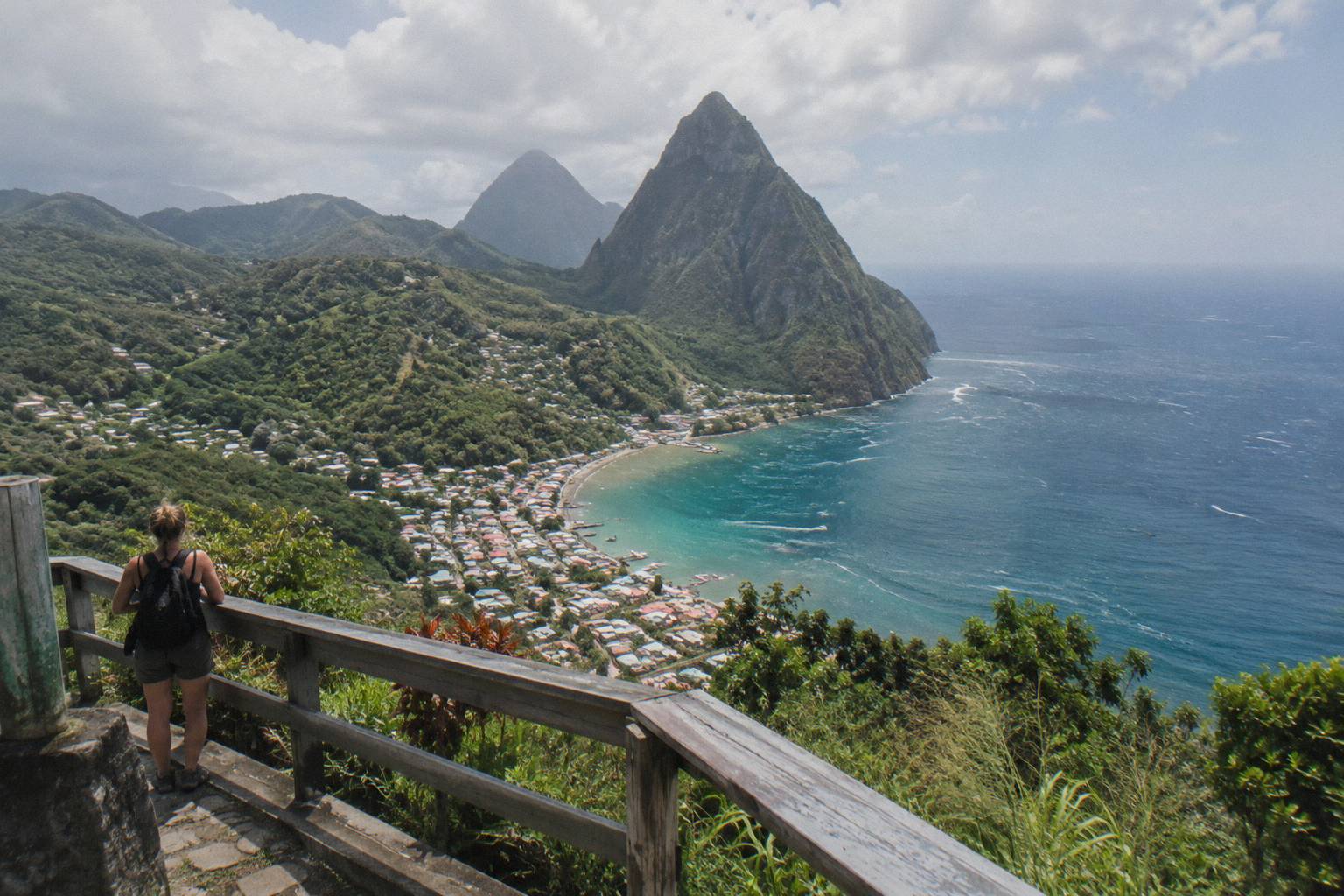
Honesty about your own condition extends to the calendar, not just the body. A hiker who has been ill in the preceding week, who flew in overnight, or who is climbing on day one of the holiday before acclimatising to the heat is stacking small disadvantages that add up on a 798 m slope. Building a rest day before the climb, or at least not scheduling it the morning after arrival, costs nothing and removes one more variable. The mountain is not going anywhere, and the certified guides at Fond Gens Libres will be there whenever you are ready.
If the worry is specific rather than general, the site has focused answers: families can read whether kids can climb Gros Piton, and cruise passengers with a fixed sailing time should see the page on hiking Gros Piton on a cruise port day.
Booking Safe: What To Check Before You Pay
Before paying for any Gros Piton climb, check four things: that the format (private or guided group) matches your pace, that the whole-tour duration leaves slack around the 4 to 6 hour hike, that pickup is stated for your location type, and that the cancellation window suits your plans. On the tours listed here every priced row follows the same free-cancellation pattern, a 24 hour window, which covers itinerary wobble but not a same-day change of heart.
Read the inclusions list rather than assuming. Some tours, like the Private Hike, 4 To 5 Hours from Cool Vibes and Xceptional Tours' Private Nature Trail, 7 Hours, fold entrance fees into the price; others, like the Dannyboy Guided Hike, 5 Hours, include water and a waiting driver but coordinate the forestry guide separately. IslandTime SLU's Private Hike, 5 To 6 Hours includes all fees and taxes from US$150, as does the All Inclusive Hike, 4 Hours by Treasure tours Ltd. St. Lucia, from the same price. Knowing what is already paid removes the cash-and-confusion risk at Fond Gens Libres.
Finally, ask the operator directly about start times and weather procedure when booking, since those specifics sit with them rather than in any official published source. A good operator will answer both questions in a sentence, and that answer tells you as much about their reliability as any review score.
Common Questions About Gros Piton Climb Safety
Is The Gros Piton Climb Dangerous?
It is moderate to challenging rather than dangerous for a prepared hiker: 4 km round trip, 798 m of mountain, typically 4 to 6 hours with a certified guide required. The real hazards are slips on wet rock and heat exhaustion, both largely preventable with proper shoes, early starts and enough water.
Do I Have To Have A Guide To Climb Gros Piton?
Yes. The Saint Lucia Tourism Authority requires a certified local guide, and the US$50 per adult trail fee paid at Fond Gens Libres covers both entry and the guide. Most booked tours coordinate this for you as part of the day.
What Is The Most Common Injury On The Trail?
Stumbles and slips, mostly on the descent, on wet rock and roots. Grippy footwear, a walking pole and a slow, short-stepping pace down the steep sections prevent the large majority of them.
How Much Water Should I Carry?
More than feels reasonable in a temperate climate. Operators typically include a bottle or 1.5 litres per person, and many hikers add extra of their own for a hot day, plus a salty snack to replace what sweat takes out.
Can Beginners Climb Gros Piton Safely?
Reasonably fit beginners climb Gros Piton regularly with a guide and an honest pace. Pick a longer whole-tour window so you are not rushed, start early for cooler conditions, and consider a private climb so the pace fits your legs.
Is Petit Piton Safer Than Gros Piton?
No, it is harder. Petit Piton is a 3.2 km scramble with fixed ropes, 3 to 5 hours, classed very challenging and technical with a professional guide mandatory, while Gros Piton is the moderate to challenging option of the two.